
Israel Launches Preemptive Strikes on Iran's Nuclear Facilities
Israel's ambassador to the United Nations, Danny Danon, has stated that the military operations against Iran will not be brief, potentially lasting for days or weeks. Danon emphasized that the initial phase of the strikes targeted Iran's ballistic missile production capabilities and nuclear facilities in Tehran. He asserted that Israel has the capability to reach every target within Iran and maintains control over the situation. Danon further stated that Israel will continue its operations until Iran is unable to proceed with its efforts.
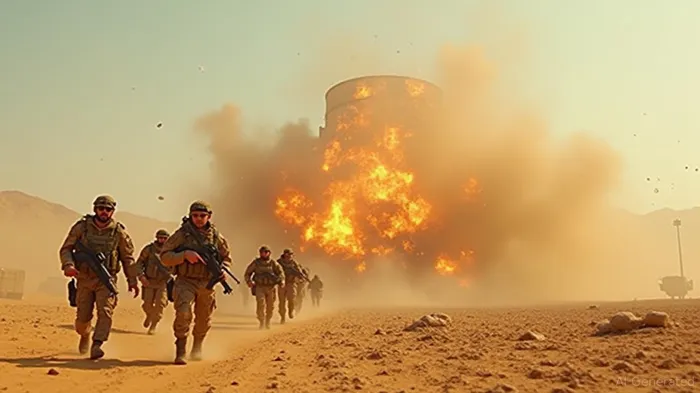
The recent escalation in tensions in the Middle East began on Friday, June 13, when Israel launched a preemptive military strike against Iran, codenamed "Rising Lion." The operation aimed to dismantle Iran's nuclear weapons development capabilities by targeting nuclear facilities and military installations. The strikes included precision attacks on Iran's air defense systems, ground-to-ground missile facilities, and key military and nuclear personnel. The Israeli military reported significant damage to Iran's nuclear and military infrastructure within a short period.
The primary target of the airstrikes was Iran's main uranium enrichment facility in the Natanz region. Witnesses reported multiple explosions in the area, indicating severe damage to Iran's ballistic missile program. The Israeli military estimated that Iran currently possesses enough enriched uranium to produce 15 nuclear weapons, which served as the direct catalyst for the operation.
In addition to the public airstrikes, Israel's intelligence agency conducted a series of covert operations within Iran. These operations targeted Iran's air defense systems and long-range missile facilities, further weakening Iran's defensive capabilities and creating favorable conditions for subsequent airstrikes. The actions demonstrated Israel's deep penetration and intelligence capabilities within Iran.
In response to the potential Iranian retaliation, Israel declared a state of emergency nationwide. The Israeli military mobilized tens of thousands of soldiers, and all borders were placed on high alert. The Chief of Staff of the Israeli military warned that any attempt to challenge Israel would result in severe consequences. The Israeli ambassador to the United Nations emphasized that while Israel maintained continuous dialogue with the United States, the decision to strike Iran was made independently by Israel without direct U.S. involvement.
The attack resulted in significant damage to Iran's nuclear and military infrastructure. The Iranian capital experienced multiple explosions, with the Revolutionary Guard's headquarters being one of the primary targets. The commander of the Revolutionary Guard was killed in the attack, along with another high-ranking security official. Two prominent Iranian nuclear scientists were also killed in the strikes. The Iranian Civil Aviation Authority announced the temporary suspension of all flights at Imam Khomeini International Airport in Tehran to monitor the situation.
The precision strikes by Israel severely impacted Iran's nuclear weapons development capabilities, particularly the uranium enrichment facilities in the Natanz region. Following the initial wave of airstrikes, Israel launched a second wave of attacks, resulting in explosions across multiple Iranian cities. Iranian state media confirmed significant damage to nuclear-related facilities and military assets. Despite the setbacks, Israeli sources indicated that Iran was preparing for a retaliatory strike against Israel, escalating the risk of further conflict.
The international community reacted to the escalating tensions. The United States clarified that it did not participate in Israel's military operation but had prepared emergency plans for various potential scenarios in the Middle East. President had previously stated that Israel might take action against Iran but hoped for a peaceful resolution through diplomatic means. The sixth round of nuclear talks, scheduled for Sunday, was stalled due to the conflict, highlighting the fragility of diplomatic efforts. Senator criticized Israel's actions, stating that the escalation put the region and forces at risk.
The conflict led to significant volatility in global markets, with international oil and gold prices experiencing sharp fluctuations. The heightened tensions in the Middle East drove up the prices of safe-haven assets and energy commodities. The Israeli ambassador to the United Nations reiterated that the strikes on Iran were an independent decision by Israel, emphasizing the country's resolve to address the perceived threats from Iran. The ambassador also noted that the operation would continue for several days or even weeks, ensuring that all targets were neutralized.

Stay ahead of the market.
Get curated U.S. market news, insights and key dates delivered to your inbox.






Comments
No comments yet