
U.S. and Israel Launch Tomahawk Missile Strikes on Iran; Market Implications
 Aime Summary
The U.S. and Israel launched coordinated strikes on Iran using Tomahawk cruise missiles and other military assets as part of Operation Epic Fury. - Tomahawk missiles are long-range, precision-guided weapons that allow for standoff attacks, reducing the risk to manned aircraft and ground forces. - The operation targets Iran's military infrastructure, including missile sites and nuclear facilities, and is expected to impact global energy markets and regional stability.
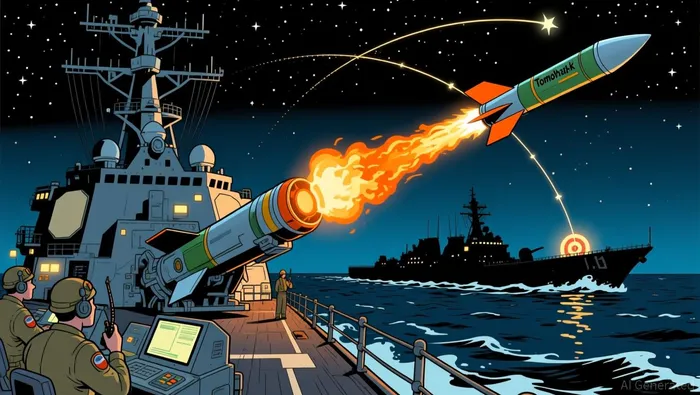
The U.S. military deployed a mix of Tomahawk cruise missiles, systems, and drones to strike Iranian targets from land, sea, and air platforms. These attacks were supported by advanced air defense systems like the MIM-104 Patriot and to counter Iranian retaliation. The operation marks a major escalation in U.S. military actions against Iran and follows months of planning with Israeli forces. Tomahawk missiles, in particular, are well-suited for these operations due to their range and accuracy, allowing U.S. forces to strike deep into Iran from safe distances.
What Role Do Tomahawk Missiles Play in Modern Military Operations?
Tomahawk cruise missiles have become a staple of U.S. naval and military operations due to their precision, range, and flexibility. Modern variants of the can fly up to 1,600 kilometers and use a combination of GPS, inertial navigation, and terrain-following radar to reach their targets with minimal risk to personnel. These missiles are launched from surface ships or submarines and can be programmed to follow complex flight paths, making them ideal for striking hardened or deeply buried targets.
The use of Tomahawk missiles in the recent operation against Iran highlights their strategic value in standoff strikes. They allow the U.S. to conduct attacks without exposing ground troops or aircraft to Iran’s air defenses. This capability is critical in regions like the Middle East, where traditional air superiority is increasingly contested.
Why This Military Escalation Matters for Global Energy Markets and Investors
Iran’s position as a key player in the Persian Gulf makes this military escalation a significant risk to global energy markets. The Strait of Hormuz, , is vulnerable to disruption in the event of further hostilities. Analysts warn that the operation could lead to higher oil prices due to rerouting, delays, and potential supply disruptions .
For investors, this means heightened volatility in energy and defense sectors. Energy companies with exposure to the Middle East face operational risks, while defense firms that supply weapons like the Tomahawk and air defense systems may see increased demand. At the same time, diplomatic efforts are intensifying, with the U.N. and the European Union calling for de-escalation . While the U.S. and Israel appear focused on neutralizing Iran’s military capabilities, the long-term geopolitical consequences remain uncertain.
How Should Investors Respond to This Escalation?
Investors should closely monitor the situation for signs of further escalation or diplomatic resolution. In the short term, energy prices are likely to remain elevated, benefiting oil and gas producers but increasing costs for consumers and industries reliant on fossil fuels. Defense stocks may also benefit, particularly those involved in missile production and air defense systems.
However, there are broader risks to consider. A prolonged conflict could destabilize the region further and lead to retaliatory actions by Iran and its allies. This could ripple through financial markets and impact global trade. Companies with physical assets in the Middle East, especially energy firms and logistics providers, should be scrutinized for exposure to geopolitical shocks.
In the longer term, the strategic realignment between China and Iran, as seen in recent defense deals, could shift the balance of power in the region. This may lead to a reevaluation of U.S. military postures and defense budgets, potentially opening new opportunities in the defense sector for U.S. companies .
Bottom line: The U.S.-Israel operation using Tomahawk missiles is a major development with far-reaching implications. Investors should consider both the direct market impacts—such as energy and defense sector volatility—and the broader geopolitical shifts that could influence long-term strategies and asset allocations.

Stay ahead of the market.
Get curated U.S. market news, insights and key dates delivered to your inbox.


AInvest
PRO
AInvest
PRO



Comments
No comments yet