
Israel Iran Conflict Sends Oil Prices Up 13%
Israel launched a pre-emptive attack on neighboring Iran late Thursday, marking a significant escalation in tensions within the Middle East. This development sent shockwaves through global markets, with various assets experiencing notable fluctuations. Bitcoin, the world's largest cryptocurrency by market capitalization, saw a decline in its value. However, the drop was relatively modest compared to the broader market turmoil.
The conflict between Israel and Iran has historically been a source of geopolitical instability, and this latest escalation has reignited concerns about the potential for a protracted war. The airstrikes by Israel targeted Iran's nuclear facilities and military infrastructure, raising fears about the disruption of oil transit through the Strait of Hormuz. This waterway is crucial for global oil supplies, with an estimated 17 million barrels of oil passing through it daily. The prospect of higher oil prices due to potential disruptions in supply has led to increased inflation fears, particularly in the United States.
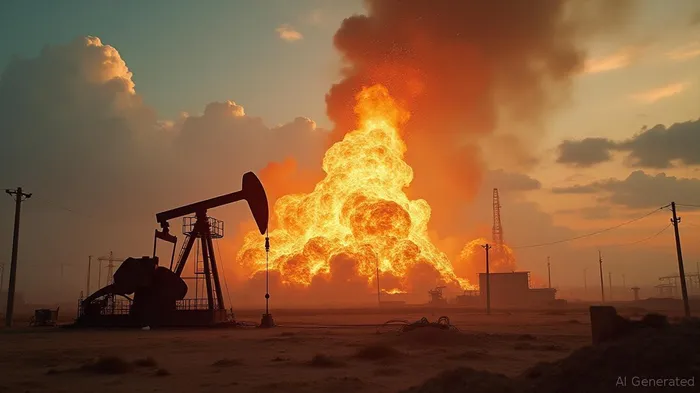
The energy markets responded swiftly to the news, with oil prices spiking by as much as 13% before retreating slightly. This volatility in oil prices has significant implications for global inflation, as higher energy costs can drive up the overall cost of goods and services. The conflict has also raised questions about the potential for Bitcoin to serve as a safe haven asset during times of geopolitical uncertainty. Historically, gold has been the traditional safe haven asset, but the debate around Bitcoin's role in this capacity has gained traction in recent years. Some argue that Bitcoin's decentralized nature and limited supply make it an attractive option for investors seeking to hedge against inflation and geopolitical risks. However, the modest drop in Bitcoin's value during this latest escalation suggests that its safe haven status may still be uncertain.
The broader cryptocurrency market also experienced a downturn following the airstrikes, with altcoins and other digital assets seeing significant declines. The liquidation of leveraged positions in the crypto market amounted to over $1.14 billion in the past 24 hours, with long positions accounting for roughly 91 percent of the total. This indicates that many traders were caught off guard by the sudden escalation in tensions and were forced to close their positions to avoid further losses.
The conflict has also raised concerns about the potential for further disruptions in global markets. The uncertainty surrounding the situation in the Middle East could make it more difficult for policymakers to manage inflation and economic growth. In the United States, the Federal Reserve has been closely monitoring inflation trends and could face additional challenges in the coming months as a result of the conflict. The prospect of higher oil prices and increased inflation could complicate the Fed's efforts to maintain stable economic conditions.
In summary, the escalation of tensions between Israel and Iran has had a significant impact on global markets, with Bitcoin and other assets experiencing notable fluctuations. The conflict has raised concerns about the potential for higher oil prices and increased inflation, as well as the role of Bitcoin as a safe haven asset. The broader cryptocurrency market has also been affected, with many traders forced to liquidate their positions in response to the sudden escalation in tensions. The situation remains fluid, and the potential for further disruptions in global markets cannot be ruled out.

Stay ahead of the market.
Get curated U.S. market news, insights and key dates delivered to your inbox.


AInvest
PRO
AInvest
PRO



Comments
No comments yet