
How the Israel-Iran Ceasefire Ignites a Nasdaq 100 Rally—and Where to Invest Now
The sudden ceasefire between Israel and Iran, brokered by U.S. President Donald Trump on June 23, 2025, has upended geopolitical dynamics in the Middle East—and sent shockwaves through global markets. While the agreement's long-term stability remains uncertain, its immediate impact has been transformative: oil prices dropped sharply, air raid sirens fell silent, and investors began pricing out the risk of a prolonged conflict. For tech stocks and the Nasdaq 100, this geopolitical de-escalation has created a critical tailwind. Here's how to parse the opportunity—and the risks.
The Geopolitical Overhang Lifts
Tech stocks have long been vulnerable to macroeconomic headwinds, from rising interest rates to supply chain disruptions. But the Israel-Iran conflict added another layer of risk: the potential for a regional war that could destabilize energy markets, disrupt semiconductor supply chains, and divert capital from growth sectors into defense spending.
The ceasefire removes this immediate threat. Oil prices, which spiked to $90 per barrel amid fears of supply disruptions, have now retreated below $80. This reduction in energy costs eases inflationary pressures, giving the Federal Reserve less reason to aggressively hike rates—a development that favors high-growth tech companies reliant on cheap capital.
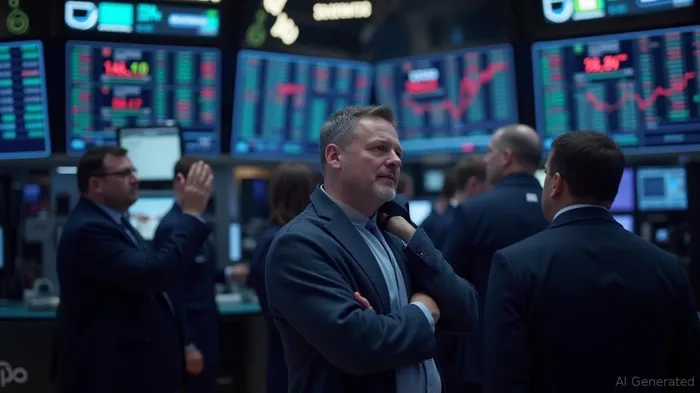
The Nasdaq 100 surged 6% in the 48 hours following the ceasefire announcement, with semiconductor and cloud infrastructure stocks leading the charge.
Sector Spotlight: Cloud Computing and Semiconductors Lead the Rally
Not all tech sectors benefit equally from reduced geopolitical risk. Companies with exposure to Middle Eastern supply chains or energy prices—such as cybersecurity firms or defense contractors—may see less direct upside. Instead, look to cloud infrastructure, artificial intelligence (AI), and semiconductor leaders, which thrive in stable, high-growth environments.
- Cloud Computing:
- Microsoft (MSFT) and Amazon (AMZN) dominate cloud infrastructure, which is critical for businesses digitizing operations. Lower energy costs and reduced geopolitical volatility create a tailwind for their enterprise software and cloud services.
Alphabet (GOOGL) and Salesforce (CRM) also stand to gain as companies reinvest in innovation rather than contingency planning.
Semiconductors:
NVIDIA (NVDA) and AMD (AMD), whose AI chips power everything from data centers to autonomous vehicles, should benefit from reduced supply chain risks. The U.S.-Iran conflict had threatened to disrupt semiconductor manufacturing in Taiwan and the Middle East, a risk now mitigated.
AI and Automation:
- Companies like Palantir (PLTR) and C3.ai (AI), which sell AI-driven solutions to enterprises, may see accelerated adoption as businesses prioritize efficiency in a post-conflict environment.
The Risks Lurking Beneath the Rally
While the ceasefire is a net positive, complacency is unwarranted. The agreement's fragility—highlighted by post-ceasefire missile launches and Iran's suspension of IAEA cooperation—means geopolitical risks could resurface. Additionally, the U.S. strike on Iran's nuclear facilities (Operation Midnight Hammer) has not yet been fully assessed for its long-term impact. If Iran's nuclear program rebounds faster than anticipated, markets could face renewed instability.
Furthermore, the Nasdaq 100's valuation remains stretched. The index trades at a 28x forward P/E ratio, near its five-year average. Investors must balance near-term momentum with long-term fundamentals.
Investment Strategy: Play the Momentum, but Stay Disciplined
For now, the Nasdaq 100's rally is justified. Here's how to position:
- Buy the Nasdaq 100 ETF (QQQ) for broad exposure to the sector's growth trajectory.
- Target high-margin tech leaders: NVIDIA, MicrosoftMSFT--, and Alphabet offer strong balance sheets and secular growth trends.
- Avoid overpaying: Use pullbacks to enter positions—especially in names like Snowflake (SNOW) or Datadog (DDOG), which have seen sharp corrections but remain core to the cloud economy.
NVIDIA's 25% YTD outperformance over Intel underscores the shift toward AI-driven innovation.
Conclusion: A Fragile Peace, but a Tech Opportunity
The Israel-Iran ceasefire is neither a permanent solution nor a guarantee of lasting stability. Yet for tech investors, it represents a meaningful reduction in one of the most acute geopolitical risks of 2025. With energy prices cooling and capital flowing back into growth sectors, the Nasdaq 100's rally is far from over. But investors must remain vigilant: the Middle East's history of volatility ensures this peace could unravel as quickly as it emerged.
For now, the trade is clear: bet on tech's winners, but keep an eye on the horizon.

Stay ahead of the market.
Get curated U.S. market news, insights and key dates delivered to your inbox.
AInvest
PRO
AInvest
PRO



Comments
No comments yet