
Israel Exports Plunge as War Shakes Trade Routes
 Aime Summary
Israel's exports fell to $4.4586 billion in March 2026, down from $5.1625 billion in the previous month. The drop highlights vulnerability to geopolitical instability, with regional conflict affecting supply chains and trade flows. Israel's export performance is closely tied to global markets and regional peace, making it a barometer for broader Middle East tensions. Geopolitical shocks are increasingly affecting oil prices and inflation, with central banks keeping a cautious stance. Investors are watching for shifts in regional diplomacy and policy responses from key players like the U.S., Europe, and Gulf nations.
Israel's March 2026 exports dropped to $4.4586 billion, the lowest level since at least February 2026's $5.1625 billion, according to data published at 19:15 local time. This decline reflects the growing impact of geopolitical tensions in the Middle East, particularly the ongoing conflict involving Iran, Israel, and U.S. interests. 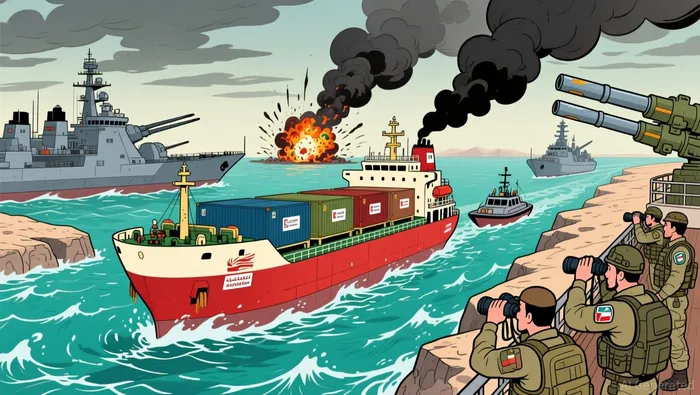 The war has disrupted global oil supply chains, raised energy prices, and introduced significant uncertainty into global markets.
What Does the Drop in Israel Exports Signal About Regional Trade?
Israel's exports are a key indicator of its economic exposure to regional stability. A sharp monthly decline like this one typically reflects either disrupted trade routes, reduced demand from key partners, or heightened uncertainty in global markets. With the U.S.-Israel alliance at odds with Iran, the region has become a focal point for geopolitical risk. This has directly affected oil production and transportation through the Strait of Hormuz, a critical global energy corridor.
The International Energy Agency has estimated a potential global oil supply reduction of 8 million barrels per day due to disruptions in the Gulf, and oil prices have already surged to $106 per barrel for Brent crude. As a result, many regional economies—especially those heavily dependent on oil—have seen inflationary pressures rise and growth forecasts revised downward . Israel, as a non-oil-exporting economy, faces different challenges. It is more exposed to trade disruptions and reduced consumer and business confidence due to the heightened risk environment.
Why Are Investors Watching Israel's Exports in a Tense Region?
Investors are closely monitoring Israel's exports as part of a broader assessment of regional economic health and trade resilience. In a time of global supply chain fragility, any significant deviation in trade data—especially in a conflict zone—can signal broader economic risks. The drop in Israel's exports may indicate reduced cross-border trade due to logistics bottlenecks, insurance861051-- costs for transport, or a decline in buyer confidence .
In addition to direct trade impacts, the conflict has also led to heightened volatility in financial markets. European bond yields have hit their highest levels since 2010, and central banks like the Federal Reserve, European Central Bank, and Bank of Japan have all expressed concern over inflation risks tied to the war . This means that Israel's exports are not just a domestic indicator but are part of a larger narrative of global economic uncertainty. Investors are also keeping an eye on how major economies like the U.S. and China manage their energy strategies amid the instability .
What Investors Should Watch Next in the Region
With the war showing no immediate signs of abating, investors should focus on a few key developments:
- Oil Price Volatility: A continuation of high oil prices could lead to further inflationary pressures, especially in the U.S. and Eurozone, where central banks have already raised interest rates.
- Policy Responses: Governments in the Gulf and beyond are implementing measures to mitigate energy price shocks, from fuel subsidies to price caps. Investors should monitor whether these policies become permanent or temporary fixes.
- Trade Route Security: The future of maritime trade in the region—especially through the Strait of Hormuz—will have a major impact on global trade. Any escalation of hostilities or disruption of shipping lanes could cause further economic shocks.
- Regional Diplomacy: Diplomatic efforts to de-escalate tensions or broker a truce could signal a return to economic stability. Alternatively, a further escalation could lead to more severe economic consequences.
For now, the fall in Israel's exports is a sign of the broader economic fragility caused by the regional conflict. While the immediate impact is on trade volumes, the longer-term implications could include shifts in trade patterns, supply chain diversification, and increased volatility in global markets. Investors should remain cautious and monitor not just Israel's data, but also broader indicators from the U.S., Europe, and Asia to assess the full scope of the conflict's economic impact.

Stay ahead of the market.
Get curated U.S. market news, insights and key dates delivered to your inbox.


AInvest
PRO
AInvest
PRO



Comments
No comments yet