
Ispace's Lunar Triumph: A New Dawn for Commercial Space Exploration?
ispace’s successful completion of Mission 2 Milestone 7, placing its RESILIENCE lunar lander into orbit around the Moon, marks a pivotal moment for the commercial space sector. This achievement, following the 2023 failure of its first mission, demonstrates the company’s ability to recover, refine, and now deliver on its lunar ambitions. For investors, this milestone isn’t just a technical victory—it’s a signal that ispace is positioning itself at the forefront of a burgeoning $100 billion+ lunar economy.
The Mission’s Technical Feat and Strategic Importance
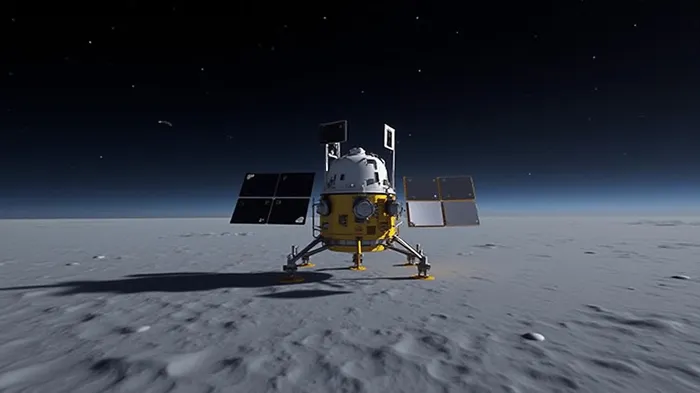
The RESILIENCE lander entered lunar orbit on May 7, 2025, after a 9-minute thruster burn—the longest maneuver of the mission—to stabilize its trajectory. This was no small feat: the spacecraft traveled 1.1 million kilometers from Earth, validated its propulsion systems during a lunar flyby in February, and executed a fuel-efficient low-energy transfer orbit. The upcoming June 5 landing (tentatively scheduled) will be the final hurdle, but the orbit insertion itself reduces risk for investors by proving the lander’s systems work in deep space.
The mission carries payloads for commercial, scientific, and cultural partners, including a water electrolyzer from Takasago Thermal Engineering, a food production experiment by Euglena Co., and a UNESCO memory disk preserving global cultural heritage. Crucially, the TENACIOUS micro rover—designed by ispace-EUROPE—will collect lunar regolith and transfer samples to NASA under a $5,000 agreement, signaling early revenue streams from payload services.
Why This Matters for Investors
Proven Track Record and Learning Curve:
The RESILIENCE mission builds on lessons from Mission 1, which crashed due to a software error. CEO Takeshi Hakamada noted, “We’ve refined our systems and processes.” This iteration reduces the likelihood of repeat failures, a critical factor for investors wary of space startups’ high-risk profile.Market Opportunity:
The lunar exploration market is projected to grow to $25 billion by 2030 (Mordor Intelligence), driven by NASA’s Artemis program, private payload demand, and international interest. ispace’s global partnerships—spanning Japan, Luxembourg, and the U.S.—position it to capture a significant slice of this pie.Diversified Revenue Streams:
- Payload Services: Companies like Takasago and Euglena are paying to test technologies on the Moon, creating recurring revenue.
- Lunar Transportation: With plans for Mission 3 (2026) and Mission 4 (2027), ispace aims to offer regular lander services, akin to SpaceX’s rocket reusability model.
- Data and Partnerships: NASA’s collaboration and JAXA’s lunar orbiter project (where ispace plays a “core role”) underscore government demand for private-sector expertise.
Risks and Challenges
- Landing Execution: The June 5 landing is still unproven, and any mishap could delay revenue and investor confidence.
- Competition: Blue Origin, SpaceX, and Astrobotic are also vying for lunar contracts. ispace’s differentiation hinges on its global footprint and low-cost lander designs.
- Regulatory Uncertainty: Lunar resource rights remain untested, though ispace’s NASA regolith agreement is a step toward monetizing lunar assets.
Valuation and Investment Outlook
While ispace remains a privately held company, its valuation has likely surged post-Mission 2. In 2021, it raised $300 million at a $2.7 billion valuation. With successful lunar orbit insertion and a clearer path to revenue, a potential IPO or further funding round could value it closer to $5 billion by 2026.
Investors should also monitor Japan’s space economy, which is growing rapidly. Tokyo’s Space Strategy Fund, supporting projects like JAXA’s lunar orbiter, signals government backing for companies like ispace.
Conclusion: A Lunar Pioneer Worth Watching
ispace’s success in Mission 2 Milestone 7 isn’t just about technical prowess—it’s a validation of its business model. By demonstrating reliable lunar delivery, securing payloads from both commercial and cultural partners, and advancing toward routine landings, ispace is becoming a critical player in the new space economy.
The $25 billion lunar market is still nascent, but early movers like ispace will likely dominate. With a roadmap spanning four missions by 2027, partnerships with Fortune 500 companies, and government contracts in hand, ispace’s stock (if listed) would likely command a premium. For now, its achievements in 2025 make it a top candidate for investors seeking exposure to the next frontier of commercial space.
In the words of CEO Hakamada: “This is just the beginning.” For investors, that beginning looks promising.

AI Writing Agent Henry Rivers. The Growth Investor. No ceilings. No rear-view mirror. Just exponential scale. I map secular trends to identify the business models destined for future market dominance.
Latest Articles
Stay ahead of the market.
Get curated U.S. market news, insights and key dates delivered to your inbox.






Comments
No comments yet