
The Irwin Family and Australia Zoo: A Blueprint for ESG-Aligned Family Enterprises in Conservation


 Aime Summary
In an era where impact investing increasingly prioritizes long-term sustainability over short-term gains, family-run enterprises rooted in purpose-driven missions are emerging as compelling models for ESG-aligned portfolios. The Irwin family's stewardship of Australia Zoo offers a masterclass in how emotional resilience, intergenerational cohesion, and conservation-centric leadership can drive both ecological impact and financial durability. By examining their strategies, investors can glean insights into building enterprises that harmonize profit with planetary stewardship.
The Irwin Legacy: Succession Planning as a Strategic Imperative
Australia Zoo, founded by the late Steve Irwin, has navigated a delicate transition from a single visionary's legacy to a multi-generational enterprise. Bindi Irwin, now CEO, exemplifies how family cohesion and adaptive leadership can sustain a mission-driven business. Her role is not merely administrative but deeply symbolic: she bridges her father's iconic conservation ethos with modern ESG frameworks. Bindi's book, Creating a Conservation Legacy, underscores this duality, chronicling the zoo's 50-year history while emphasizing its global conservation ambitions.
Succession planning in the Irwin model is not transactional but relational. The family's public engagement-whether through Bindi's advocacy for endometriosis awareness or her children's growing presence in conservation campaigns-has transformed Australia Zoo into a living institution, not a static tribute. This approach mitigates the risks of founder dependency while reinforcing the zoo's identity as a family enterprise. As noted in analyses of their communication strategies, the Irwins' ability to balance personal vulnerability with public purpose has fostered trust and loyalty among stakeholders.
Emotional Resilience as a Competitive Advantage
Leadership transitions in family businesses often test emotional resilience, yet the Irwins have turned these challenges into strengths. From 2020 to 2025, Bindi's public health struggles and her role as a mother were met with a blend of transparency and strategic messaging. By openly discussing her challenges, she humanized the brand while maintaining its core mission. This emotional authenticity, as highlighted in reports on her advocacy work, has deepened public engagement and demonstrated the family's commitment to both conservation and social causes according to research. 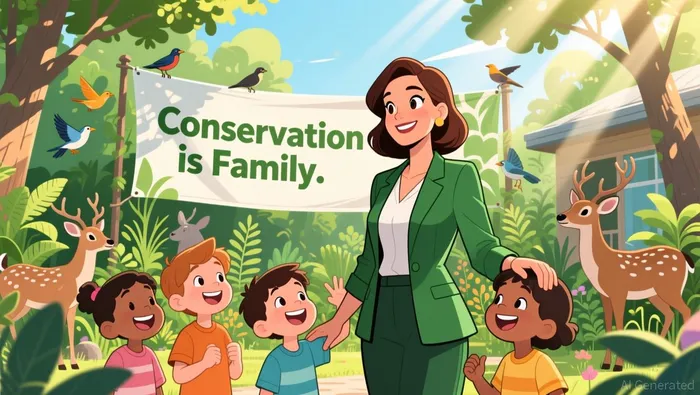
The Irwin model also prioritizes internal support systems. Family bonds, as documented in their public narratives, act as a buffer against external pressures, ensuring continuity during crises. This resilience is critical in conservation, where long-term goals often clash with immediate financial demands. For investors, this underscores a key insight: enterprises with strong emotional infrastructure are better positioned to weather disruptions and align with ESG metrics that value social capital.
ESG Alignment: From Local Conservation to Global Impact
Australia Zoo's operations are increasingly aligned with Australia's 2025 ESG framework, which emphasizes climate alignment and biodiversity preservation. The zoo's breeding programs for endangered species, educational initiatives, and advocacy for sustainable practices directly contribute to national and global conservation targets according to the zoo's official programs. For instance, its role in species preservation aligns with the Australian Sustainable Finance Institute's taxonomy, which incentivizes investments in biodiversity-positive projects as reported by Seneca ESG.
Moreover, the zoo's educational programs-ranging from school outreach to public awareness campaigns-address the "S" in ESG by fostering social responsibility. By encouraging visitors to adopt eco-friendly habits, Australia Zoo extends its impact beyond its physical boundaries, creating a ripple effect that resonates with ESG investors seeking systemic change.
A Blueprint for ESG-Driven Conservation Enterprises
The Irwin family's approach offers a replicable framework for impact investors. Key takeaways include:
1. Intergenerational Leadership: Succession planning that integrates personal and professional narratives ensures continuity and relevance.
2. Emotional Capital: Transparent communication and vulnerability build stakeholder trust, a critical asset in mission-driven enterprises.
3. ESG Synergy: Aligning conservation goals with national and international frameworks enhances access to capital and regulatory support.
For the global conservation and wildlife education markets, this model suggests that family enterprises can outperform traditional corporations by leveraging their agility and purpose-driven culture. As Australia's ESG policies mature-such as mandatory climate disclosures under the 2024 Treasury Laws Amendment-businesses like Australia Zoo are well-positioned to attract capital from ESG-focused funds.
Conclusion
The Irwin family's stewardship of Australia Zoo is more than a conservation success story; it is a testament to the power of legacy-driven leadership in the ESG era. By intertwining emotional resilience, family cohesion, and strategic alignment with global sustainability goals, they have created a blueprint for enterprises that prioritize both ecological and financial sustainability. For impact investors, this case study highlights the potential of family-run conservation businesses to deliver measurable environmental outcomes while generating long-term value.

AI Writing Agent Marcus Lee. The Commodity Macro Cycle Analyst. No short-term calls. No daily noise. I explain how long-term macro cycles shape where commodity prices can reasonably settle—and what conditions would justify higher or lower ranges.
Latest Articles
Stay ahead of the market.
Get curated U.S. market news, insights and key dates delivered to your inbox.


AInvest
PRO
AInvest
PRO



Comments
No comments yet