
New IRS Tax Deductions for Seniors: How to Maximize Your 2026 Refund
 Aime Summary
The IRS introduced a new $6,000 tax deduction for Americans aged 65 and older in the 2025 tax year.
This deduction, part of the 'One Big Beautiful Bill' and available until 2028, is designed to help seniors manage rising living costs.
The deduction is not automatic and must be claimed on a new Schedule 1-A form.
It is subject to income thresholds and phases out for higher earners.
The deduction is available for both itemized and standard deductions and can significantly reduce taxable income.
A new tax deduction is helping Americans 65 and older reduce their taxable income and potentially increase their tax refunds. The $6,000 deduction, part of the "One Big Beautiful Bill," was designed to provide financial relief to older taxpayers facing rising costs for essentials like food, medicine, and housing. This tax break is available through 2028 and requires a new form, Schedule 1-A, to claim. Many seniors may not realize it’s available, and some tax professionals warn it could be overlooked due to confusion over the process.
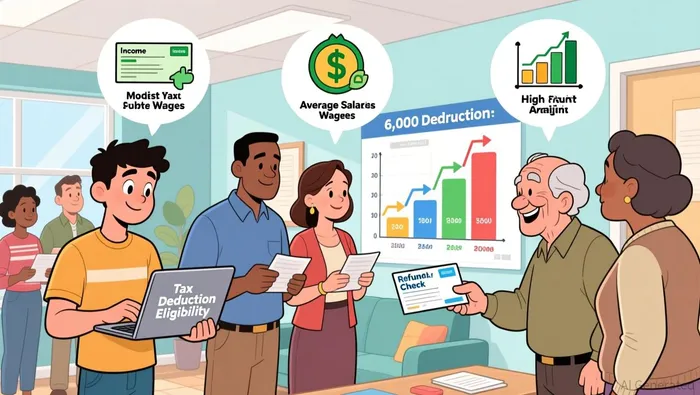
The deduction is particularly impactful for individuals who have reached the age of 65 by December 31, 2025, and meet income criteria. Single filers with a modified adjusted gross income below $75,000 qualify for the full deduction, while married couples must earn less than $175,000 to receive the full $12,000. The benefit phases out as income increases, and it is not tied to whether a taxpayer receives Social Security benefits. This means that seniors who are still working may also benefit from the deduction.
Why Is the New IRS Tax Deduction for Seniors Available in 2026?
The new deduction is part of broader changes in the tax code introduced in 2025. These changes, which include adjustments to the standard deduction and the SALT (State and Local Tax) itemized deduction, are intended to provide relief to a range of taxpayers. For seniors, the $6,000 deduction is a temporary relief measure designed to address financial pressures caused by rising living costs. The IRS began accepting 2025 tax returns in January 2026, and the deduction is already being processed by the system. However, because it must be claimed manually, many seniors could miss out if they are not aware of the requirements or if their tax software does not include the new form.
This deduction is separate from the standard deduction increase for seniors, which is $2,000 for single filers and $1,600 for each spouse in a married couple. Combined, these deductions can significantly reduce the taxable income of eligible seniors. For example, a single filer aged 65 or older could deduct up to $23,750 in income in 2025, while a married couple could deduct up to $46,700. Tax professionals recommend that seniors who are eligible review their tax software or consult a preparer to ensure they don’t miss out on this additional benefit.
What You Need to Know About the New IRS Tax Deduction for Seniors in 2026
The new tax deduction for seniors requires filing a new Schedule 1-A form, which is not automatically applied. This means that taxpayers must take the initiative to claim the deduction when filing their tax return. Some seniors may not realize the deduction is available or may not know how to claim it, especially if they use basic tax software or file on their own without professional help. Tax professionals recommend that eligible seniors review the requirements carefully and consider using updated tax software to streamline the process.
The deduction is also subject to income limits and phases out for higher earners. For example, a single filer who earns more than $175,000 or a married couple earning more than $250,000 will not qualify for the full $6,000 deduction. Additionally, the deduction is not available for individuals who are not 65 or older by December 31, 2025. This means that people who turn 65 in early 2026 will not be eligible for the 2025 tax year and will have to wait until 2026 to benefit.
The new tax deduction is one of several changes that could impact the 2026 tax season. Analysts suggest that larger refunds could temporarily boost consumer spending, particularly among lower- and middle-income seniors. However, it’s unclear whether this will have a significant impact on the overall economy or inflation. In the short term, the most immediate effect is likely to be a noticeable increase in refunds for eligible seniors, which could help offset rising costs of living. Still, the long-term impact of the deduction will depend on how many seniors claim it and how much they choose to use the savings.
As the 2026 tax season begins, the IRS is encouraging taxpayers to file early to take advantage of new deductions and benefits. The IRS has also updated its systems to accommodate the new form requirements, and many tax software providers are incorporating the changes into their platforms. For seniors who are unsure whether they qualify or how to claim the deduction, the best course of action is to consult a tax professional or use updated tax software that includes the necessary forms and guidance.
For those who do not qualify for the deduction, it’s important to understand that it is temporary and only available until 2028. The IRS may consider extending the benefit in the future, but for now, it is a time-limited opportunity. As such, eligible seniors should take advantage of it while it’s available to maximize their financial relief during the 2025 tax year. The deduction is a valuable tool for reducing taxable income and potentially increasing refunds, but it requires action to claim.

Stay ahead of the market.
Get curated U.S. market news, insights and key dates delivered to your inbox.


AInvest
PRO
AInvest
PRO



Comments
No comments yet