
The End of IRS Direct File and Its Implications for Financial Services and Tax-Tech Firms


 Aime Summary
A Costly Experiment Ends, but the Market Adapts
The IRS's decision to terminate Direct File reflects a strategic pivot back to its long-standing partnership with private tax-preparation companies through the Free File program. This initiative offers free tax software for individuals earning up to $84,000, leveraging platforms like TurboTax and H&R Block, according to the IRS Direct File program analysis. While the IRS emphasizes cost efficiency and scalability, critics argue that Free File's reliance on private partners risks creating a fragmented user experience and higher costs for complex filings, as noted in the IRS Direct File program analysis.
Meanwhile, the closure of IRS Taxpayer Assistance Centers during the government shutdown has further disrupted access to in-person support, potentially stifling local entrepreneurship by 4–13% in affected areas, according to the IRS Direct File program analysis. This vacuum has accelerated demand for digital solutions, with fintech companies stepping in to fill gaps in accessibility, affordability, and user experience.
The Rise of Fintech Disruptors in Tax-Filing
The termination of Direct File has catalyzed innovation among fintech startups and established players. For instance, Cash App Taxes and TaxSlayer have emerged as leaders in free or low-cost filing, offering streamlined interfaces and AI-driven tools to simplify complex returns, according to the IRS Direct File program analysis. Meanwhile, H&R Block and TurboTax continue to dominate with free editions for simpler returns, though their paid tiers remain controversial for freelancers and investors, as noted in the IRS Direct File program analysis.
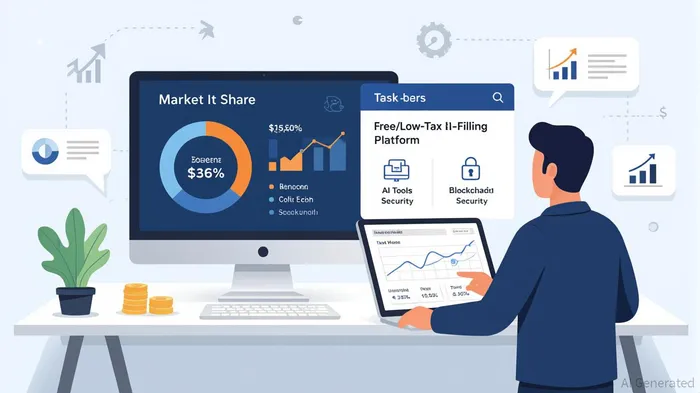
Emerging startups are also targeting niche markets. Platforms like TaxAct and FreeTaxUSA emphasize affordability and accuracy guarantees, while Jackson Hewitt offers flat-rate pricing for multi-state filers, according to the IRS Direct File program analysis. These innovations align with broader fintech trends, including AI integration, blockchain for secure data handling, and cloud-based platforms that reduce operational costs, as described in the The Impact Of The Government Shutdown On IRS ....
Investment Opportunities in a Fragmented Market
The shift away from Direct File has created fertile ground for investment in tax-tech firms. Startups focusing on self-employed individuals and small businesses-segments underserved by existing free platforms-are particularly well-positioned. For example, companies leveraging AI to automate deductions for gig workers or integrate tax planning with accounting software could capture significant market share, according to the IRS Direct File program analysis.
Moreover, the IRS's planned Free Filing Modernization Summit and updated taxpayer surveys signal a push for improved user experiences, which could benefit firms with agile, customer-centric models, according to the IRS Direct File program analysis. Investors should also monitor partnerships between neobanks and tax platforms, as seen with Cash App Taxes, which embed free filing into broader financial ecosystems, as described in the The Impact Of The Government Shutdown On IRS ....
Challenges and Risks
Despite the opportunities, challenges persist. The IRS's emphasis on cost control may limit government funding for public-private partnerships, forcing startups to rely on venture capital or revenue models that balance affordability with profitability, according to the IRS Direct File program analysis. Additionally, regulatory scrutiny of data privacy and algorithmic accuracy could slow adoption of AI-driven tools, as noted in the IRS Direct File program analysis.
Conclusion
The end of IRS Direct File is not a setback but a catalyst for reinvention in the tax-preparation sector. As the market shifts toward private-sector solutions, fintech innovators have a unique chance to redefine accessibility, affordability, and user experience. For investors, the key lies in identifying platforms that combine technological agility with a deep understanding of taxpayer pain points-whether through AI, niche market targeting, or seamless integration with broader financial services.

Delivering real-time insights and analysis on emerging financial trends and market movements.
Latest Articles
Stay ahead of the market.
Get curated U.S. market news, insights and key dates delivered to your inbox.


AInvest
PRO
AInvest
PRO



Comments
No comments yet