
The IRS 2025 Stimulus Payments: Implications for Financial Markets and Tax-Related Consumer Spending


 Aime Summary
Feasibility and Fiscal Challenges
The Trump administration's plan hinges on a critical assumption: that tariff revenue will remain robust enough to fund both the stimulus and debt reduction. Yet, as noted by budget experts, . Treasury Secretary has further cast doubt on the plan, stating he was not consulted on its design and suggesting tax cuts might replace direct payments. This uncertainty underscores the political and fiscal risks of the proposal, which could face legislative roadblocks or legal challenges from the Supreme Court, which has questioned the administration's use of emergency powers to justify tariffs.
Historical Precedents: Stimulus and Market Behavior
Past offer insights into potential market dynamics. During the 2020-2021 pandemic, direct payments accelerated shifts in consumer behavior, particularly in retail and technology sectors. Best Buy, for instance, stimulus-driven demand shifted toward online shopping. Similarly, Ford's resilience during the same period-marked by a Q4 2021 Non-GAAP EPS of $0.34-highlighted how stimulus-induced confidence can bolster corporate performance, especially in industries tied to durable goods.
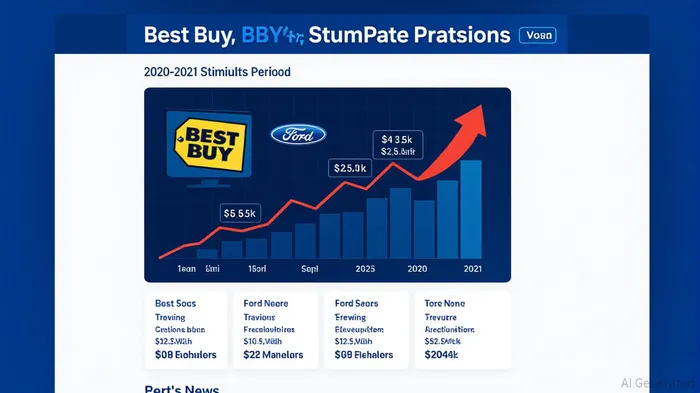
These examples illustrate how stimulus can drive sector-specific gains. A 2025 plan, if implemented, might similarly benefit retailers, automakers, and technology firms by boosting disposable income and consumer spending. However, , particularly in inflation-sensitive categories like housing and travel.
Market Implications: Asset Classes and Investor Behavior
The proposed stimulus could create divergent impacts across . Equities, particularly in consumer discretionary and industrial sectors, may see short-term gains if the plan boosts retail sales and manufacturing demand. Conversely, bonds could face downward pressure as higher consumer spending risks inflationary spikes, prompting the Federal Reserve to maintain or raise interest rates. Commodities, including energy and metals, might also rise if the stimulus spurs infrastructure or manufacturing activity.
Retail investors, meanwhile, may adopt a cautious approach. While the prospect of increased consumer spending could drive optimism in growth stocks, the uncertainty surrounding the plan's feasibility may lead to , with allocations to defensive sectors like utilities or healthcare. Additionally, the focus on tariff-funded stimulus could reignite debates over , influencing currency markets and multinational corporations' earnings.
Strategic Considerations for Investors
Given the ambiguity surrounding the 2025 plan, investors should prioritize flexibility. A "wait-and-see" strategy, with a focus on high-quality, in resilient sectors, could mitigate risks. For example, companies with strong cash flow-like Ford during the 2021 recovery-may outperform in a stimulus-driven environment. Conversely, overexposure to sectors reliant on stable tariff policies (e.g., import-dependent manufacturers) could pose risks if legal challenges disrupt trade flows.
Conclusion
While 's 2025 stimulus proposal remains unimplemented, its potential to reshape consumer behavior and market dynamics cannot be ignored. Historical precedents suggest that direct payments can catalyze sector-specific growth, but the feasibility of a tariff-funded plan hinges on unresolved fiscal and legal questions. For now, investors must balance optimism about near-term consumer spending with caution regarding the plan's uncertain trajectory.

Delivering real-time insights and analysis on emerging financial trends and market movements.
Latest Articles
Stay ahead of the market.
Get curated U.S. market news, insights and key dates delivered to your inbox.


AInvest
PRO
AInvest
PRO



Comments
No comments yet