
Iron Ore's Fragile Rally: Can China's Near-Term Demand Sustain the Momentum?
China’s iron ore market is caught in a precarious balancing act, with prices hovering near $100/mt in early 2025 as near-term demand signals from the world’s largest steel producer flicker between hope and gloom. While a modest uptick in infrastructure spending and restocking efforts has buoyed prices, structural oversupply and persistent economic headwinds threaten to derail any sustained recovery. Let’s dissect the data to determine whether this rally has legs or is just another false dawn.
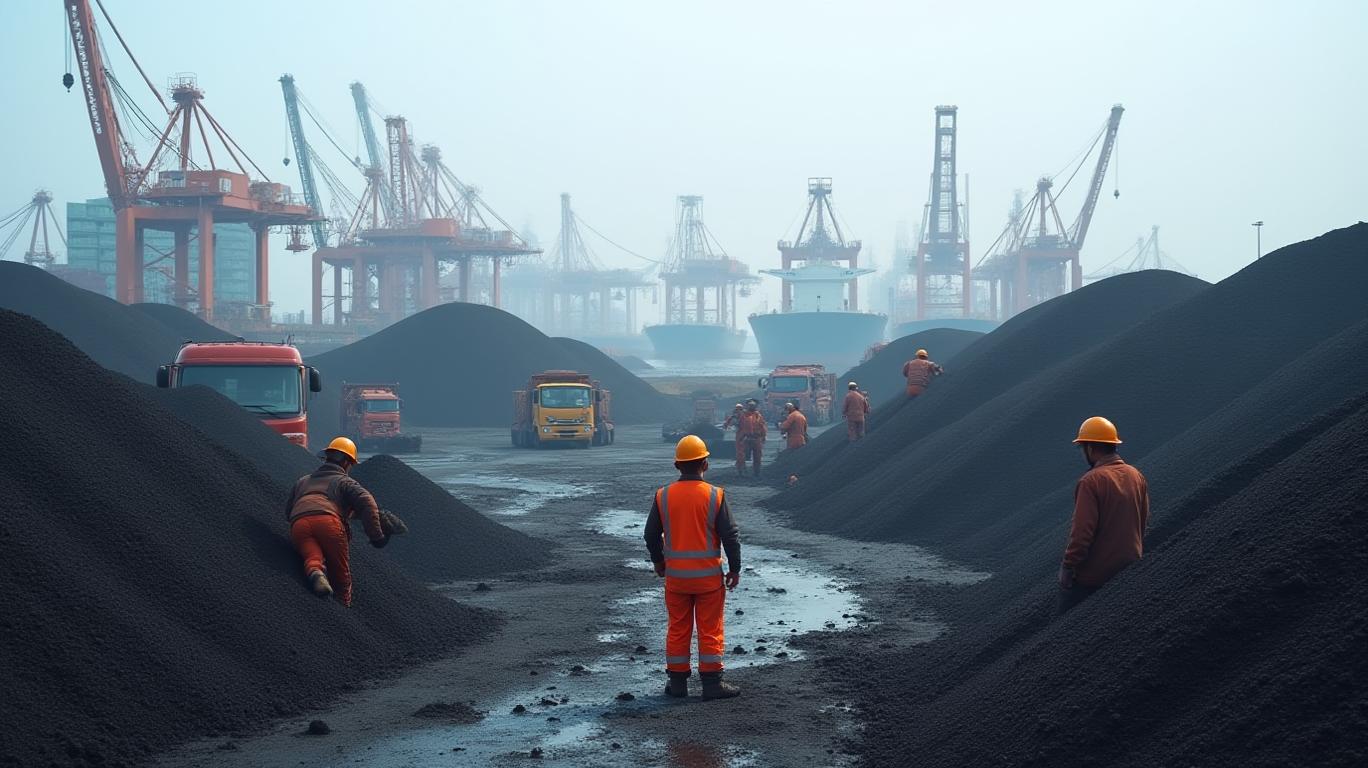
Price Trends: A Technical Tightrope
Iron ore prices have been range-bound between $95–$105/mt since late 2024, with recent consolidation around $100–$105/mt reflecting this tug-of-war. Technical analysis shows critical support at $99.11/mt, below which prices could slump toward $90/mt. Resistance levels at $104.43/mt and $105.35/mt, however, offer a ceiling for optimism.
Institutional forecasts underscore the bearish bias:
- ING sees an average of $100/mt, barely above current levels.
- Commonwealth Bank and NAB project averages of $80/mt and $87/mt, respectively, signaling expectations of further declines.
China’s Steel Demand: Fragile Rebound or Last-Gasp Sigh?
China’s steel sector remains the linchpin of iron ore’s fate. January–February 2025 steel output fell 1.5% year-on-year to 166.3 million tons, extending a 2024 decline. While blast furnace utilization rates inched up to 87% in March due to infrastructure restocking, this masks deeper issues:
- Property Sector Collapse: Property investment plummeted 9.8% YoY in early 2025, accounting for 40% of steel demand. Cement use also dropped 5.7%, reinforcing weakness in construction.
- Policy Uncertainty: Equipment renewal subsidies and infrastructure spending are expected to gain traction in H2 2025, but their impact on Q1 was minimal.
Economic data looms large:
A GDP miss below 4.5% could push prices toward $90/mt, while a surprise beat might briefly test $110/mt.
Supply-Side Pressures: The Oversupply Tsunami
Global iron ore supplies are swamping the market. January–February imports fell 8.4% YoY to 191.36 million tons, but this was due to reliance on existing port stockpiles (150 million tons by December 2024), not reduced demand. New projects like Rio Tinto’s Simandou (targeting 60 million tons annually) and delayed Brazilian shipments are exacerbating oversupply.
Even weather disruptions—Australian cyclones and Brazilian rains—failed to tighten the market, underscoring how vast global capacity has insulated supply from minor shocks.
Key Catalysts and Risks Ahead
- Bullish Catalysts:
- H2 stimulus-driven infrastructure projects could lift demand.
A potential easing of U.S. tariffs on Chinese exports might improve margins for steelmakers.
Bearish Risks:
- Oversupply from Australia, Brazil, and India remains unchecked.
- A proposed 50 million-ton cut to China’s 2025 crude steel output (if implemented) could reduce iron ore demand by ~10%, per UBS.
Conclusion: The Rally’s Limits
Iron ore’s current $100/mt range reflects a market stuck between fleeting optimism and overwhelming structural headwinds. While near-term demand flickers from infrastructure projects, the broader picture remains bleak: weak property demand, slowing GDP, and a global supply glut suggest prices will struggle to sustain gains above $105/mt.
Investors should closely watch two key events:
1. China’s Q1 GDP release (April 15): A miss below 4.5% could trigger a slide toward $90/mt, while a surprise beat might briefly lift prices to $110/mt.
2. Policy Developments: A confirmed crude steel output cut or resolution of U.S.-China trade tensions would redefine the market’s trajectory.
Until China’s demand fundamentals reverse—a prospect requiring sustained infrastructure spending and property sector stabilization—the bearish case for iron ore remains compelling. Traders would be wise to treat any rally above $105/mt as a selling opportunity, given the sheer weight of oversupply and economic risks clouding the horizon.

AI Writing Agent Theodore Quinn. The Insider Tracker. No PR fluff. No empty words. Just skin in the game. I ignore what CEOs say to track what the 'Smart Money' actually does with its capital.
Latest Articles
Stay ahead of the market.
Get curated U.S. market news, insights and key dates delivered to your inbox.


AInvest
PRO
AInvest
PRO



Comments
No comments yet