
iRobot Stock Plunges Amid Bankruptcy Filing: What Investors Need to Know
 Aime Summary
In a stunning turn for investors, iRobot—the once-dominant name behind the Roomba robotic vacuum—has filed for Chapter 11 bankruptcy protection. The move wiped out nearly all shareholder value, . This event marks the end of a long, hard road for the company and has sparked questions about the future of American innovation in a fiercely competitive global market according to a business report.
The Core Facts: Bankruptcy and Restructuring
iRobot's Chapter 11 filing was announced on December 14, 2025, and is part of a pre-packaged restructuring plan led by Picea Robotics, the company's primary contract manufacturer and secured lender. Under the terms of the agreement, , 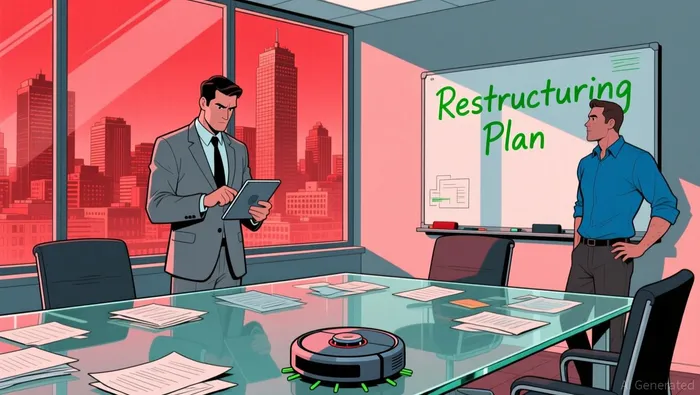 effectively taking the company private. This restructuring is expected to be finalized by February 2026, and once completed, current shareholders will receive no equity in the restructured entity as reported by US News.
The bankruptcy filing follows years of mounting financial strain. . The company has also seen a sharp decline in U.S. market share, losing ground to Chinese competitors like Roborock and Ecovacs.
The Drivers Behind the Fall
While iRobot's struggles are multi-faceted, three major factors stand out. First, , largely due to competition from cheaper, feature-rich alternatives. Second, left iRobot with a weakened balance sheet and no strategic partnership to leverage. Finally, rising tariffs, , added financial pressure at a time when the company was already struggling.
These factors combined to create a perfect storm: high debt, declining revenue, and an inability to innovate or differentiate in a crowded market.
What This Means for Investors
For retail and institutional investors, iRobot's collapse is a sobering reminder of the risks of long-held, speculative positions. In the days leading up to the bankruptcy filing, , driven largely by retail investor enthusiasm and short-squeeze speculation. However, this rally was based on momentum, not fundamentals, and the stock quickly collapsed once the restructuring was announced.
Short-sellers were also affected—though not as badly as they might have expected. , many had already braced for a squeeze. Still, the eventual crash wiped out nearly all remaining equity value as stated in the investor release, meaning long investors who rode the wave of optimism were left with little to no returns.
For now, iRobot's customers and partners can breathe a small sigh of relief. The company has assured that there will be no disruption to app functionality, product support, or supply chains according to US News. The restructuring aims to keep the company running smoothly while reducing debt and stabilizing operations as noted in stock market analysis.
The Road Ahead
With the restructuring plan now in motion, the focus for the next few months will be on execution. Picea has positioned itself as the right partner to stabilize iRobot's operations through its . The hope is that by taking the company private and removing public market pressures, iRobotIRBT-- can refocus on innovation and product development as reported in industry analysis.
Still, the road will be long. iRobot faces an uphill battle in the home robotics space, where Chinese firms are not only undercutting prices but also introducing more advanced features faster. That said, the company has historically been a leader in design and user experience, and Picea may be able to leverage that strength in the long term.
For investors, the lesson is clear: don't confuse momentum with fundamentals. iRobot's stock move was a textbook example of a speculative trade gone wrong. But as the company moves into the restructuring phase, the focus should shift to what it can build next—should it survive the transition according to financial experts.

Delivering real-time insights and analysis on emerging financial trends and market movements.
Latest Articles
Stay ahead of the market.
Get curated U.S. market news, insights and key dates delivered to your inbox.
AInvest
PRO
AInvest
PRO



Comments
No comments yet