
iRobot's Roomba Line Faces Major Shifts in 2025 — What Recent Data Means for Investors


 Aime Summary
iRobot, the maker of the iconic Roomba robot vacuum, is at a turning point in 2025. After years of strong sales and product innovation, the company is now navigating a complicated financial landscape that includes bankruptcy filings, restructuring efforts, and a potential return to the private sector. For investors, this means closely watching not just the company’s performance, but also the broader market for robotic consumer products and smart home integration. Understanding the context around iRobot’s business model, recent moves, and market potential is key to evaluating its future prospects.
iRobot's Business and Market Positioning
iRobot has long been a pioneer in the home robotics space. Its Roomba line has sold over 30 million units globally by 2024, 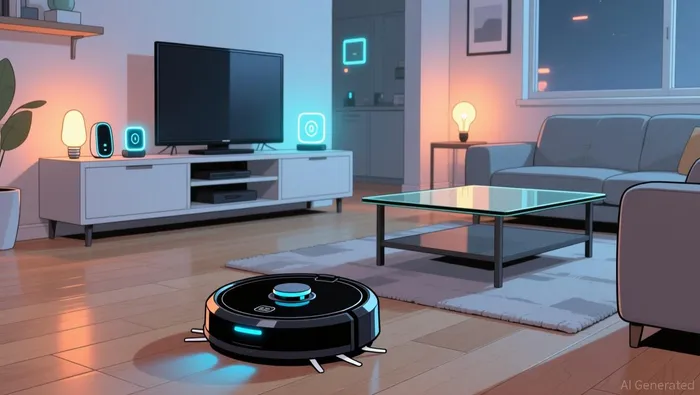 helping to normalize the idea of autonomous cleaning devices in households. The company's success was driven in part by its acquisition by Amazon in 2022, which gave it access to Amazon's vast e-commerce ecosystem and smart home integration with Alexa and Google Assistant.
The company's business model relies on strong partnerships with component suppliers and contract manufacturers, particularly Picea, which also became its secured lender and primary contract manufacturer after the Amazon acquisition. These relationships have allowed iRobotIRBT-- to maintain stable unit economics while expanding its product line into new areas, like Moxie, a robot designed to assist children with autism using AI.
Recent Financial and Strategic Developments
The financial landscape has turned more challenging for iRobot in 2025. In one of the most surprising developments, the company recently filed for bankruptcy and announced a pre-packaged Chapter 11 restructuring under Picea. This move will convert it into a private entity by February 2026, removing its stock from the Nasdaq and eliminating shareholder equity.
Despite these challenges, iRobot is still investing in innovation. In Q3 2025, the company spent $13.77 million on R&D, and it holds a strong IP portfolio with 1,657 global patents. However, its cash reserves have dropped significantly—from $40.6 million in Q2 2025 to just $24.8 million by Q3 2025—while it owes $90.9 million past due to Picea.
Meanwhile, the company's third-quarter revenue surged to $155.1 million in 2025, a 752% increase compared to earlier periods. This has sparked a resurgence in investor interest, although it remains to be seen whether this momentum will continue in the face of its restructuring.
What This Means for Retail Investors
For retail investors, the situation with iRobot is complex. On one hand, the company has shown resilience, with a strong R&D pipeline and a significant IP portfolio that could attract strategic buyers or private investors. On the other, the restructuring process will remove the stock from public markets, meaning current shareholders will lose their equity and any future gains will depend on a private restructuring or buyout.
The broader market for robotic vacuums also remains promising. The global market was valued at $5.575 billion in 2024 and is forecast to reach $9.983 billion by 2031, growing at a CAGR of 8.6%. This is driven by trends like AI integration and smart home compatibility—areas where iRobot has been a leader.
Still, the company must contend with competition from new entrants and mid-range products that challenge its dominance in performance and price. Moreover, its current financial situation raises questions about its long-term viability without a major strategic shift or injection of capital.
The Road Ahead: Challenges and Opportunities
Looking forward, iRobot faces two key challenges: restructuring its debt and maintaining innovation in a competitive market. Its restructuring plan, led by Picea, may provide short-term stability, but it also limits public scrutiny and market confidence. The company will need to execute its R&D pipeline effectively and potentially attract new investors or buyers who see value in its IP and market position.
At the same time, the broader industry trend toward smart home integration and AI-powered home devices could offer new opportunities for iRobot. If it can reposition itself in the private space with a stronger financial foundation and a clear innovation strategy, it may still find a path to renewed success.
For investors, the key takeaway is to remain cautious but not dismissive. iRobot's Roomba brand remains a household name, and its expertise in robotics and home automation hasn't disappeared overnight. But the next few months will be critical in determining whether the company can rebuild its position and stay relevant in a rapidly evolving market.

Delivering real-time insights and analysis on emerging financial trends and market movements.
Latest Articles
Stay ahead of the market.
Get curated U.S. market news, insights and key dates delivered to your inbox.
AInvest
PRO
AInvest
PRO



Comments
No comments yet