
iRobot Files for Bankruptcy and Goes Private — What Recent Data Means for Investors


 Aime Summary
Just over a week into December 2025, iRobotIRBT-- made a major move that caught the attention of both retail investors and industry watchers: the company filed for Chapter 11 bankruptcy and announced a restructuring agreement that will see it go private. This wasn't a surprise. For years, the once-dominant brand behind the Roomba robotic vacuum has struggled with declining sales, production delays, and stiff competition from Chinese rivals. Now, with Picea Robotics stepping in to take full control, the question is: What does this mean for the company, its products, and its investors?
[^
## Core facts: What the restructuring agreement with Picea entails
iRobot's move follows a so-called "pre-packaged" Chapter 11 bankruptcy — a process where the restructuring terms are already negotiated before the filing. In this case, Shenzhen-based Picea Robotics, which is also iRobot's secured lender and contract manufacturer, will acquire 100% of the company's equity. Current common stockholders will see their shares canceled, and iRobot will be delisted from NASDAQ and become a wholly owned private company by February 2026. The goal is to streamline operations, reduce debt, and maintain the Roomba brand's presence in the market 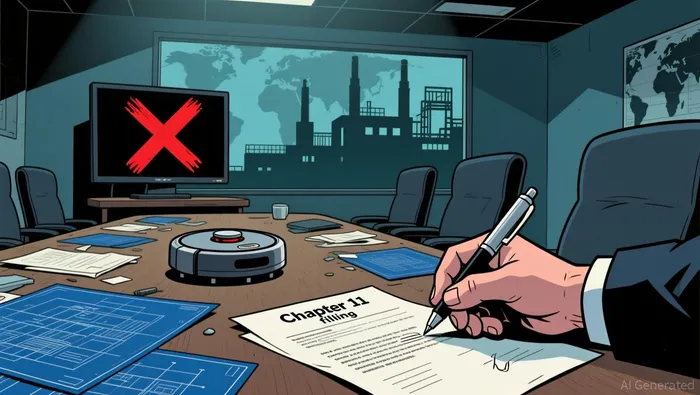 according to the company's announcement.
Importantly, the restructuring plan allows iRobot to continue its operations without disruption, including the development and shipment of its popular Roomba devices. Picea's involvement — both as a financier and a manufacturer — makes it a natural fit for the buyout, suggesting a smoother transition than a traditional bankruptcy. Still, the outcome for current investors is not optimistic: they won't see any recovery from their shares, and the company's future will be decided behind closed doors as reported by MEXC.
Key financial drivers: Why iRobot's revenue and stock were in decline
The path to bankruptcy was years in the making. iRobot's Q3 2025 revenue fell to $145.8 million, a 33% drop from the same period in 2024. That's a significant decline for a company that once commanded a dominant share of the robotic home appliance market. Factors contributing to the financial downturn include supply chain bottlenecks, delayed production cycles, and mounting competition from Chinese rivals like Roborock and ECOVACS, which have offered more competitive pricing and faster innovation according to financial analysis.
. Instead, it left iRobot exposed to rising costs and thinning margins. Meanwhile, U.S. tariffs and other trade policies have made it harder for the company to maintain its cost advantage, further squeezing its profit margins as noted in market analysis.
What this means for investors and the robot vacuum market
For investors who still hold iRobot stock, the news is bleak. , and with existing common stock set to be wiped out, there's little upside left for those who bought into the brand when it was riding high. That said, the restructuring could bring stability to iRobot's operations, allowing it to focus on product development and global expansion without the pressures of quarterly earnings reports according to financial news.
From a market perspective, the deal raises questions about the future of the robotic vacuum space. iRobot once set the standard for autonomous cleaning devices, but over the past few years, its position has been eroded. Will Picea's ownership help iRobot regain its edge? Or will it serve as a bridge to more aggressive cost-cutting and product rationalization? The answer likely depends on how quickly the company can innovate in a market that's now dominated by fast-moving Asian players as observed in industry reports.
Looking ahead: Is iRobot's future as a private company promising or risky?
The next few months will be crucial for iRobot's path forward. With Picea in the driver's seat, the company can refocus on long-term strategy without the distractions of public market expectations. That could mean more investment in R&D, better integration of AI-powered navigation, or even partnerships with U.S. and international retailers to regain shelf space.
Still, the risks remain high. The robotic vacuum market is now more competitive than ever, with a growing number of players offering smart, connected devices at lower price points. If iRobot can't match the innovation and pricing of its rivals, the Roomba brand may not be able to reclaim its former glory — even under new ownership.
What's clear is that iRobot's future is in the hands of Picea and its team. Whether this change leads to a comeback or a slow fade will depend on the execution of the new strategy — and whether the Roomba can still find a place in the smart home of 2026 and beyond.

Delivering real-time insights and analysis on emerging financial trends and market movements.
Latest Articles
Stay ahead of the market.
Get curated U.S. market news, insights and key dates delivered to your inbox.




Comments
No comments yet