
iRobot Files for Bankruptcy: What This Means for Investors and the Robotics Market


 Aime Summary
Robotics Giant iRobotIRBT-- — Best Known for Its Roomba Line of Robotic Vacuums — Is Undergoing a Major Transformation
On December 14, 2025, the company filed for Chapter 11 bankruptcy as part of a pre-packaged restructuring deal with Shenzhen-based PICEA Robotics. This move signals a strategic shift aimed at stabilizing the business and reducing its debt load. The filing has sent shockwaves through the market and raised urgent questions for investors: What does this mean for iRobot's future, and how will it affect the competitive landscape in home robotics?
What's Happening with iRobot in 2025?
For years, iRobot has struggled with declining revenues and rising costs. The company previously sought a lifeline through a failed acquisition attempt by Amazon in 2022. With mounting debt and cash reserves dwindling to just $24.8 million by Q3 2025, the company faced a bleak outlook. The Chapter 11 filing is not a failure, but rather a calculated effort to restructure the business and continue operations under a new ownership structure.
Key Details of the Chapter 11 Restructuring
Under the restructuring plan, Shenzhen PICEA Robotics will acquire 100% of iRobot's equity. This move effectively takes the company private, removing it from the Nasdaq and eliminating equity for current shareholders. The transaction will be executed through a court-supervised Chapter 11 process and is expected to close by February 2026 according to official sources. Once completed, the company will be free of its debt burden and can focus on long-term innovation and product development.
Why iRobot Is Restructuring, and What Comes Next
The restructuring is necessary to give iRobot the financial breathing room it needs to compete. Despite these challenges, the company still holds 1,657 global patents and maintains a strong market position in the robotic vacuum industry according to recent reports. 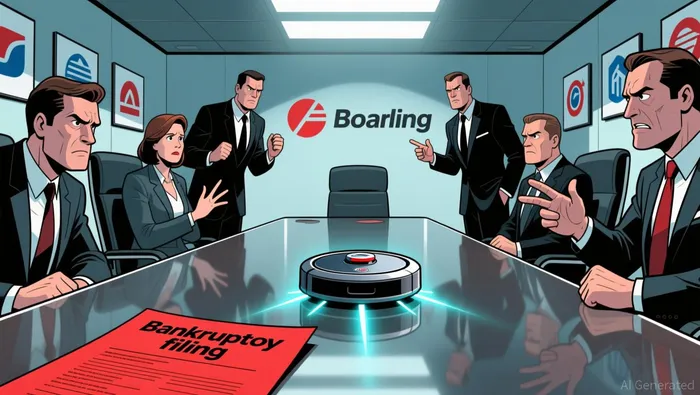 The goal is to preserve its core operations, including the Roomba brand, while positioning it for future growth in a more competitive, global robotics market. Picea's involvement suggests that iRobot's technology and brand may have a strong partner in this new chapter.
What This Means for Investors and the Market
The news has been a mixed bag for shareholders. On the one hand, the restructuring plan offers a path forward for the business. On the other, current shareholders will see their equity wiped out, as common stock will no longer hold any value under the new ownership structure according to financial analysis. That said, the stock has seen a surge in recent trading days — jumping 72% in four days — largely driven by retail investor speculation and short-covering activity rather than any fundamental business news according to market observers. This rally has led to comparisons with past meme stock phenomena, like GameStop in 2021.
Shareholder Implications and Stock Volatility
With 40% short interest in the stock and a limited number of days for short sellers to cover positions, a short squeeze appears to be playing out. Retail traders are betting on further gains, but the long-term outlook for shareholders remains bleak. Once the restructuring is finalized and the company is delisted, there will be no equity value for existing shareholders. The market is watching closely to see how this plays out and whether iRobot can regain its footing under private ownership.
Broader Trends in the Robotics and AI Space
iRobot's restructuring is part of a larger trend in the tech and robotics sectors. As artificial intelligence and automation continue to reshape industries, companies are increasingly turning to strategic overhauls to remain competitive. For example, Adobe is aggressively expanding its AI offerings through its $1.9 billion acquisition of Semrush, while the AI chip market is projected to grow to $565 billion by 2032 according to industry forecasts. In this context, iRobot's move could signal a shift toward more private, focused R&D and innovation in the home robotics space.
Looking Ahead: A Private iRobot in a Competitive Landscape
With its stock set to be delisted and its future now in the hands of a new owner, the next few months will be critical for iRobot. If the restructuring is approved and completed by February 2026, the company will begin a new phase — one that is less visible to public markets but potentially more agile in a competitive global landscape. The long-term success of the Roomba brand will depend on how well PICEA Robotics can integrate iRobot's technology and scale its operations.
Meanwhile, the broader market is showing signs of resilience. The Nasdaq and S&P 500 have both gained ground in Q4 2025, driven in part by the AI sector according to market analysis. While iRobot may be taking a step back from public ownership, the robotics and AI industries are continuing to evolve. For investors, the key takeaway is clear: restructuring is not the end of a company's story — it may be the beginning of a new chapter.

Delivering real-time insights and analysis on emerging financial trends and market movements.
Latest Articles
Stay ahead of the market.
Get curated U.S. market news, insights and key dates delivered to your inbox.
AInvest
PRO
AInvest
PRO



Comments
No comments yet