
iRobot Files for Bankruptcy: What Recent Developments Mean for Investors


 Aime Summary
The Fall of a Market Pioneer
iRobot, best known for its Roomba vacuum robots, was a pioneer in the consumer robotics space. Its early success in the early 2000s turned the Roomba into a household name. But over the last few years, the company struggled to keep up with the rapid pace of innovation and competition. By Q3 2025, , . sales plummeting 33%. , combined with stiff competition from lower-cost Asian rivals and product stagnation, weakened the company's market position. Even a short-term lifeline from The Carlyle Group couldn't reverse the trend. , setting the stage for its eventual restructuring plan.
A Restructuring for Survival
In what has become known as a "pre-packaged" bankruptcy filing, iRobotIRBT-- moved quickly to cut through the legal red tape. On December 14, 2025, it announced a with Picea Robotics — its main lender and contract manufacturer — under which Picea will acquire all of iRobot's equity interests in exchange for taking the company private. 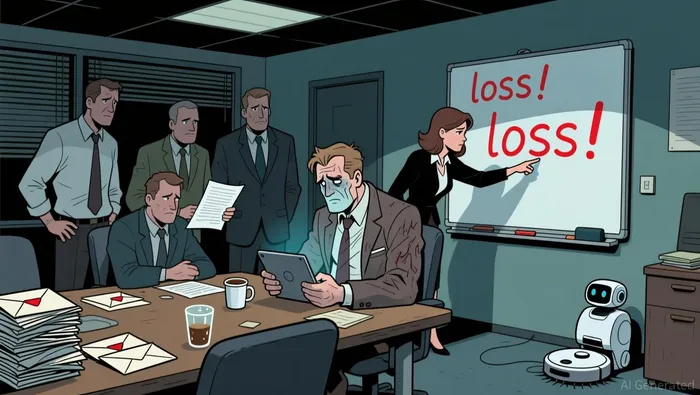 The deal is expected to be finalized by February 2026, and once it is, iRobot's shares will be delisted from NASDAQ. Current shareholders will see their common stock wiped out in the process, and the company will be restructured with a cleaner balance sheet and no debt burden.
Importantly, the restructuring isn't a liquidation. The company plans to continue operations during the process, with no disruption to customer programs, global partners, or product support. That means Roomba owners and other iRobot customers can rest assured that the brand won't vanish overnight. The company also , which could be valuable assets for future product development — even if the public ownership era is ending.
The Bigger Picture — A Market Still on the Rise
While iRobot's troubles are a wake-up call, the robotic home market itself is still on an upward trajectory. According to recent projections, , reaching $71.26 billion by 2034. That's driven by advancements in AI, cost reductions in manufacturing, and the development of multifunctional robots that can handle more complex tasks like mopping, cleaning windows, and even monitoring home security. The key difference now is that iRobot no longer holds a dominant position. Chinese companies, in particular, have been gaining ground with aggressive pricing and fast innovation cycles. Meanwhile, U.S. companies are rethinking their strategies — sometimes through partnerships or acquisitions — to stay competitive.
What This Means for Investors
For investors, the bottom line is that iRobot's stock is now effectively a write-off. Its shares are likely to trade at negligible levels until the restructuring is complete, and once Picea takes full control, the stock will no longer be listed. That said, the deal isn't entirely bad for the market. A restructured iRobot could allow the company to focus on long-term innovation without the pressure of short-term earnings. And if Picea plans to use the brand and technology to expand into other markets — like commercial robotics or international distribution — that could still offer upside in the long run, just not for public shareholders.
More broadly, the iRobot situation highlights a key trend: even leading brands must adapt to the speed of technological change and global competition. For investors, that means being careful about overestimating the staying power of any one company — especially in fast-moving sectors like consumer tech. It also means keeping an eye on the broader industry. While iRobot may be struggling, the robotic home market is still in its early stages, and new players or new strategies could still take off.
Looking Ahead
The iRobot story is a cautionary tale — but it's also a signal that the robotics space is evolving rapidly. For now, the focus is on the restructuring process and whether Picea can help iRobot regain its footing. If the company can streamline its operations, reduce costs, and invest in next-generation robotics, it may still have a viable future. But if Picea's plans are more about cost cutting than innovation, the long-term outlook could remain uncertain.
Investors should also keep an eye on the broader market. The robotic home industry is still young, and the companies that survive and innovate in the next few years will likely be the ones that lead the next wave of growth. That means watching for companies with strong R&D pipelines, global distribution, and partnerships with AI and automation leaders. The key for any investor is to stay informed, keep perspective, and not let one company's story overshadow the bigger picture.

Delivering real-time insights and analysis on emerging financial trends and market movements.
Latest Articles
Stay ahead of the market.
Get curated U.S. market news, insights and key dates delivered to your inbox.




Comments
No comments yet