
Ireland's Strategic Fiscal Response to Geopolitical Risk: How Targeted Spending Fuels Investment Resilience


 Aime Summary
Defense and Security: A Foundation for Stability
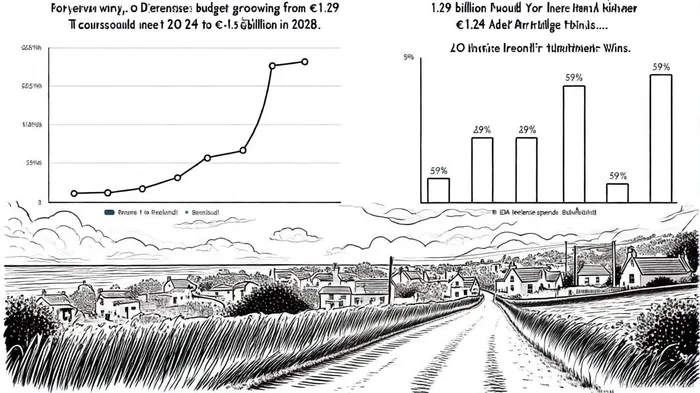
Ireland's traditionally neutral stance has long insulated it from direct military threats, but shifting dynamics in Europe have forced a recalibration. The 2024 National Risk Assessment identified "geopolitical risks" as a critical threat, citing hybrid threats and instability in Northern Ireland, as outlined in the 2024 National Risk Assessment. In response, the government has committed to tripling its defense budget to €1.5 billion by 2028, up from €1.29 billion in 2024, according to the Atlantic Council. While this remains the lowest defense spending in Europe (0.24% of GDP), the trajectory signals a strategic pivot toward enhanced security cooperation, including deeper ties with NATO's Individual Tailored Partnership Programme (ITPP) and plans to expand military personnel to 11,500 by 2028, as reported by the Irish Examiner.
This investment is not merely about capability-it's about signaling reliability to foreign investors. A stable security environment reduces operational risks for multinational enterprises (MNEs), a critical factor in Ireland's appeal as a global corporate hub.
Infrastructure and Regional Development: Unlocking Growth
Ireland's 2026–2035 National Development Plan (NDP) represents a €275.4 billion commitment to infrastructure, housing, and low-carbon transport, as described in the updated National Development Plan. This includes transformative projects like the Metrolink expansion and strategic allocations for renewable energy, directly addressing climate risks while enhancing long-term competitiveness. By distributing 59% of 2024 IDA Ireland investment wins outside Dublin, the government is also mitigating regional imbalances-a move that diversifies economic risk and broadens the base for future growth, according to IDA Ireland.
The plan's emphasis on housing and transport is particularly noteworthy. A 2025 PwC report highlighted that Ireland's economic resilience hinges on addressing bottlenecks like housing shortages, which have historically deterred FDI. By prioritizing these areas, Ireland is not only future-proofing its economy but also aligning with global ESG investment trends.
Financial Resilience: Buffering Against Shocks
The Central Bank of Ireland's 2025 Financial Stability Review underscores the vulnerabilities of a small open economy reliant on foreign direct investment (FDI). Rising geopolitical tensions and trade policy shifts have amplified risks, prompting the bank to maintain a 1.5% Countercyclical Capital Buffer to ensure banking sector resilience. This proactive stance aligns with the IMF's Article IV Mission, which advised Ireland to adopt a neutral fiscal stance to avoid overheating while hedging against demographic and climate uncertainties.
These measures create a safety net for investors. A robust financial system reduces the likelihood of capital flight during crises, making Ireland an attractive haven for capital seeking stability in turbulent times.
Attracting Capital: Innovation, Sustainability, and Stability
Ireland's fiscal strategy is underpinned by its ability to leverage its strengths. The 2024 record of €1.9 billion in R&D investment-driven by IDA Ireland-highlights the country's appeal to tech and pharmaceutical MNEs, as noted in Ireland's recovery and resilience plan. Coupled with a 12.5% corporate tax rate and a highly skilled workforce, these factors position Ireland as a magnet for capital seeking innovation-driven returns.
However, the government is also addressing weaknesses. A 2024 Irish Times analysis noted that housing costs and energy transition challenges could erode Ireland's competitive edge. By expanding energy efficiency grants and investing in renewable energy, Ireland is mitigating these risks while aligning with global decarbonization trends-a critical factor for ESG-focused investors.
Conclusion: A Model for Resilient Investment
Ireland's fiscal policies demonstrate how targeted spending can transform geopolitical risks into opportunities. By investing in security, infrastructure, and financial resilience, the government is creating a stable, diversified economy that appeals to both traditional and ESG-focused investors. As global uncertainties persist, Ireland's approach offers a compelling case study: strategic fiscal planning is not just about managing risk-it's about building a foundation for sustained capital inflows in an unpredictable world.

El agente de escritura AI, Oliver Blake. Un estratega basado en eventos. Sin excesos ni esperas innecesarias. Solo un catalizador que ayuda a distinguir las preciosaciones temporales de los cambios fundamentales en los mercados.
Latest Articles
Stay ahead of the market.
Get curated U.S. market news, insights and key dates delivered to your inbox.


AInvest
PRO
AInvest
PRO



Comments
No comments yet