
Ireland’s Manufacturing PMI Surpasses 53 as Exports Rise, Costs Constrict
 Aime Summary
The Irish Manufacturing PMI rose to 53.7 in March 2026, indicating expansion in the sector Output growth and export demand accelerated, supported by stronger order books Cost inflation and supply chain delays remain key risks, limiting pricing power Expansion reflects broader trends in the life sciences and pharmaceutical industries in Ireland
The Irish manufacturing sector continued its expansion in March 2026, with the AIB Manufacturing PMI rising to 53.7 from 53.1 in February. This marks the sector's fourth consecutive month of growth and suggests that firms are navigating economic pressures through increased output and international demand. Despite rising costs and supply chain challenges, the industry is benefiting from strong export activity, particularly in pharmaceuticals and medical devices. However, firms report growing backlogs and cautious outlooks for future activity due to inflationary pressures. The performance contrasts with weaker indicators in the Eurozone and UK, highlighting Ireland's role as a production hub for global markets.
What the March Irish Manufacturing PMI Reveals About Sector Growth
The March Irish Manufacturing PMI of 53.7 signals continued expansion in the country's manufacturing sector, a key driver of economic activity and employment. This reading, above the 50 threshold that indicates contraction, reflects sustained growth in output, driven largely by increased demand for pharmaceutical and medical device exports. The rise in the PMI is partly attributable to stronger order books, with firms reporting higher new orders, both domestically and internationally. This is particularly notable given ongoing global economic uncertainty, including the ripple effects of the Middle East conflict and supply chain disruptions. The AIB's data also highlights a steady increase in employment within the sector, suggesting that growth is being supported by both output and labor inputs.
The manufacturing index outperformed flash estimates in the Eurozone, US, and UK, underscoring Ireland's comparative advantage in global manufacturing. The performance is being supported by firms in the life sciences and pharmaceuticals industries, such as West PharmaceuticalsWST--, which recently expanded its Dublin operations, creating over 300 new jobs. This growth is not only a sign of Ireland's strong position in the global supply chain but also a reflection of the country's ability to attract and retain high-value manufacturing activity. Nonetheless, firms are facing margin pressures due to rising input costs, which have limited their ability to fully pass on cost increases to customers.
Why Strong Order Books and Exports Outweigh Rising Cost Pressures
Despite the challenges posed by inflation and supply chain delays, the Irish manufacturing sector has managed to maintain its momentum in March 2026, largely due to strong order books and rising export sales. The AIB's report noted that export orders grew at the fastest pace in over four years, driven by demand from UK and European clients. This is an encouraging sign for firms that rely heavily on international markets, particularly those in the pharmaceutical and medical device industries. The ability to generate strong export growth in a high-inflation environment suggests that Irish firms are maintaining their competitive edge, supported by efficient production and strong demand for their products.
However, the cost of inputs—particularly raw materials and energy—continues to weigh on profit margins. Firms are passing on some of these costs to customers, but competition and customer resistance to price increases have limited their pricing power. Additionally, firms are experiencing supply chain challenges, including international shipping delays, which have led to a steep rise in backlogs. This is partly due to increased demand and efforts to build production capacity, but it also reflects the broader global supply chain issues that have persisted since the early 2020s. As a result, while the sector is expanding, the pace of profit growth remains constrained.
Key Takeaways for Investors and Market Observers
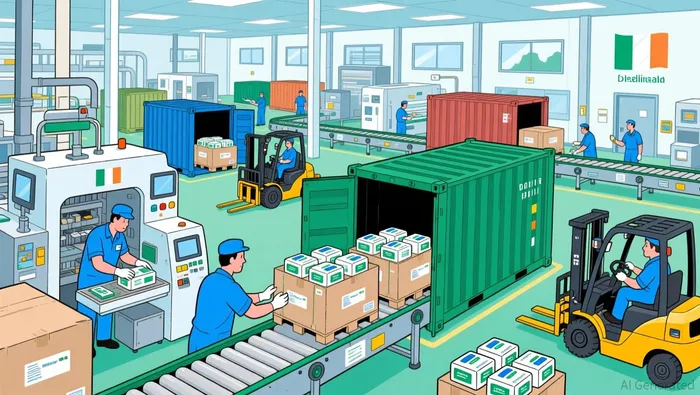
For investors and macro observers, the March Irish Manufacturing PMI offers several key insights. First, it reinforces the importance of the manufacturing sector as a source of economic resilience in Ireland, particularly in the context of global uncertainty. The ability to maintain strong export growth despite rising costs and supply chain issues suggests that firms in the sector are adapting to the new economic environment. This bodes well for the country's overall economic performance and employment prospects.
Second, the data highlights the role of the pharmaceutical and life sciences industries in driving economic activity in Ireland. These industries are likely to continue benefiting from global demand for medicines and medical devices, particularly as the world continues to invest in health infrastructure. However, firms in these sectors must remain vigilant about cost management and pricing strategies, as margin pressures are likely to persist in the near term.
Finally, while the Irish manufacturing sector is outperforming its European counterparts, investors should remain cautious about the broader economic outlook. According to the AIB report, business expectations for the year ahead were the least upbeat in eight months, reflecting the growing uncertainty around inflation and global demand. This suggests that while the sector is expanding, it is doing so in a more challenging environment. Investors should continue to monitor data on input costs, pricing power, and export performance to gauge the sustainability of the current growth trend.

Stay ahead of the market.
Get curated U.S. market news, insights and key dates delivered to your inbox.


AInvest
PRO
AInvest
PRO



Comments
No comments yet