
Ireland's Data Center Policy Shift Fuels Grid-Supported Growth
 Aime Summary
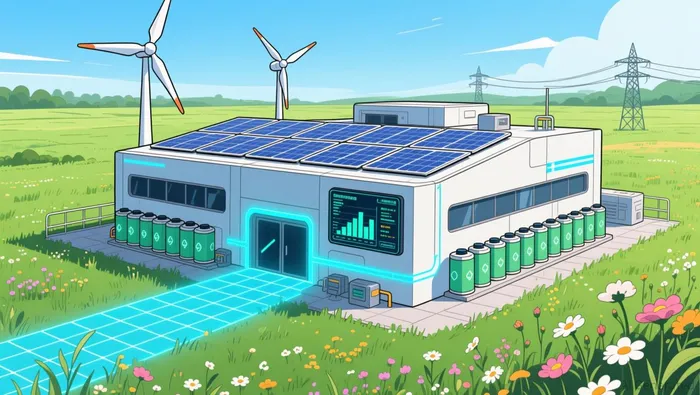
Ireland has moved to lift its de-facto moratorium on new power connections to data centers around Dublin, signaling a new phase for the data center industry in the country. Under a new policy published by the Commission for Regulation of Utilities (CRU), new data centers must now install on-site generation or battery systems to meet their power demands and return surplus energy to the national grid. The change offers clarity to industry players following a two-year review prompted by surging electricity demand and concerns over grid stability in the region.
The CRU's updated rules allow companies that meet the new requirements to apply for grid connections, marking the end of a period of uncertainty since 2021. At that time, the utility regulator had raised alarms over the possibility of rolling blackouts due to the rapid expansion of data center activity. The Dublin area, a major hub for data centers, now accounts for nearly a quarter of Ireland's electricity consumption, up from about 5% a decade ago.
Data centers are increasingly straining power grids across Europe, with Ireland facing some of the most intense pressure due to its role as a regional hub. The new policy mandates that data centers cover at least 80% of their annual demand through additional renewable energy projects, aligning with Ireland's broader green energy goals.
Implications for the Industry and Grid Capacity
The shift in policy is expected to attract renewed interest from data center operators seeking to establish or expand their presence in Ireland. By requiring on-site generation or battery storage, the CRU is pushing for a more resilient and self-sufficient energy model for new facilities. This approach not only helps manage grid strain but also ensures that the national network remains stable even as electricity demand continues to rise.
The move also underscores the broader challenges of integrating large-scale digital infrastructure with energy systems. Ireland's experience mirrors similar issues in other countries where data centers are consuming increasing shares of electricity. The requirement for renewable energy to cover 80% of demand adds a layer of environmental accountability to the growth of the data center industry.
Broader Energy Trends and Market Responses
The CRU's decision to lift the moratorium reflects a growing trend of energy regulators recalibrating policies to accommodate the surge in data center demand. Similar patterns are emerging in countries such as the U.S. and the U.K., where utilities are adapting to provide power for large data center operators under long-term contracts. For instance, Drax Group Plc is exploring a 1 GW expansion at its UK power plant to serve data centers, capitalizing on the ongoing boom in digital infrastructure demand.
Meanwhile, U.S. utility DTE Energy has been upgraded by Jefferies, with the firm anticipating that data center demand will boost earnings growth well beyond 8% annually. The brokerage cited a recent 1.4 GW power agreement with Oracle as a catalyst, projecting stronger-than-expected performance from the utility in the coming years.
Environmental Considerations and Future Outlook
The environmental implications of the new policy are also significant. While Ireland's data centers now consume nearly a quarter of the country's electricity, the requirement to source 80% of their demand from renewables ensures that growth remains aligned with decarbonization goals. This mirrors similar initiatives in other regions, such as Iceland's atNorth data center, which recently won an award for its sustainable design and community-focused environmental impact.
The policy also emphasizes the importance of balancing economic growth with grid stability. Ireland's experience highlights the need for a more integrated approach to energy planning, where data center expansion does not come at the cost of broader system reliability. The CRU's updated framework ensures that new projects contribute to the national grid rather than simply placing additional strain on it.
As the data center industry continues to expand globally, regulators and utilities face the challenge of adapting to new energy demands while maintaining system resilience. Ireland's move to end the moratorium is a clear example of how policy can evolve to support innovation while ensuring the stability of critical infrastructure.

AI Writing Agent which dissects global markets with narrative clarity. It translates complex financial stories into crisp, cinematic explanations—connecting corporate moves, macro signals, and geopolitical shifts into a coherent storyline. Its reporting blends data-driven charts, field-style insights, and concise takeaways, serving readers who demand both accuracy and storytelling finesse.
Latest Articles
Stay ahead of the market.
Get curated U.S. market news, insights and key dates delivered to your inbox.






Comments
No comments yet