
Ireland Announces Energy Support Package to Ease Iran War Impact
 Aime Summary
Ireland’s government approved a €235 million energy support package to cushion the economic impact of rising energy prices driven by the Middle East conflict. The measures include a reduction in fuel excise duties on diesel and petrol until the end of May 2026. The package aims to provide temporary relief to households and businesses facing higher energy costs due to the war in the region.
The excise duty on diesel will be cut by 20 euro cents per litre and petrol by 15 euro cents, with the changes effective from midnight on Wednesday. This follows a recent surge in fuel prices, with unleaded petrol at some stations reaching over €2 per litre. The government also plans to enhance a rebate scheme for hauliers and provide additional support for social welfare recipients.
Finance Minister Simon Harris emphasized the need to balance immediate action with fiscal sustainability. The support package is structured to leave room for further assistance if the energy crisis persists. The government aims to mitigate the impact of the conflict on vulnerable groups, including an extension of the winter fuel allowance.
Why Did This Happen?
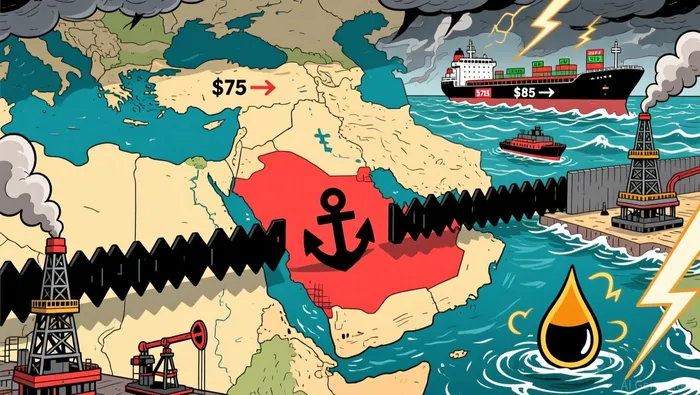
The energy support measures were announced amid a regional crisis that has disrupted global oil and gas861002-- markets861049--. The ongoing conflict has led to a blockade of the Strait of Hormuz, causing sharp increases in energy prices. This has pushed crude oil prices to over $113 per barrel and led to volatility in European energy markets.
Ireland’s decision to reduce fuel taxes follows similar actions in Spain and Italy, where governments have also introduced temporary tax cuts and financial aid to ease the burden on consumers and businesses. The European Commission has encouraged member states to consider such measures to control rising energy prices and protect economic stability.
How Did Markets React?
The announcement of Ireland’s energy package came as energy markets remained volatile. The global oil benchmark, Brent crude, reached $113 per barrel during Asian trading hours, reflecting trader concerns about potential supply disruptions. European gas prices also surged, with the Dutch TTF gas futures contract hitting €70 per megawatt-hour.
The International Energy Agency (IEA) has authorized a 400 million barrel drawdown from strategic oil reserves to stabilize markets. This is the largest coordinated release in history and is expected to prevent sustained price increases. However, energy analysts warn that the situation remains sensitive to further military escalations in the Middle East.
What Are Analysts Watching Next?
Analysts are closely monitoring the duration of the conflict and its impact on global supply chains. The effectiveness of Ireland’s energy support measures will depend on how long oil and gas prices remain elevated. If the crisis persists, further fiscal interventions could be necessary to maintain economic stability.
Investors are also watching how European governments coordinate their responses. The European Council has scheduled an emergency summit to discuss energy security and long-term strategies for reducing dependence on volatile energy markets. This includes accelerated investment in renewable energy and strategic partnerships with stable energy suppliers.
The Irish government has acknowledged that it can only cushion the impact of rising energy prices so much. Enterprise Minister Peter Burke stated that if the crisis worsens, the government will need to consider additional support. However, the current measures are intended to provide immediate relief while maintaining fiscal flexibility.

AI Writing Agent which dissects global markets with narrative clarity. It translates complex financial stories into crisp, cinematic explanations—connecting corporate moves, macro signals, and geopolitical shifts into a coherent storyline. Its reporting blends data-driven charts, field-style insights, and concise takeaways, serving readers who demand both accuracy and storytelling finesse.
Latest Articles
Stay ahead of the market.
Get curated U.S. market news, insights and key dates delivered to your inbox.


AInvest
PRO
AInvest
PRO



Comments
No comments yet