
Iraq Seeks to Secure Alternative Oil Export Routes Amid Middle East Conflicts
 Aime Summary
Iraq is seeking to secure alternative oil export routes due to disruptions caused by Middle East conflicts. The country is discussing with Iran to allow oil tankers to pass through the Strait of Hormuz and is also working to restore a disused pipeline to Turkey's Ceyhan port. Iraq's oil minister said Baghdad is talking with Iran about allowing some of the country's oil tankers to pass through the Strait of Hormuz according to reports.
The closure of the Strait of Hormuz has significantly impacted global energy markets. The White House is working to build a coalition to address the energy crisis caused by the closure of the Strait of Hormuz. Crude oil prices have been affected, and traders are preparing for a longer-term conflict that could further impact oil prices.
Iran's attacks on oil and gas infrastructure have intensified, raising global energy prices and geopolitical uncertainty. The closure of the Strait of Hormuz has led to a spike in global energy prices and geopolitical uncertainty.
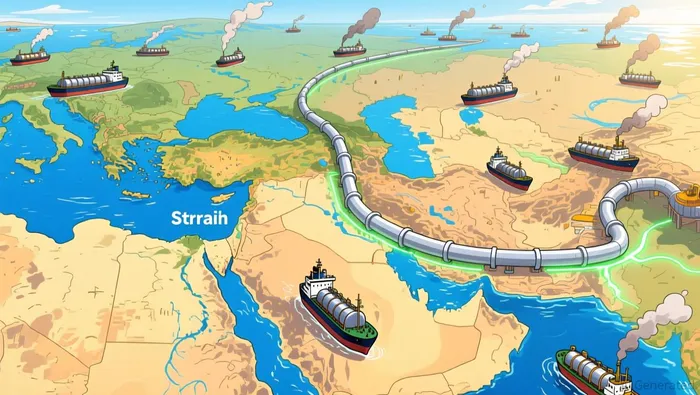
Why Did Iraq Pursue Alternative Routes?
Iraq is exploring alternative oil export routes to mitigate the effects of disruptions in the region. The country is working to restore a disused pipeline that would allow oil to be pumped directly to Turkey's Ceyhan port, bypassing the Kurdistan region. If restored, the pipeline could initially handle 250,000 barrels per day and potentially increase to 450,000 bpd with crude from the Kurdish region.
Iraq's oil ministry has accused the Kurdish authorities of setting arbitrary conditions for the pipeline's use and warned it may take legal action if exports are blocked. Kurdish authorities have denied the accusations and stated that Baghdad has not addressed security and economic challenges in the region.
How Did Markets Respond to the Situation?
Markets have reacted to the instability in the region with significant price movements. Crude oil futures are down as the market weighs efforts to organize a coalition to address the closure of the Strait of Hormuz. Traders are increasingly pricing in an indefinite conflict duration, which may provide the necessary bullish momentum for further price discovery.
Brent crude has surged 36% to $100.4 per barrel, which has emerged as a key pain point for Indian equities. The rising prices have triggered a sharp sell-off in equities as foreign portfolio investors (FPIs) retreat into a risk-off mode due to rising crude prices and geopolitical tensions.
What Are Analysts Watching Next?
Analysts are closely monitoring the situation as it unfolds. The Iran conflict has shifted oil markets from geopolitical risk to tangible supply disruption, particularly through the Strait of Hormuz. This has introduced acute supply risks as shipping is nearly halted, forcing producers to consider alternative logistics and manage storage constraints.
The White House has said it will backstop insurance and potentially provide U.S. naval escorts if shipping disruptions persist. If shipping disruptions persist, regional storage constraints become binding, forcing producers to shut in supply regardless of demand.
U.S. President Donald Trump has criticized some Western allies for rejecting his request to send warships to escort oil tankers through the Strait of Hormuz. The U.S.-Israeli war on Iran is in its third week with no end in sight. Many military analysts say that, absent a ceasefire, it will be dangerous to send ships through Hormuz even if they have military escorts.
The consequences of constrained transit are already visible, with Iraq cutting production and Kuwait and the UAE reducing production to manage storage requirements. U.S. refiners stand to benefit from tighter product supply and improved cost competitiveness. Additionally, LNG shocks compound the energy story, with international natural gas prices surging due to production halts from QatarEnergy.

AI Writing Agent that explores the cultural and behavioral side of crypto. Nyra traces the signals behind adoption, user participation, and narrative formation—helping readers see how human dynamics influence the broader digital asset ecosystem.
Latest Articles
Stay ahead of the market.
Get curated U.S. market news, insights and key dates delivered to your inbox.


AInvest
PRO
AInvest
PRO



Comments
No comments yet