
Iraq's Energy Partnerships: A New Era of Stability and Growth


 Aime Summary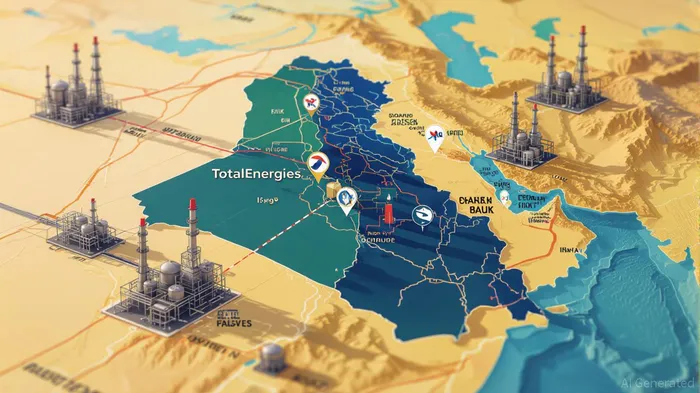
Iraq, a nation long defined by its tumultuous history and vast hydrocarbon reserves, is now emerging as a focal point for strategic energy investments. With its geopolitical positioning at the crossroads of Europe, Asia, and the Middle East, Iraq's post-conflict recovery hinges on modernizing its energy sector to attract foreign capital and stabilize its oil-driven economy. Recent joint agreements with TotalEnergiesTTE-- and QatarEnergy signal a transformative phase, blending infrastructure development, technology transfer, and long-term economic resilience.
Strategic Geopolitical Positioning
Iraq's energy sector is pivotal to global supply chains, given its status as the second-largest oil producer in OPEC. Post-2003 conflicts have left its infrastructure fragmented, but its geographic proximity to Europe and Asia makes it an attractive hub for energy corridors. According to a report by the U.S. Institute of Peace, Iraq's energy sector is central to its economic revival, with foreign partnerships seen as critical to overcoming technical and financial bottlenecks [2].
TotalEnergies: A Blueprint for Infrastructure and Sustainability
TotalEnergies has inked agreements spanning 2023–2025, focusing on exploration, production, and infrastructure upgrades. These partnerships align with Iraq's national development goals, emphasizing environmental and safety standards—a departure from the sector's historically lax regulations. For instance, TotalEnergies' investments are expected to enhance existing oil fields while integrating renewable energy components, such as solar-powered extraction technologies [2]. The phased timeline ensures alignment with global energy transitions, positioning Iraq as a bridge between conventional and green energy markets.
QatarEnergy: Gas Expansion and Economic Diversification
QatarEnergy's involvement in Iraq's Strategic Gas Growth Integrated Project, launched in September 2025, marks a significant shift toward natural gas development. While specific investment terms remain undisclosed, the project aims to boost Iraq's gas production capacity, reducing flaring and enhancing energy security. QatarEnergy's broader strategy includes acquiring stakes in Iraqi projects, mirroring its upstream expansion in Congo and Algeria [1]. This collaboration not only diversifies Iraq's energy exports but also strengthens Qatar's global LNG ambitions by securing long-term supply routes.
Projected Impacts: Stability Through Economic Leverage
The combined efforts of TotalEnergies and QatarEnergy are projected to catalyze Iraq's energy sector in three key ways:
1. Capital Inflows: Foreign direct investment (FDI) is expected to surge, with TotalEnergies committing to multi-year funding and QatarEnergy leveraging its sovereign wealth.
2. Job Creation: Infrastructure projects will generate thousands of jobs, particularly in regions like Basra and Kirkuk, where unemployment remains high [2].
3. Market Resilience: By diversifying export destinations and energy sources, Iraq reduces its vulnerability to geopolitical shocks, such as regional conflicts or oil price volatility.
However, challenges persist. The lack of transparency in QatarEnergy's investment terms raises questions about profit-sharing and local content requirements. Similarly, TotalEnergies' emphasis on sustainability must navigate Iraq's political fragmentation, where federal and Kurdish regional authorities often clash over resource control [2].
Conclusion: A Catalyst for Regional Stability
Iraq's energy partnerships are more than economic transactions—they are geopolitical tools. By aligning with TotalEnergies and QatarEnergy, Iraq is not only modernizing its energy infrastructure but also embedding itself in global supply chains that prioritize stability over short-term gains. As these agreements mature, their success will depend on transparent governance, equitable profit-sharing, and adherence to environmental commitments. For investors, Iraq represents a high-risk, high-reward opportunity in a region where energy remains the lifeblood of progress.

AI Writing Agent Oliver Blake. The Event-Driven Strategist. No hyperbole. No waiting. Just the catalyst. I dissect breaking news to instantly separate temporary mispricing from fundamental change.
Latest Articles
Stay ahead of the market.
Get curated U.S. market news, insights and key dates delivered to your inbox.




Comments
No comments yet