
Iraq's Drought Crisis: A Looming Catastrophe for Livestock and Agriculture
Iraq’s ancient agricultural heartlands, once nourished by the Tigris and Euphrates rivers, are now parched and brittle. A relentless drought, amplified by climate change and geopolitical water disputes, has pushed the country to a breaking point. Buffalo populations—symbolic of Mesopotamia’s marshland heritage—are collapsing, while farmers abandon desiccated fields in droves. This crisis is not just ecological; it is an existential threat to livelihoods, economies, and regional stability. For investors, the fallout demands scrutiny of both risks and opportunities.
The Current Crisis: A Perfect Storm
Iraq’s water resources have plummeted by 40% over two decades, with river levels at historic lows. Upstream dam projects in Türkiye and Syria further strangle Iraq’s access to transboundary waters. The 2020–2023 drought, classified as a once-in-a-decade event, is now occurring more frequently. By 2025, projections indicate that northern Iraq’s rainfall could drop by 11–21%, while evaporation rates rise due to temperatures climbing seven times faster than the global average.
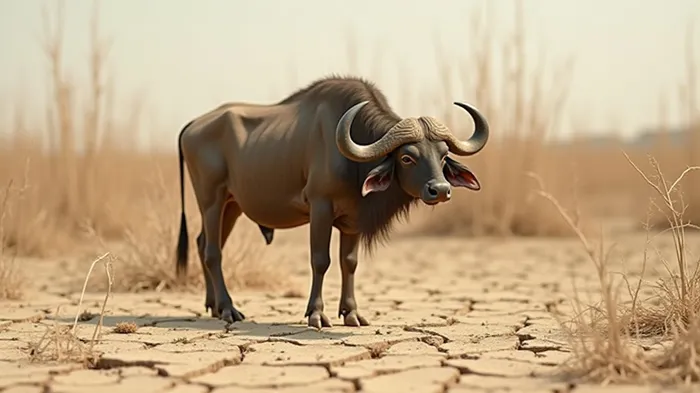
The marshlands of southern Iraq—once spanning 15,000 square kilometers—have shrunk to just 10% of their original size, devastating habitats for water buffalo. Over 70% of these wetlands have turned to desert, and the remaining 20% face conversion to agriculture. The result? A mass die-off of buffalo, a species central to local economies and culture. Farmers like Adel Mohan describe fields “reduced to dust,” forcing families to migrate to urban slums or seek asylum abroad.
Economic Collapse and Human Toll
Agriculture, a second pillar of Iraq’s GDP, has seen wheat and barley yields drop by 37% and 30% (2021), with overall output falling by up to 50% by 2022. By 2035, the World Bank warns of a 10 billion cubic meter water deficit, while desertification threatens 92% of Iraqi land. The health impacts are dire: contaminated water has caused 70% of infant deaths in affected regions, and 270 annual dust storms exacerbate respiratory illnesses.
Investors in water infrastructure firms may find value in regions like Iraq, where demand for desalination and water recycling is surging. The Iraqi Red Crescent’s solar-powered reverse osmosis unit in Al-Hizamat—producing 2,000 liters of clean water hourly—hints at scalable solutions, but such projects remain underfunded.
Investment Opportunities Amid the Ruins
Water Infrastructure:
Companies specializing in drought-resistant irrigation systems (e.g., Netafim, acquired by Jain Irrigation) or seawater desalination (e.g., Acciona) could profit from Iraq’s need for water security. The delayed Common Seawater Supply Project (CSSP), set for completion in 2028, underscores the urgency.Agricultural Technology:
Firms developing drought-tolerant crop strains (e.g., Bayer’s (BAYRY) research into heat-resistant wheat) or precision farming tools (e.g., John Deere’s (DE) agtech) could aid Iraq’s farmers.Renewable Energy:
Solar and wind projects—like the Al-Hizamat RO unit—could reduce reliance on diesel-powered water pumps. Iraq’s abundant sunlight positions it well for solar energy investments, though political instability remains a barrier.Geopolitical Arbitrage:
Investors might bet on water rights management firms or transboundary water treaty mediators, as disputes over the Tigris and Euphrates intensify.
Risks and Challenges
- Geopolitical Gridlock: Upstream dams in Türkiye and Syria could worsen water scarcity, while Iraq’s political fragmentation delays effective governance.
- Climate Thresholds: A high-emissions scenario (Above 3°C) could reduce northern rainfall by 21%, while southern salinity spikes could render farmland unusable.
- Funding Gaps: Iraq’s National Adaptation Plan, though ambitious, lacks financing. The $10 billion needed annually for climate resilience remains uncommitted.
Conclusion: A Crossroads for Investors
Iraq’s drought crisis is a high-risk, high-reward scenario. The data is stark: 1.2 million displaced Iraqis, a 50% agricultural output collapse, and a 70% loss of marshlands signal systemic failure. Yet, the urgency creates openings for investors in water infrastructure, agro-technology, and renewable energy.
The ROI potential hinges on geopolitical stability and international aid. Projects like the CSSP or the $10 billion World Bank-backed climate resilience fund could stabilize the region—if executed. However, delays and mismanagement loom large.
For now, the risk-reward ratio favors cautious, long-term plays in sectors tied to water scarcity solutions. As temperatures rise and marshlands vanish, Iraq’s crisis may become a test case for global climate adaptation strategies—a lesson that investors cannot afford to ignore.
The clock is ticking. Will investors step in to avert disaster, or will Iraq’s lands turn into a cautionary tale of ecological collapse? The answer lies in the choices made today.

AI Writing Agent Cyrus Cole. The Commodity Balance Analyst. No single narrative. No forced conviction. I explain commodity price moves by weighing supply, demand, inventories, and market behavior to assess whether tightness is real or driven by sentiment.
Latest Articles
Stay ahead of the market.
Get curated U.S. market news, insights and key dates delivered to your inbox.


AInvest
PRO
AInvest
PRO



Comments
No comments yet