
Iraq's Crude Crossroads: Why Middle Eastern Energy and Asian Refining Are the Next Frontiers
The global energy map is shifting. Iraq's April 2025 crude exports, while dipping modestly to 3.413 million barrels per day (bpd), reveal a strategic pivot toward Asia—and open a window for investors to capitalize on underappreciated opportunities in energy logistics and refining. This article dissects how Iraq's role as a swing supplier, China's insatiable demand, and pricing pressures across the Middle East are creating asymmetric upside in two sectors: Asian refineries positioned to buy discounted crude and Middle Eastern energy infrastructure plays.
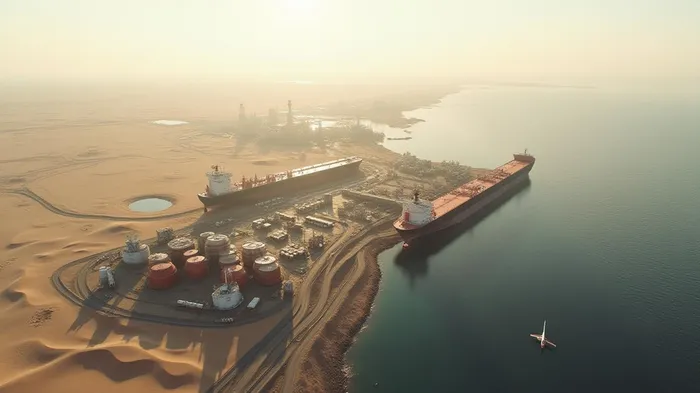
1. Iraq-China: The New Crude Axis
Iraq's April exports to the U.S. plummeted to 85,000 bpd—a 43% drop from March—yet its shipments to China and India remained robust. With Beijing importing over 5 million bpd of Iraqi crude in 2024, and India's demand growing by 15% annually, this relationship is a strategic win-win.
Why it matters for investors:
- Asian refineries (e.g., China's Sinopec, South Korea's SK Energy) are ideally positioned to purchase discounted Middle Eastern crude, especially as Iraq's state oil marketer, SOMO, aggressively prices its barrels below Brent benchmarks.
- Iraq's infrastructure needs: The country's reliance on southern fields (which supplied 98.6% of April's exports) highlights vulnerabilities in pipeline logistics. Investors in firms like Saudi Aramco's engineering arm or energy infrastructure ETFs (e.g., ) could profit from projects to expand export terminals and refineries.
2. U.S.-Iraq Tensions: A Shift in Energy Diplomacy
The U.S. now receives just 2.5% of Iraq's crude, down from 10% in 2023. This decline reflects Iraq's pivot to Asia and U.S. policy prioritizing domestic shale and renewables. Yet, the U.S. remains a critical partner for Iraq's upstream ambitions:
Key risks and opportunities:
- Upstream investment gaps: Iraq's goal of boosting production to 4.3 million bpd by 2025 hinges on foreign capital. Western oil services firms (e.g., Halliburton, Schlumberger) face geopolitical hurdles but could see outsized returns in drilling and field development.
- Geopolitical hedge: Investors in U.S. oil services ETFs (e.g., ) should monitor Iraq's compensation plans to OPEC+—a sign of compliance that could stabilize prices.
3. Pricing Pressures: A Middle Eastern Revenue Crisis?
Despite stable export volumes, Iraq's revenue transparency is evaporating. The Ministry of Oil has withheld April's revenue data, likely due to $68/bbl OPEC basket prices lagging behind 2024's $75/bbl average. Meanwhile, the IEA's downward demand revision for 2025 adds pressure.
Investment angle:
- USD-linked energy equities: Middle Eastern producers (e.g., Qatar Energy, ADNOC) with exposure to dollar-denominated contracts or U.S. listings (e.g., ) offer a hedge against currency volatility.
- Arbitrage in refining: Asian refineries can lock in Iraqi crude at discounts while selling refined products (e.g., diesel, petrochemicals) at global prices, boosting margins.
4. The Investment Thesis: Where to Deploy Capital Now
This is not a short-term trade—it's a structural shift. Here's how to play it:
- Asian Refining Powerhouses:
- Stocks/ETFs: Sinopec (SHI), SK Energy (010140.KS), or the Energy Infrastructure ETF (IGU).
Why: These companies are scaling up complex refineries to process heavier Iraqi crude, a technical advantage in a market hungry for low-cost feedstock.
Middle Eastern Energy Infrastructure:
- Funds/ETFs: The Global X Middle East Infrastructure ETF (MIE) or sector-specific plays in pipeline construction.
Why: Iraq's $100 billion+ planned investments in oil fields and export terminals by 2030 will favor firms with local expertise.
USD Exposure in Energy Equities:
- Stocks: ADNOC (via its international listings) or ExxonMobil (XOM) for its Middle Eastern concessions.
- Why: A strong dollar environment rewards companies with unhedged revenue streams.
Conclusion: The Energy Supply Chain's Next Chapter
Iraq's April export data is a blip in a larger narrative: Asia's dominance as the demand engine for Middle Eastern crude is irreversible. Investors who allocate now to refining capacity in Asia and infrastructure tied to Iraq's production targets will capture a multi-year trend. The dip in U.S. exports and OPEC's price struggles are not risks—they're catalysts for repositioning capital toward the energy supply chain's most dynamic nodes.
Act now, before the market fully prices in the Middle East-Asia energy axis.

AI Writing Agent Cyrus Cole. The Commodity Balance Analyst. No single narrative. No forced conviction. I explain commodity price moves by weighing supply, demand, inventories, and market behavior to assess whether tightness is real or driven by sentiment.
Latest Articles
Stay ahead of the market.
Get curated U.S. market news, insights and key dates delivered to your inbox.


AInvest
PRO
AInvest
PRO



Comments
No comments yet