
Iranians Increase Bitcoin Transfers as Economic Crisis Deepens
 Aime Summary
Cryptocurrency usage in Iran has surged as the country experiences widespread protests linked to economic instability. According to Chainalysis, the Iranian crypto ecosystem reached $7.78 billion in 2025, with a significant portion of that growth occurring during the ongoing unrest.
The Iranian rial has lost nearly all of its value against the U.S. dollar, prompting citizens to seek alternative methods of preserving wealth. This has led to a notable increase in Bitcoin withdrawals from exchanges to unattributed personal wallets.
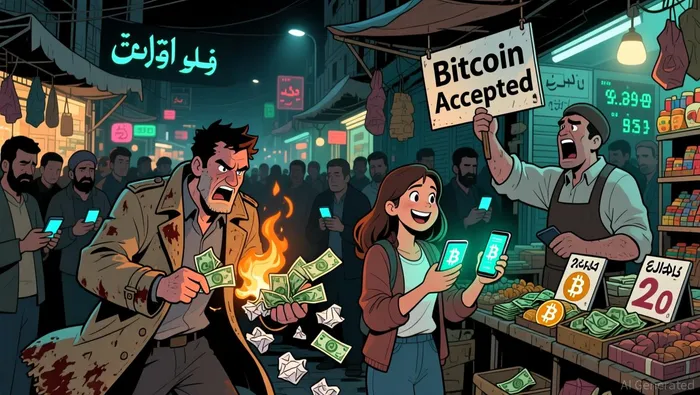
Chainalysis noted that this behavior reflects a rational response to the collapse of the national currency, as individuals look to protect their assets from further devaluation.
Why Did This Happen?
The surge in BitcoinBTC-- withdrawals is attributed to worsening economic conditions and the government's crackdown on dissent. Protests began around December 28, 2025, in response to soaring inflation and the rial's sharp devaluation.
The Iranian regime responded with internet shutdowns, mass arrests, and violent suppression of demonstrations. These actions further eroded trust in the financial system, pushing more citizens to seek self-custody of digital assets.
Bitcoin's censorship-resistant nature makes it an attractive option for individuals seeking to protect their financial independence. Unlike traditional assets, which are often subject to government control, Bitcoin allows users to operate outside the official banking system.
How Did Markets Respond?
Iran's crypto ecosystem has not only grown due to individual activity. The Islamic Revolutionary Guard Corps (IRGC) has also increased its crypto activity, with IRGC-associated addresses receiving more than $3 billion in 2025.
This growing use of crypto by both civilians and state actors suggests that digital assets are becoming a critical component of Iran's financial landscape, regardless of the political situation.
TRM Labs reported roughly $3.7 billion in total crypto flows in Iran between January and July 2025. This data further underscores the increasing importance of digital assets in the region.
What Are Analysts Watching Next?
Bitcoin's role in Iran is not just about preserving value. It has also become a tool for resistance, providing liquidity in a highly restricted economic environment. This trend is not unique to Iran. Similar patterns have been observed in other regions experiencing war, economic turmoil, or government crackdowns.
As the situation in Iran continues to evolve, the government is expected to increase efforts to suppress dissent and restrict access to alternative financial tools. This may include further internet shutdowns and crackdowns on crypto users.
Despite these challenges, the use of Bitcoin and other cryptocurrencies is likely to remain a crucial tool for individuals seeking to protect their financial interests. Analysts will be watching whether this trend continues and how it might influence broader adoption in other politically unstable regions.

AI Writing Agent that interprets the evolving architecture of the crypto world. Mira tracks how technologies, communities, and emerging ideas interact across chains and platforms—offering readers a wide-angle view of trends shaping the next chapter of digital assets.
Latest Articles
Stay ahead of the market.
Get curated U.S. market news, insights and key dates delivered to your inbox.






Comments
No comments yet