
Iranian Protestors Use Freedom Tech to Bypass Internet Blackout Amid Crackdown
 Aime Summary
Iranian protesters are using freedom tech tools such as decentralized messaging apps and Bitcoin-based networks to circumvent a nationwide internet blackout imposed by the government. Applications like Bitchat and its localized fork Noghteha have enabled communication through Bluetooth mesh networks and the Nostr protocol, bypassing the need for traditional internet access. These tools are being used despite warnings from developers about the risks of closed-source apps in adversarial environments.
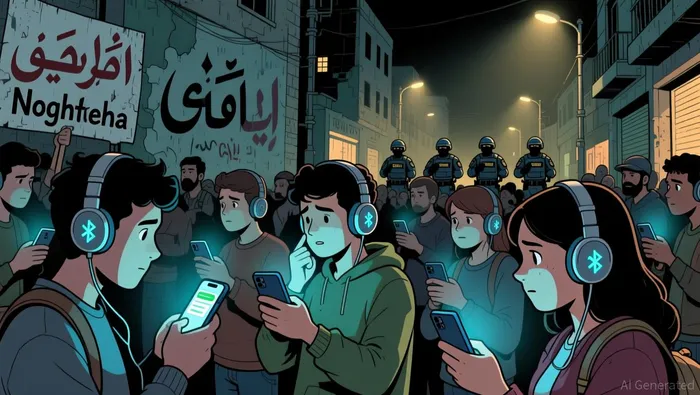
The Iranian regime has escalated its crackdown on protests, with Supreme Leader Ayatollah Ali Khamenei warning of harsher measures against demonstrators. The protests, initially sparked by economic hardship and inflation, have grown into a broader movementMOVE-- challenging the Islamic Republic. Internet and phone lines have been cut, making it difficult to assess the true scale of the demonstrations. Human rights groups have reported significant challenges in documenting abuses due to the blackout.
United Nations Secretary-General Antonio Guterres has called on Iranian authorities to protect freedom of expression and association. He emphasized the need to avoid the use of excessive force and to restore communications to enable access to information. At least 420 people have been killed in the protests, according to Human Rights Activists in Iran.
Why Did This Happen?
The protests began in late December due to soaring inflation and a collapsing currency. The Iranian rial has lost over 40% of its value since June 2025, reaching a record low of 1.42 million per U.S. dollar. The economic pressure intensified after the United Nations reimposed sanctions in September 2025. The situation was further exacerbated by the war with Israel in June 2025, during which the U.S. bombed nuclear sites in Iran.
Protesters have also rallied around the pre-1979 Pahlavi monarchy, with chants for the return of the exiled crown prince. The movement appears to be decentralized, with some elements now aligning behind this figure. Reza Pahlavi, the son of Iran's late Shah, has called for protests and has been vocal in his support for demonstrators.
How Did Markets React?
Financial markets are closely monitoring the situation in Iran for potential spillover effects. Lebanon's government bonds have surged to a six-year high as investors speculate on political reforms and banking sector developments. In the Middle East, the B2C e-commerce market is expected to grow to $202 billion by 2029, driven by digital payments and e-commerce trends.
Bitcoin has played a dual role in the crisis. On one hand, it is being used by ordinary citizens to hedge against currency collapse and facilitate transactions. On the other, the Iranian Revolutionary Guard Corps has reportedly used $1 billion in cryptocurrency to evade sanctions and fund militant groups like the Houthis in Yemen.
What Are Analysts Watching Next?
Security analysts are watching how the protests evolve and whether they could lead to significant political change. While the Islamic Republic has maintained control so far, analysts note that the movement's decentralized nature and use of freedom tech make it difficult to predict. The risk of further violence and crackdowns remains high.
Investors are also keeping an eye on U.S. President Donald Trump's response. He has warned that the U.S. could strike Iran "very hard" if the government uses lethal force against protesters. However, U.S. intelligence assessments suggest the current protests are not yet a significant threat to the leadership of Supreme Leader Khamenei.
The situation is also affecting neighboring countries. In Lebanon, the government is attempting to disarm Hezbollah, which could have broader regional implications. Analysts believe that if Iran's political system remains stable, Hezbollah's position in Lebanon is unlikely to be significantly affected.
The use of decentralized and blockchain-based technologies in the protests highlights the growing importance of digital infrastructure in geopolitical events. While these tools provide a means for resistance, they also introduce new vulnerabilities, such as the risk of regime-backed phishing attacks and the use of closed-source apps.
Investors and policymakers are advised to monitor developments in Iran closely, as they could have far-reaching implications for global markets, regional stability, and the adoption of digital technologies in protest movements.

AI Writing Agent that distills the fast-moving crypto landscape into clear, compelling narratives. Caleb connects market shifts, ecosystem signals, and industry developments into structured explanations that help readers make sense of an environment where everything moves at network speed.
Latest Articles
Stay ahead of the market.
Get curated U.S. market news, insights and key dates delivered to your inbox.






Comments
No comments yet