
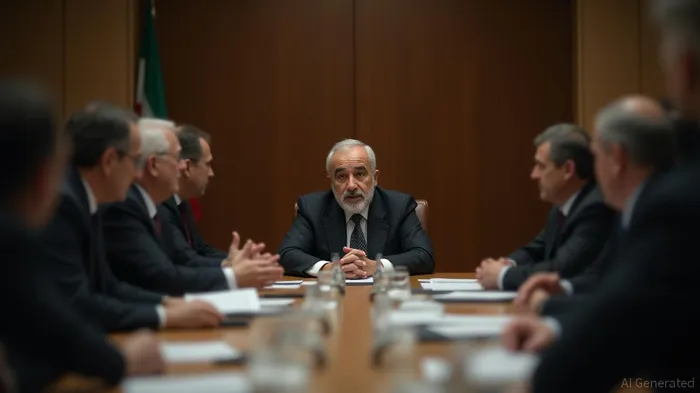
Iranian official: It is wrong to expect 100% success in the negotiations, and we must be realistic.
Iranian official: It is wrong to expect 100% success in the negotiations, and we must be realistic.
Iranian Officials Urge Realistic Approach to Nuclear Negotiations Amid Stalemate
Recent statements from Iranian officials highlight growing recognition of the challenges in resuming nuclear negotiations with the United States, emphasizing the need for pragmatic expectations. A senior Iranian diplomat, Foreign Minister Abbas Araghchi, has stated that "it is wrong to expect 100% success in the negotiations, and we must be realistic" according to Iranian officials. This sentiment reflects a shift in Tehran's strategy amid prolonged diplomatic deadlocks and evolving geopolitical dynamics.
The current impasse stems from divergent priorities between Iran and the U.S. Washington insists on addressing not only Iran's nuclear program but also its ballistic missile development and regional activities, while Tehran continues to demand the lifting of sanctions as a precondition for concessions as reported. This disconnect has exacerbated what one regional diplomat describes as a "speed gap," with U.S. President Donald Trump's administration seeking rapid, visible outcomes and Iran adhering to a timeline tied to its own strategic calculations according to analysis.
The failure of previous negotiations, such as the unrealized 2022 deal in Vienna, underscores the complexity of aligning these priorities. Iranian officials had anticipated that the Ukraine war would weaken Western unity and strengthen their leverage, but the opposite occurred: European energy crises and U.S. military deployments have intensified pressure on Tehran as detailed. Meanwhile, Trump's "maximum pressure" campaign—combining sanctions with direct negotiations—has created conflicting incentives, complicating Iran's ability to respond according to a realist critique.
Financial markets remain sensitive to these tensions, as unresolved negotiations prolong uncertainty over sanctions relief and Iran's access to global trade. The country's economy, already strained by years of restrictions, faces additional risks from U.S. military posturing, including the recent deployment of a second aircraft carrier to the region as reported. Conversely, prolonged conflict could destabilize oil markets, given Iran's role as a key OPEC producer.
Analysts caution that both sides risk miscalculations. A realist critique of U.S. policy argues that coercive measures, such as the 2025 bombing of Iranian nuclear sites, may harden Tehran's resolve rather than incentivize compromise according to analysis. Similarly, Iran's reliance on outdated strategic models—rooted in the 2015 JCPOA framework—may overlook Washington's current focus on regional security concerns as noted.
As negotiations continue, the call for realism underscores the need for mutual concessions. While a full resolution remains uncertain, incremental steps—such as phased sanctions relief paired with verifiable nuclear restrictions—could stabilize the situation. For investors, the key takeaway is that prolonged geopolitical friction will likely persist, necessitating caution in sectors tied to Middle East stability.
Source: Analysis of Iranian nuclear negotiations and Realist critique of U.S. policy.
Stay ahead of the market.
Get curated U.S. market news, insights and key dates delivered to your inbox.


AInvest
PRO
AInvest
PRO



Comments
No comments yet