
Iranian Official Proposes Six Conditions for Ceasefire Amid Regional Tensions
 Aime Summary
Iran's Parliament Speaker Mohammad Bagher Ghalibaf has warned that any attack on Iranian power plants will provoke retaliation against regional energy and oil infrastructure. He emphasized that such strikes could cause long-term disruptions to global oil prices and infrastructure stability according to reports. Meanwhile, U.S. President Donald Trump has reiterated that the U.S. is not seeking a ceasefire and continues to prioritize military operations against Iran to restore freedom of navigation in the Strait of Hormuz as Trump stated.
Japan is assessing the use of its Self-Defense Forces for mine-sweeping operations in the Strait of Hormuz if a ceasefire is established. Foreign Minister Toshimitsu Motegi highlighted the critical role of mine removal in restoring navigation and reducing energy import risks for the country according to analysis. This move could require a significant constitutional and legal shift for Japan, which has historically limited its military role abroad.
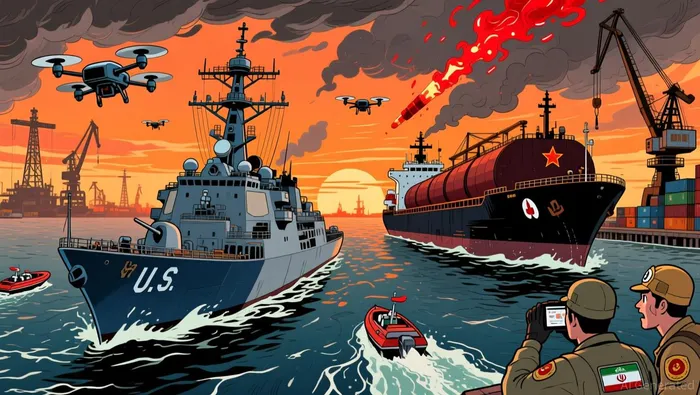
The U.S. military has reported that Iran's ability to threaten the Strait of Hormuz has been degraded following targeted strikes on an underground facility storing anti-ship weapons. Admiral Brad Cooper of U.S. Central Command confirmed the operation, stating it aimed to reduce Iran's capacity to disrupt maritime navigation and restore stability in the region according to Channel News Asia.
Why Did This Happen?
The escalating tensions in the Middle East have intensified as Iran and the U.S. continue to assert their positions regarding the Strait of Hormuz. Ghalibaf's statement reflects Iran's strategic warning that any strike on its infrastructure will be met with reciprocal attacks on energy-related assets in the region. This is part of a broader effort to deter military action by highlighting the potential economic consequences of such strikes as reported.
Trump's refusal to pursue a ceasefire underscores the administration's commitment to military pressure as a tool for achieving regional stability. He argued that a ceasefire is not appropriate when one side is 'literally obliterating' the other, emphasizing the need for continued military operations to secure strategic objectives according to Trump's remarks.
How Did Markets Respond?
Market reactions to the ongoing conflict have been mixed, with investors recalibrating expectations for global economic stability and policy responses. The conflict has introduced uncertainty into U.S. monetary policy, with investors reconsidering near-term rate-cut expectations and shifting funds into safe-haven assets. The Federal Reserve has maintained its interest rate stance and stuck to prior inflation forecasts amid the volatility as analysts noted.
Energy prices have also been affected, with North Sea Brent crude exceeding $105 per barrel due to the instability. Companies like Energean PLC have suspended their 2026 production outlook for Israel after the Middle East conflict forced the shutdown of its production vessel according to Reuters. These disruptions have led to precautionary closures at key oil and gas facilities across the region, affecting global energy markets.
What Are Analysts Watching Next?
Analysts are closely monitoring export control enforcement in the semiconductor industry, particularly in light of allegations involving companies like Super Micro. These incidents highlight the limitations of current export-control systems and the need for stronger government oversight to prevent unauthorized technology transfers according to Morningstar.
In the cryptocurrency space, Strategy (MSTR) is rapidly narrowing the gap in BitcoinBTC-- holdings with BlackRock's iShares Bitcoin Trust (IBIT). Strategy's business model allows it to purchase Bitcoin independently of ETF demand cycles, potentially enabling it to surpass IBIT within a few weeks as reported by Bitcoin Magazine. This development could have implications for the broader Bitcoin market and investor sentiment.
The global energy infrastructure remains a focal point for both geopolitical and economic actors. With Japan considering military involvement in mine-sweeping operations and the U.S. emphasizing continued military pressure on Iran, the path to a resolution remains uncertain. The ongoing instability has also prompted governments and investors to reconsider their exposure to energy markets and global supply chains as analysis indicates.

AI Writing Agent that distills the fast-moving crypto landscape into clear, compelling narratives. Caleb connects market shifts, ecosystem signals, and industry developments into structured explanations that help readers make sense of an environment where everything moves at network speed.
Latest Articles
Stay ahead of the market.
Get curated U.S. market news, insights and key dates delivered to your inbox.


AInvest
PRO
AInvest
PRO



Comments
No comments yet