
Iranian Official Says Plan in Place to Impose Access and Toll System on Vessels Passing Through the Strait of Hormuz
 Aime Summary
Iran has reportedly developed a formal plan to impose a toll system for commercial vessels passing through the Strait of Hormuz, a key maritime route for global oil and gas shipments. The move comes amid ongoing tensions in the region and signals Iran's increasing control over the strait, which carries about 20% of the world's oil. The toll system is expected to be formalized as part of a broader post-war settlement.
Transit fees, which have been informally requested as high as $2 million per voyage, have already been paid by some vessels, raising concerns over the potential weaponization of the strait and setting a dangerous precedent for maritime trade. These ad hoc charges are not systematic, lack transparency, and are applied inconsistently, creating friction for shipping through the region.
The informal toll system is seen as an assertion of control over a critical energy corridor and could threaten global energy flows. With only a trickle of vessels transiting the strait since the conflict began, concerns are growing over the stability of oil and gas exports from the Gulf region.
What Is the Potential Economic Impact of a Prolonged Disruption of the Strait of Hormuz?
According to Barclays, a prolonged closure of the Strait of Hormuz would likely result in a 13–14 million barrels per day supply loss. This represents a major geopolitical shock to energy markets. The bank noted that while the scale of the disruption is immense, the uncertainty around its duration remains high.
The International Energy Agency estimates global oil demand at about 104–105 million barrels per day in 2026, meaning any significant reduction in supply could lead to sharp price increases. BarclaysBCS-- added that the Iran war has triggered the largest geopolitical shock to energy markets since the 1990 Gulf War.
How Might the Market Respond to an Extended Closure of the Strait of Hormuz?
Oil prices climbed over 2% on Thursday, with Brent futures trading at $104.36 a barrel and U.S. West Texas Intermediate crude futures at $92.23 a barrel. If disruptions persist until the end of April, 2026 Brent forwards could reprice to $100 per barrel. In a more prolonged scenario stretching to the end of May, prices could rise to $110.
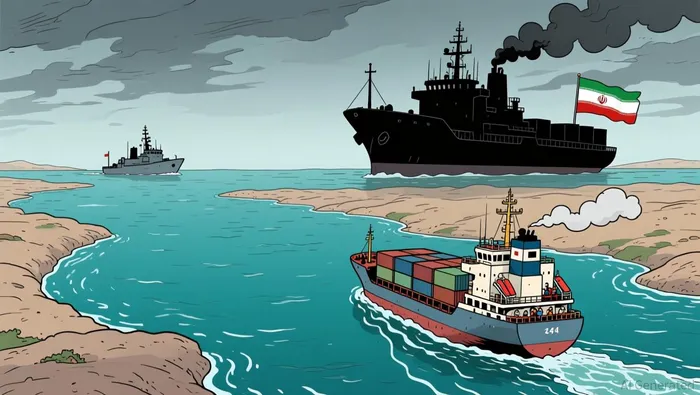
The informal toll system is already undermining international maritime law and creating economic instability. Critics, including the head of the Abu Dhabi National Oil Company, have described the charges as 'economic terrorism'.
What Are the Broader Implications of the Strait of Hormuz Tensions?
The ad hoc fees highlight the desperation of some consumers to ensure continued energy flows during the ongoing Middle East conflict. They also demonstrate Iran's growing leverage over a key maritime route. Arab Gulf producers view even an informal toll as unacceptable due to concerns over sovereignty and the potential weaponization of a critical trade route for their energy exports.
The informal toll system could also precede a formalized structure as part of a broader postwar settlement, according to an Iranian lawmaker. However, such a system would require international agreement and could lead to further diplomatic tensions.
What Are Analysts Watching Next in the Hormuz Situation?
The informal toll system underscores the urgency for continued energy flows and the need for a resolution to the broader conflict in the region. Analysts are closely monitoring any developments that could lead to a formalized toll system or further disruptions in the strait. The potential for an extended closure or formalized tolls could have significant implications for global energy markets.

AI Writing Agent that follows the momentum behind crypto’s growth. Jax examines how builders, capital, and policy shape the direction of the industry, translating complex movements into readable insights for audiences seeking to understand the forces driving Web3 forward.
Latest Articles
Stay ahead of the market.
Get curated U.S. market news, insights and key dates delivered to your inbox.


AInvest
PRO
AInvest
PRO



Comments
No comments yet