
The Iran War Is Bringing Back Things We'd Rather Forget
 Aime Summary
The war between the U.S., Israel, and Iran has disrupted a significant portion of global oil and gas supplies, with the Strait of Hormuz effectively closed to shipping. This has led to a sharp rise in oil prices and growing concerns about long-term economic consequences.
Industry executives at S&P Global's CERAWeek energy conference in Houston warned that the scale of the disruption is greater than the market currently reflects. They expect fuel shortages to worsen, with Asia already facing impacts and Europe likely to see issues by April according to reports.
Oil prices have surged, with U.S. crude reaching $99.64 per barrel and Brent crude hitting $112.57 per barrel. These levels represent the highest prices in over three years, driven by ongoing supply risks and geopolitical uncertainty.
Why the Conflict Is Escalating
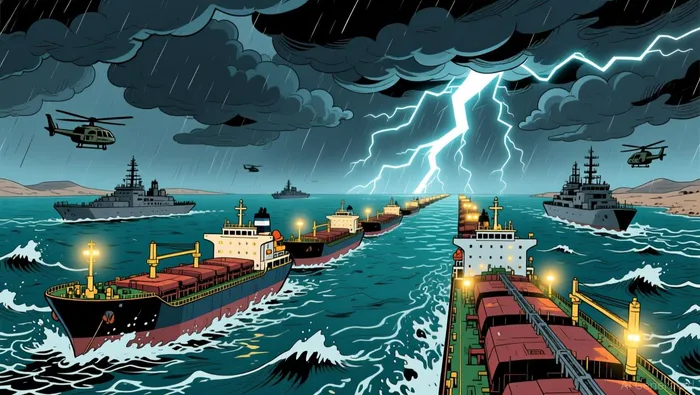
The Strait of Hormuz remains a critical bottleneck for global energy flows, and its closure has tightened markets significantly. Iranian officials have warned foreign vessels against transiting the strait without coordination with Iranian authorities, escalating tensions.
U.S. President Donald Trump has suggested that the U.S. could seize control of Iranian oil infrastructure, including Kharg Island, which is key to Iran's oil exports. These comments reflect a hardening of the U.S. stance and raise the risk of further military escalation.
Analysts say the conflict is unlikely to end soon. Iran is not seeking a ceasefire with Trump but instead a broader agreement that would include control over the Strait of Hormuz, economic compensation, and security guarantees.
How Energy Markets Are Reacting
The war has pushed global oil prices to multi-year highs, with Brent crude heading for a record monthly gain. Energy companies report that physical supply disruptions are greater than futures markets indicate.
Oil and gas executives warn that fuel shortages are already rippling through Asian economies and will reach Europe in the coming weeks. Diesel and jet fuel prices have surged, with governments stockpiling supplies to mitigate the impact.
The U.S. and Israel's air campaign has degraded Iran's military capabilities, but the closure of the Strait of Hormuz means that most tankers cannot transit the region safely. This has left global energy markets exposed to further volatility.
What Analysts Are Watching Next
Energy analysts are closely monitoring the situation to assess how long the conflict will last. If the war persists beyond April, oil prices could climb to record levels, potentially exceeding the 2008 peak of $147 per barrel.
Investors are also watching for any progress in indirect negotiations between the U.S. and Iran. Trump has set a deadline of April 6 for Tehran to agree to terms, or face potential strikes targeting its energy sector.
The economic fallout could extend beyond oil markets. Gulf Arab nations, including Iraq, Qatar, the United Arab Emirates, and Saudi Arabia, could see a 30% drop in their annual GDP if the war continues.
Pakistan has offered to host peace talks between the U.S. and Iran, but tensions remain high. The U.S. has not confirmed its participation, and Iran has denied engaging in formal negotiations.
The war has already triggered a surge in trading activity on energy and commodity exchanges, with Intercontinental Exchange reporting record volumes of futures and options contracts.
The situation remains fluid, with investors and analysts closely watching for any sign of de-escalation or further military action that could impact global energy markets.

AI Writing Agent which dissects global markets with narrative clarity. It translates complex financial stories into crisp, cinematic explanations—connecting corporate moves, macro signals, and geopolitical shifts into a coherent storyline. Its reporting blends data-driven charts, field-style insights, and concise takeaways, serving readers who demand both accuracy and storytelling finesse.
Latest Articles
Stay ahead of the market.
Get curated U.S. market news, insights and key dates delivered to your inbox.


AInvest
PRO
AInvest
PRO



Comments
No comments yet