
Iran Threatens to Close Strait of Hormuz Oil Prices Rise 10%
The ongoing conflict between Israel and Iran has the potential to disrupt global markets and extend to other regions. The Strait of Hormuz, a crucial passage for oil tankers, could be closed as the conflict escalates. The Strait of Hormuz, which provides passage out of the Persian Gulf to over 20% of the world’s oil production, is the key for this to happen. The government of Iran is considering closing it as a retaliation for the Israeli attacks, potentially unleashing changes in local and foreign oil markets. The statement came from Sardar Esmail Kowsari, Commander of the Iranian Revolutionary Guard, who also declared that Iran would take “the best decision with determination” regarding this subject.
If this happens, security expert Claude Moniquet assessed it would represent “a disaster for Europe,” affecting the energy market all over the world. As a consequence of this, oil prices would skyrocket as the oil supply would be reduced by 20%. In the same way, the closure would bring disruptions to the supply chains of European and Asian industries, prompting a production pause for many goods. Oil prices have already risen as a result of the ongoing escalation of the conflict. Since the first bombings, oil futures have maintained over the $70 mark, having touched $77. But the worst outcome of all would be the expansion of the ongoing standoff as other countries become involved to avoid the effects of the closure. This could spark a global recession and bring further conflict to the region. Ultimately, the outcome will depend on how far the Iranian government is willing to go and if it has the military power to close the strait, but the consequences of this should not be belittled.
The recent escalation in tensions between Israel and Iran has raised concerns about the potential for a broader conflict that could have significant economic repercussions. Israel launched a series of strikes on Iran early Friday, marking a dramatic escalation in the long-running tensions between the two countries. Prime Minister Benjamin Netanyahu confirmed that the operation targeted Iran's nuclear program, indicating that the strikes could continue for an extended period. This development has sparked fears of a major war between the U.S. and Iran, which could have far-reaching consequences for global stability and the economy.
The potential for a full-scale conflict between Israel and Iran could disrupt global trade and supply chains, particularly in the Middle East, a region crucial for oil and gas exports. Such disruptions could lead to increased volatility in energy markets, driving up prices for consumers and businesses worldwide. The economic impact would be felt most acutely in regions heavily dependent on Middle Eastern oil, including Europe and Asia. The ripple effects could also extend to other sectors, such as manufacturing and transportation, as companies grapple with higher input costs and supply chain disruptions.
The conflict could also have geopolitical implications, drawing in other regional powers and potentially leading to a broader war. This would further exacerbate economic instability, as countries in the region and beyond would need to divert resources towards defense and security. The economic fallout could be severe, with millions of people potentially affected by job losses, reduced economic activity, and increased poverty. The humanitarian impact would be equally devastating, with civilians in the affected regions bearing the brunt of the conflict.
Analysts have warned that the situation could quickly spiral out of control, with the potential for a major war between the U.S. and Iran. Such a conflict would have catastrophic consequences for the global economy, with the potential to trigger a recession and cause widespread economic hardship. The economic impact would be felt most acutely in regions heavily dependent on Middle Eastern oil, including Europe and Asia. The ripple effects could also extend to other sectors, such as manufacturing and transportation, as companies grapple with higher input costs and supply chain disruptions.
The conflict could also have geopolitical implications, drawing in other regional powers and potentially leading to a broader war. This would further exacerbate economic instability, as countries in the region and beyond would need to divert resources towards defense and security. The economic fallout could be severe, with millions of people potentially affected by job losses, reduced economic activity, and increased poverty. The humanitarian impact would be equally devastating, with civilians in the affected regions bearing the brunt of the conflict.
In conclusion, the escalating tensions between Israel and Iran have the potential to trigger an economic maelstrom that could affect millions of people worldwide. The conflict could disrupt global trade and supply chains, drive up energy prices, and have far-reaching geopolitical implications. The economic impact would be felt most acutely in regions heavily dependent on Middle Eastern oil, including Europe and Asia. The humanitarian impact would be equally devastating, with civilians in the affected regions bearing the brunt of the conflict. It is crucial for the international community to work towards de-escalating the situation and preventing a broader conflict that could have catastrophic consequences for the global economy. 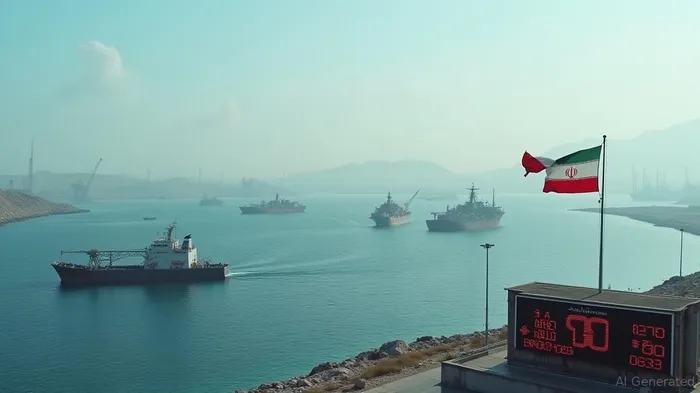

Stay ahead of the market.
Get curated U.S. market news, insights and key dates delivered to your inbox.


AInvest
PRO
AInvest
PRO



Comments
No comments yet