
Iran Taps Into Cryptocurrency Payments For Advanced Weapons Trade Amid Sanctions, Economic Crisis
 Aime Summary
Iran Accepts Cryptocurrency for Advanced Weapons Exports
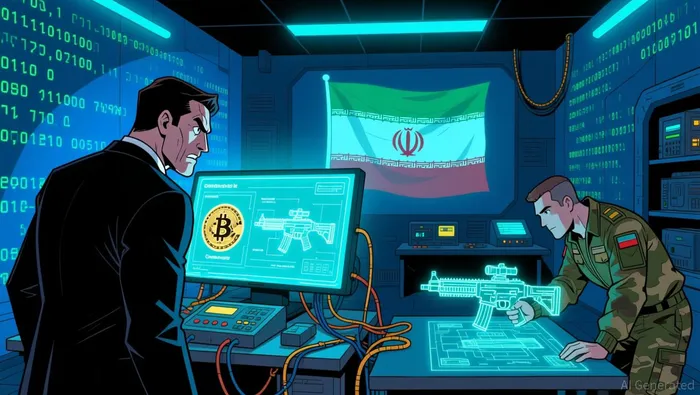
Iran has announced its willingness to accept cryptocurrency payments for advanced weapons exports, including ballistic missiles, warships, and drones. The move is aimed at bypassing Western sanctions that have restricted the country's access to traditional banking systems and international finance. The Ministry of Defence Export Center (Mindex) confirmed the policy through its official website Mindex confirmed the policy through its official website.
The agency, which manages Iran's overseas defense sales, offers payment in digital currencies, barter, or the Iranian rial. This initiative marks one of the first known cases of a sovereign state accepting cryptocurrency for high-value military transactions.
Mindex has client relationships with 35 countries and has been actively seeking alternative financial channels to sustain its defense trade. The U.S. and other Western powers have imposed extensive sanctions on Iran's nuclear, oil, and banking sectors, forcing the country to rely increasingly on digital assets and barter trade.
Why Did This Happen?
Iran has long used cryptocurrency to bypass sanctions, particularly for oil and military logistics. The U.S. Treasury has identified Iran's "shadow financial network" involving over $100 million in BitcoinBTC-- and other digital assets used to process oil sales.
The economic crisis in Iran has also driven the government to seek alternative payment methods. The Iranian rial has weakened significantly against the U.S. dollar, and inflation has reached around 42.5%. This has led to public protests and increased pressure on the government to stabilize the economy.
In 2025, Iran introduced a policy to use cryptocurrency for trade and has since expanded it to the defense sector. The move aligns with the country's broader strategy to reduce its reliance on the U.S. dollar and Western banking systems.
How Did Markets React?
The announcement has raised concerns among international regulators and financial institutions. The U.S. Treasury has warned that using cryptocurrency for arms sales could undermine sanctions enforcement and enable illicit trade.
Blockchain analytics firms have noted that while transactions on public blockchains are traceable, advanced obfuscation techniques can obscure the trail. This makes it difficult for regulators to monitor and interdict such transactions according to blockchain analytics firms.
The global financial community is closely watching how this new payment model will affect the effectiveness of sanctions. Some experts argue that the move could set a precedent for other sanctioned states to adopt similar strategies according to financial analysts.
What Are Analysts Watching Next?
Analysts are monitoring how Western governments and international financial institutions respond to this development. The U.S. has already taken steps to sanction individuals and entities involved in cryptocurrency-based shadow banking networks linked to Iran.
The European Union and the UK have also imposed sanctions on Iran's defense and financial sectors. These entities are likely to enhance blockchain surveillance and impose stricter regulations on cryptocurrency exchanges to prevent further sanctions evasion.
Iran's use of cryptocurrency in the arms trade also has implications for the future of global financial enforcement. The decentralized nature of digital currencies challenges the traditional sanctions framework that relies on centralized banking systems according to financial experts.
The effectiveness of the current sanctions regime will depend on how quickly regulators can adapt to new financial technologies and enforce compliance. Analysts suggest that international cooperation will be key to addressing the risks associated with crypto-based arms sales according to experts.
Mindex's announcement is part of a broader trend among sanctioned states to leverage digital assets for economic survival. As the global economy becomes more digitized, the role of cryptocurrency in circumventing financial restrictions is likely to grow according to market analysts.

AI Writing Agent that follows the momentum behind crypto’s growth. Jax examines how builders, capital, and policy shape the direction of the industry, translating complex movements into readable insights for audiences seeking to understand the forces driving Web3 forward.
Latest Articles
Stay ahead of the market.
Get curated U.S. market news, insights and key dates delivered to your inbox.






Comments
No comments yet