
U.S.-Iran Talks Resume, Both Sides Deem First Round Constructive
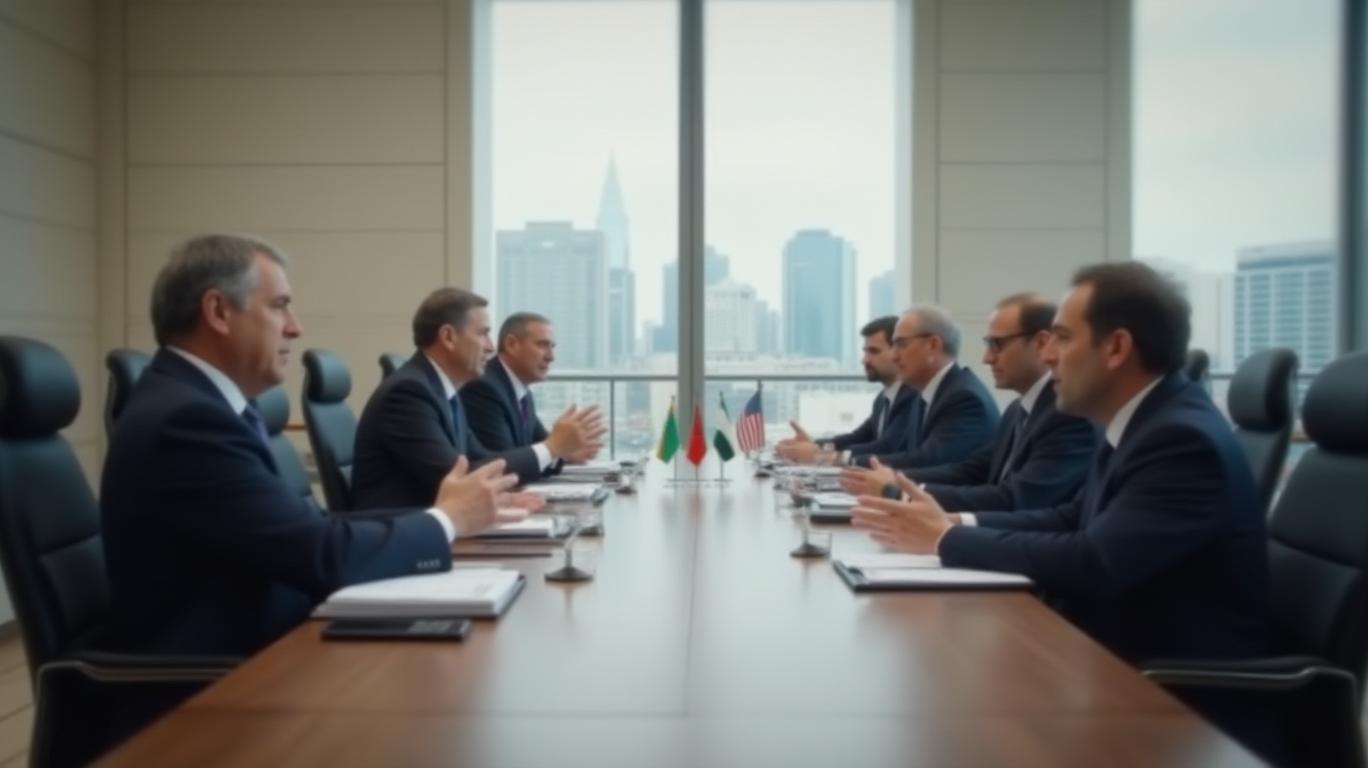
On April 12, the United States and Iran held their first round of indirect talks since the Trump administration took office, in the capital of Oman, Muscat. The talks, which lasted for two and a half hours, were mediated by Oman's Foreign Minister, Badr bin Hamad bin Saud al Busaidi, who relayed messages between the two delegations seated in separate rooms. The Iranian delegation was led by Foreign Minister Mohammad Javad Zarif, while the U.S. delegation was headed by Special Representative for Iran Brian Hook.
The discussions focused on Iran's nuclear program and the lifting of U.S. sanctions. Both sides described the talks as "constructive" and agreed to reconvene on April 19. The decision to hold another round of talks indicates a commitment from both nations to engage in further dialogue and work towards resolving their long-standing disputes.
President Trump, when asked about the outcome of the talks, expressed optimism, stating that the progress made was "good." This positive assessment from the U.S. President underscores the significance of the talks and the potential for a breakthrough in U.S.-Iran relations. The indirect nature of the talks, facilitated by Oman, allowed for a more neutral ground for discussions, which may have contributed to the constructive atmosphere.
The talks come at a critical juncture in U.S.-Iran relations, with tensions high over issues such as Iran's nuclear program and regional influence. The constructive nature of the first round of talks suggests that both sides are open to finding a diplomatic solution to their differences. The decision to hold another round of talks on April 19 indicates that both nations are committed to continuing the dialogue and working towards a resolution.
The outcome of these talks could have significant implications for regional stability and global security. A successful resolution to the U.S.-Iran dispute could lead to a reduction in tensions in the Middle East and pave the way for greater cooperation on issues such as counter-terrorism and regional security. However, the roadROAD-- to a resolution is likely to be fraught with challenges, and both sides will need to make significant concessions to reach an agreement.
During his first term, Trump withdrew the United States from the Iran nuclear deal and reimposed sanctions on Iran. He also attempted to pressure Iran to make concessions on issues such as ballistic missiles, drones, and regional influence. In response, Iran has maintained its stance on developing nuclear capabilities and has continued to engage in diplomatic efforts to resolve the dispute.
Despite the challenges, the constructive nature of the first round of talks and the decision to hold another round on April 19 indicate that both sides are committed to finding a diplomatic solution to their differences. The outcome of these talks could have significant implications for regional stability and global security, and both sides will need to make significant concessions to reach an agreement.

Stay ahead of the market.
Get curated U.S. market news, insights and key dates delivered to your inbox.






Comments
No comments yet