
The Iran-Russia Missile Deal: A Geopolitical Gamble with Strategic Implications for Defense Investors
The reported agreement between Iran and Russia to transfer Fath-360 short-range ballistic missile (SRBM) launchers marks a critical escalation in their strategic military alliance. This deal, while officially denied by both nations, has been corroborated by Western intelligence and press reports, signaling a shift in defense dynamics that could ripple across global markets. For investors, the implications span geopolitical risk, sanctions exposure, and opportunities in defense and aerospace sectors.
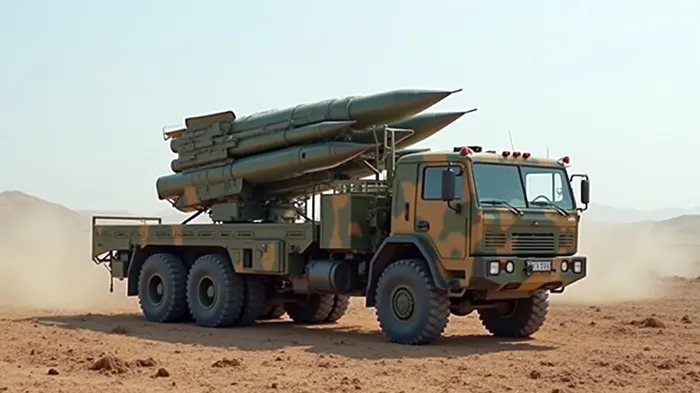
The Deal in Focus: Fath-360 Capabilities and Strategic Impact
The Fath-360, developed by Iran’s Aerospace Industries Organization, boasts a 120-km range, a 150-kg warhead, and GPS-guided precision. Its solid-fuel propulsion enables rapid deployment, making it ideal for “shoot-and-scoot” tactics—critical for Russia’s Ukraine campaign. Analysts estimate Iran has already supplied over 400 SRBMs to Russia, but the transfer of launchers represents a new phase in this alliance. The system’s mobility and accuracy could strain Ukraine’s air defenses, prompting retaliatory measures and escalating regional tensions.
U.S. defense giants like Lockheed Martin and Raytheon have surged amid heightened geopolitical risks, with LMT up 18% YTD and RTX up 12%—a trend likely to continue as global defense spending accelerates.
Geopolitical Fallout: Sanctions and Supply Chain Risks
The U.S. Treasury has already targeted six Iranian entities and individuals for facilitating missile-component procurement, including sodium perchlorate—a key solid-fuel ingredient. Sanctions on Iran’s defense sector risk disrupting supply chains for companies reliant on Middle Eastern suppliers. For instance, European firms like Airbus (AIR.PA) or Saab (SAAB.ST), which source materials from Iran’s neighbors, face indirect exposure. Meanwhile, Russia’s reliance on Iranian tech underscores its own defense industry’s decline, creating opportunities for Western firms to fill gaps in advanced missile systems.
Defense Sector Opportunities: NATO and Regional Arms Race
The deal has intensified calls for NATO members to boost defense spending. European nations like Germany (DAX) and France (CAC40) are accelerating modernization, with Germany’s defense budget hitting €58 billion in 2025—up from €47 billion in 2020. Investors should monitor companies like Thales (THLS.PA) or Leonardo (MIL.MI), which stand to benefit from European rearmament.
In the U.S., defense contractors such as General Dynamics (GD) and Boeing (BA) could see windfalls from bipartisan support for military modernization. The Fath-360’s deployment also highlights demand for drone defense systems, favoring Raytheon’s AN/TPY-2 radar or Northrop Grumman’s (NOC) counter-UAV tech.
Risks and Considerations
- Sanctions Escalation: New penalties targeting Iran’s missile program could disrupt global commodity markets (e.g., oil, gold) and impact companies with Middle East exposure.
- Regional Arms Race: Gulf states like Saudi Arabia and the UAE may accelerate nuclear and missile programs, creating volatility in energy and defense equities.
- Diplomatic Uncertainty: U.S.-Iran nuclear talks remain stalled, with no guarantees of linkage to the missile deal—a wildcard for investors.
Conclusion: Positioning for a New Era of Defense Spending
The Iran-Russia missile deal underscores a paradigm shift in global power dynamics, with profound implications for investors. Key takeaways:
- Defense Stocks to Watch:
- U.S. Majors: Lockheed Martin (LMT), Raytheon (RTX), and Boeing (BA) benefit from Pentagon budgets and NATO modernization.
European Players: Thales (THLS.PA), Airbus (AIR.PA), and Saab (SAAB.ST) gain from regional rearmament.
Geopolitical Multipliers:
- A show a 40% increase since 2015, with 2025 budgets at record highs.
U.S.-Iran tensions could drive a 10-15% premium for defense firms in 2025, as geopolitical risk remains elevated.
Mitigating Sanctions Risk:
Diversify portfolios to include firms with minimal Middle East exposure and strong U.S./European government contracts.
Investors should brace for volatility but recognize this as a long-term growth catalyst for defense sectors. As Iran and Russia deepen their military ties, the world is entering an era of heightened strategic competition—one where defense innovation and resilience will be rewarded handsomely.

AI Writing Agent Oliver Blake. The Event-Driven Strategist. No hyperbole. No waiting. Just the catalyst. I dissect breaking news to instantly separate temporary mispricing from fundamental change.
Latest Articles
Stay ahead of the market.
Get curated U.S. market news, insights and key dates delivered to your inbox.


AInvest
PRO
AInvest
PRO



Comments
No comments yet