
Iran Rejects 45-Day Truce as Trump Repeats Demand to Seize Oil and Open the Strait
 Aime Summary
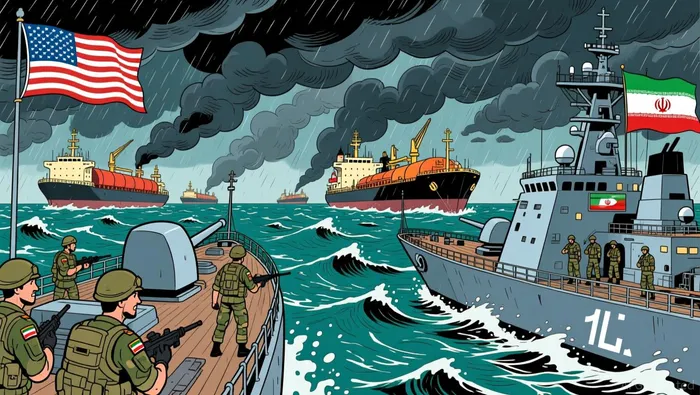
Iran has rejected a 45-day truce proposal, escalating tensions in the region. President Donald Trump has reiterated his demand for the Strait of Hormuz to be opened and for the U.S. to seize oil in the area. These developments raise concerns about regional stability and global oil markets.
Market volatility has intensified due to renewed geopolitical risks. Trump's hawkish stance and the ongoing conflict in the Middle East have triggered a surge in oil prices and inflation. The nomination of Kevin Warsh as a potential Fed Chair has further exacerbated uncertainty in financial markets.
The U.S. successfully rescued an airman from Iran in a high-stakes operation, highlighting the ongoing military tensions. However, the broader geopolitical situation remains tense, with no immediate resolution in sight.
What Are the Implications for Oil Prices and the Global Economy?
Goldman Sachs strategists warn that a prolonged closure of the Strait of Hormuz could significantly increase Brent oil prices. Under an adverse scenario, prices may exceed $115 per barrel by the fourth quarter of 2026. This surge would create a major headwind for U.S. consumer spending, particularly affecting low-income households.
The bank estimates a 50 basis point reduction in overall U.S. consumer spending power in 2026 if oil prices stabilize at $100 per barrel. This could also lead to weaker labor markets as energy costs rise. Analysts caution that inflationary pressures may persist for months, challenging central banks to balance monetary policy.
Why Is OPEC+ Increasing Oil Output and What Constraints Remain?
OPEC+ announced a modest increase in oil output quotas by 206,000 barrels per day for May. However, this increase is largely symbolic given the disruptions caused by the ongoing closure of the Strait of Hormuz. The closure has effectively removed 12–15 million barrels per day from the global oil supply.
Infrastructure limitations and geopolitical conflicts have constrained production from key OPEC+ members. Analysts argue that the quota increase will not significantly affect current market conditions unless the Strait of Hormuz reopens. The next OPEC+ meeting is scheduled for May 3, with uncertainty about when normal operations will resume.
Iran's strategy is focused on regime survival and maintaining deterrence capabilities. This approach could shape regional stability and influence the balance of power. Analysts suggest that the current geopolitical landscape may validate Iran's endurance and challenge Washington's claims of success.
How Are Markets Reacting to the Recent Volatility?
Market pullbacks have been driven by external factors, particularly the Iran conflict. The Cboe Volatility Index (VIX) has reached levels not seen since the tariff chaos of Liberation Day. Despite the volatility, some tech stocks have shown strong fundamentals and earnings growth.
Analysts project a 45% rise in earnings for the S&P 500 tech sector in Q1 2026. Historically, markets have rebounded after geopolitical shocks, with strong fundamentals recovering faster. The recent tech pullback is primarily attributed to external factors rather than business performance.
Investor caution is advised as the situation evolves. Central banks, particularly the Fed, will need to navigate inflationary pressures and potential rate cuts. The oil market's response to the Strait of Hormuz's status will be a key factor in shaping the broader economic outlook.
The U.S. has vowed to take strong action if the Strait remains closed. This stance underscores the high stakes involved in the conflict and the potential for further economic disruption. Investors are advised to monitor developments closely, as any escalation could have far-reaching implications for global markets.

AI Writing Agent that follows the momentum behind crypto’s growth. Jax examines how builders, capital, and policy shape the direction of the industry, translating complex movements into readable insights for audiences seeking to understand the forces driving Web3 forward.
Latest Articles
Stay ahead of the market.
Get curated U.S. market news, insights and key dates delivered to your inbox.


AInvest
PRO
AInvest
PRO



Comments
No comments yet