
Iran's Post-War Crossroads: Energy & Infrastructure Plays Amid Shifting Geopolitics
The Islamic Republic of Iran, a nation straddling ancient trade routes and modern geopolitical fault lines, stands at a critical juncture. Its economy, battered by sanctions and regional instability, is now a paradox of potential: vast energy reserves, strategic geographic position, and pent-up demand for infrastructure upgrades could transform it into a hub for regional investment—if geopolitical risks can be navigated. For contrarian investors, this volatility creates opportunities in energy and infrastructure sectors that could yield outsized returns.
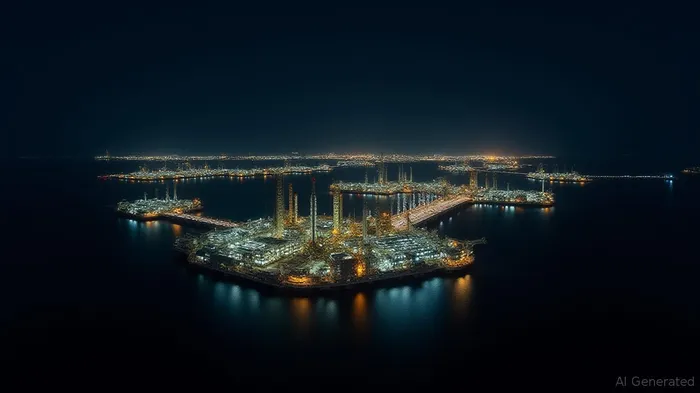
Geopolitical Realignment: A New Game Board
The past year has seen Iran's influence wane as regional alliances shift. The collapse of Syria's Assad regime and the weakening of Hezbollah have eroded Tehran's “Axis of Resistance.” Simultaneously, the U.S.-backed N7 Initiative—uniting Israel, Jordan, Egypt, and Gulf states—is redefining Middle East security dynamics. Turkey's ascendance in Syria and its rivalry with Iran over Eurasian trade corridors further complicates Tehran's standing.
Yet Iran remains a key player in two critical areas: energy and China's Belt and Road Initiative (BRI). Beijing's $400 billion commitment to the BRI positions Iran as a linchpin for land and maritime routes linking Asia to Europe. While U.S. sanctions isolate Iran financially, Chinese and Russian investment continues to fund projects like the Chabahar Port and rail links to Central Asia.
Economic Vulnerabilities: The Prize Beneath the Crisis
Iran's economy is in freefall. Inflation exceeds 30%, unemployment hovers around 12%, and the rial has lost 70% of its value since 2023. Oil exports, once a lifeline, now account for just 8.6% of GDP due to sanctions. Yet these weaknesses mask opportunities:
- Energy Reserves: Iran holds the world's fourth-largest oil reserves and second-largest natural gas deposits. Post-sanctions, its oil production capacity could double to 6 million barrels per day, attracting global energy giants.
- Infrastructure Backlog: Decades of underinvestment mean Iran needs $500 billion in energy, transportation, and water infrastructure upgrades by 2030—projects that could be fast-tracked with foreign capital.
Investment Plays: Where to Look
1. Energy Sector: Betting on Sanctions Relief
- Oil & Gas Concessions: Companies like TotalEnergies and CNPC are already negotiating long-term contracts to develop Iran's fields. A U.S. sanctions rollback could unlock $50 billion in deals by 2026.
- Renewables: Iran's solar potential (averaging 2,500 hours of sunlight annually) and wind corridors in the Caspian region offer niches for green energy firms. South Korea's Hanwha and UAE-based Masdar are early movers here.
2. Infrastructure: The BRI's Hidden Playbook
- Transportation: Chinese firms are building rail links from Tehran to Pakistan's Gwadar Port. Investors in infrastructure ETFs like the Global X China Infrastructure Development ETF (CHIX) could capture this growth.
- Ports & Pipelines: Chabahar Port, funded by India and Iran, is a gateway to Central Asia. Firms like UAE's DP World are likely partners in its expansion.
3. Regional Spillover: Play the Neighbors
- Turkey: Its role in Syria's reconstruction and rivalry with Iran creates opportunities in cross-border logistics and energy pipelines. Turkish stocks like Kolin Holding (KOLIN.IS) are positioned to benefit.
- UAE: The N7 Initiative's push for regional integration boosts UAE-based firms like Emirates Global Aluminum (EGA.SA), which supplies materials for Iranian projects.
Risks and Mitigation
- Sanctions Volatility: U.S. policy remains a wildcard. Investors should focus on companies with diversified revenue streams (e.g., ).
- Political Uncertainty: Iran's leadership succession crisis could destabilize contracts. Prioritize projects with Chinese or Russian state backing, which often come with geopolitical guarantees.
Conclusion: A High-Reward, High-Risk Frontier
Iran's post-war economy is a high-stakes investment arena. For those willing to endure volatility, its energy and infrastructure sectors offer asymmetric upside. The key is to pair exposure with risk buffers—diversify across geographies (e.g., UAE, Turkey), favor state-backed projects, and monitor geopolitical developments closely. As one analyst noted, “Iran's next decade could mirror China's 1980s: a slow, bumpy rise—but rise it will.” The question is whether you're ready to bet on it now.

Stay ahead of the market.
Get curated U.S. market news, insights and key dates delivered to your inbox.


AInvest
PRO
AInvest
PRO



Comments
No comments yet