
Iran-US Nuclear Talks: A Crossroads for Energy Markets and Investor Strategy
The stalled Iran-US nuclear negotiations, now entering a critical phase, have emerged as a pivotal factor shaping global energy markets. With Iran demanding substantial concessions—including compensation for recent U.S. airstrikes and guarantees against further military action—near-term oil price volatility remains elevated. Meanwhile, the long-term outlook hinges on whether sanctions relief can unlock Iran's oil potential or if geopolitical tensions will persist, reshaping investment opportunities in energy sectors. For investors, navigating this landscape requires a nuanced understanding of supply dynamics, regional stability risks, and strategic hedging.
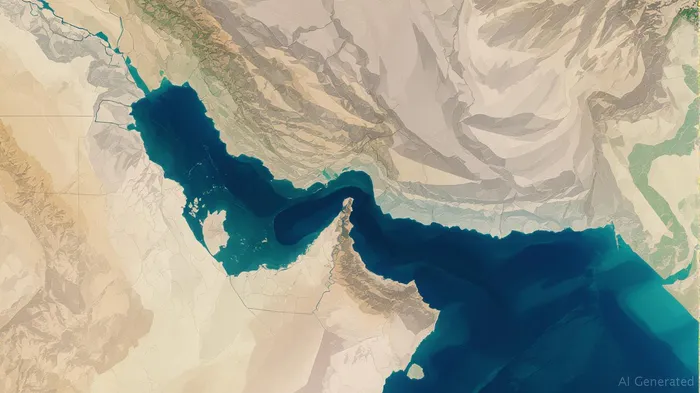
Near-Term Volatility Drivers: Supply Risks and Geopolitical Tensions
The immediate focus for investors is the geopolitical risk premium embedded in oil prices. While the U.S. and Iran remain deadlocked over negotiating terms, the threat of renewed military clashes or disruptions to the Strait of Hormuz looms large.
Strait of Hormuz as a Flashpoint: A closure or attack on this critical transit route could send Brent prices soaring to $120/bbl (per historical precedents), as seen in 2021 when tensions briefly spiked prices to $75/bbl.
Sanctions Enforcement and Supply Dynamics: Despite U.S. sanctions targeting Iranian oil exports, Tehran's adaptive strategies—such as disguising shipments as Iraqi crude—have kept exports near 2.8 mb/d. However, full enforcement of secondary sanctions could reduce global supply by 1.5%, lifting prices by 8% due to oil's price elasticity.
OPEC+'s Role: The cartel's decision to add 1.2 mb/d of production in 2025 has already contributed to a surplus, with the IEA forecasting a 0.7 mb/d overhang in 2025. This oversupply, combined with weak demand growth, could push prices toward $60–$65/bbl by year-end.
Long-Term Opportunities: Sanctions Relief, Regional Stability, and Energy Transitions
A breakthrough in nuclear talks could unlock a flood of Iranian crude, potentially adding 500,000–1 mb/d to global markets. This would create both risks and opportunities:
- Bearish Scenario (Sanctions Lifted):
- Prices could plummet to $50–$60/bbl (per BNP Paribas' $55 Brent forecast), pressuring U.S. shale producers and OPEC+ exporters.
Investment Impact:
- Oil Equities: Firms with high breakeven costs, like U.S. shale players (XLE ETF), could face margin pressure.
- Commodities: Gold and other safe-haven assets may underperform as inflation eases.
Bullish Scenario (Conflict Resumes):
A 20% probability of renewed hostilities (per U.S. intelligence) could spike prices to $110/bbl, benefiting energy ETFs like XOP (oil & gas exploration) or USL (long-dated crude).
Stability and Energy Transition:
- A nuclear deal could reduce regional instability, enabling investment in Middle Eastern LNG projects or renewable infrastructure.
Strategic Investment Recommendations
Investors must balance these scenarios through diversified portfolios and hedging strategies:
- Oil Equities:
- Buy: OPEC+ producers (e.g., Saudi Aramco, ADNOC) with low breakeven costs, as they benefit from price stability.
Avoid: High-cost U.S. shale firms unless prices rebound above $70/bbl.
ETFs and Derivatives:
- Hedging: Use inverse ETFs like DSO or short-term oil futures to mitigate downside risks if sanctions are eased.
Bullish Plays: USO (long crude) for a potential price spike from geopolitical flare-ups.
Sanctions-Sensitive Commodities:
- Gold (GLD): A safe haven during uncertainty, with a $5–$15/bbl risk premium in oil prices translating to upward momentum in gold.
Natural Gas: Regional gas markets (e.g., European TTF) may decouple from oil, offering opportunities in LNG exporters like QP (Qatar Petroleum).
Long-Term Themes:
- Energy Transition: Allocate to renewable infrastructure firms (ICLN ETF) or Middle Eastern green hydrogen projects, which could gain traction if regional stability improves.
Key Monitoring Points
- October 2025: The JCPOA's “snapback” mechanism expiration could force a U.S.-Iran deal or reignite sanctions.
- OPEC+ Meetings: Production decisions in Q4 2025 will clarify supply/demand balance.
- Chinese Demand: Beijing's crude stockpiling and policy shifts (e.g., SPR refills) could offset oversupply concerns.
Conclusion
The Iran nuclear talks represent a pivotal inflection pointIPCX-- for energy markets. Near-term volatility is inevitable, but long-term investors can capitalize by positioning for either a sanctions-relief-driven price collapse or a geopolitical-driven spike. Diversification across geographies, hedging with derivatives, and a focus on stable producers will be critical. As the saying goes, “In uncertainty, liquidity is king”—investors must stay nimble, monitor key indicators, and avoid overexposure to sanctions-sensitive assets without clarity on the talks' outcome.

Stay ahead of the market.
Get curated U.S. market news, insights and key dates delivered to your inbox.


AInvest
PRO
AInvest
PRO



Comments
No comments yet