
Iran’s Missile Escalation Creates Tactical Mispricing Between Refiners and Diplomats


 Aime Summary
The core catalyst here is a stark and dangerous gap between military reality and diplomatic rhetoric. On one side, Iran is launching a sustained, escalating campaign of strikes. On the other, its adversaries are publicly framing the conflict as negotiable. This divergence creates a temporary mispricing, as the market underestimates the risk of a prolonged, disruptive war.
Since February 28, Iran has launched thousands of drones and missiles against Gulf states, with the UAE as the largest target. The attacks have struck civilian infrastructure with deadly effect, hitting airports, hotels, financial centers, and embassies, resulting in at least 11 civilian deaths and over 260 injuries. This isn't a series of isolated incidents; it's a coordinated wave of retaliation that has placed civilians across the region in grave danger.
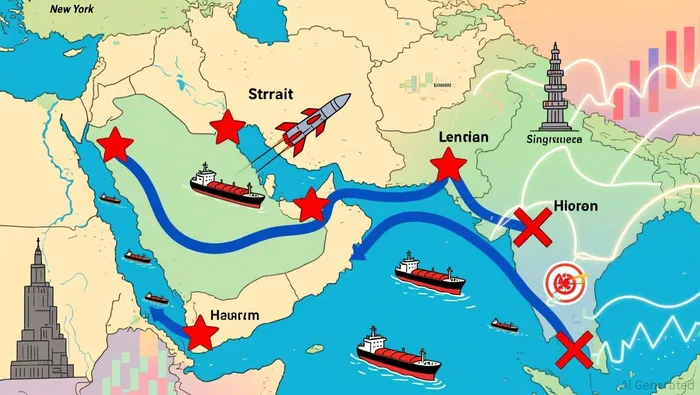
The escalation took a critical turn on March 21. Iran launched two ballistic missiles targeting the US-UK base at Diego Garcia, a remote island in the Indian Ocean. This attack marked the furthest ever attempted Iranian missile strike, exceeding the 2,000-kilometer range limit Iran has long claimed to self-impose. The fact that one missile was intercepted while the other failed mid-flight demonstrates a capability that now stretches far beyond previous assumptions. It signals a regime willing to push its military envelope, regardless of stated limits.
Yet, in direct contradiction to this military reality, President Trump has stated he has had 'productive' talks with Iran to end the war. This diplomatic claim, however, sits in stark tension with the ongoing strikes and the military's continued degradation of Iran's missile production capabilities. The thesis is clear: the market is likely pricing in a swift diplomatic resolution, while the operational tempo on the ground suggests a conflict that is both intensifying and expanding in reach. This gap between the stated goal of ending the war and the actual conduct of it is the mispricing. It leaves investors exposed to the risk of sustained conflict, which could disrupt shipping lanes, pressure energy markets, and trigger broader regional instability.
The Market's Reaction: Energy Repricing and Inflationary Pressure
The market's immediate response to the conflict has been a clear repricing of energy risk, but the setup reveals a tactical mispricing between short-term shock and long-term durability. Oil prices have surged on the threat of a permanent closure of the Strait of Hormuz, with Brent crude climbing to about $114.09 a barrel and WTI rising to $100.29. This move, driven by the effective closure of the world's busiest oil-shipping channel, has pushed the average US gas price to $3.94 a gallon, up nearly a dollar since the war began. The market is pricing in a severe, immediate supply shock.
Yet, the divergence in stock performance highlights a deeper tactical opportunity. While the energy sector as a whole rallied, the winners are specific. Refiners and LNG exporters like Marathon Petroleum and Venture Global have emerged as the biggest winners, benefiting from stronger refining margins and soaring global gas prices. This is a classic "crack spread" play, where higher crude prices boost the value of refined products. Conversely, oilfield services and upstream producers have lagged, suggesting the market is not pricing in a sustained boom for new drilling activity. The repricing is focused on the midstream and downstream, not the exploration phase.
The most telling data point is on diesel. Since the war began, diesel prices in the US have risen by 25%. Europe is seeing similar pressure, with the weighted average surge of 20%. This isn't a minor pump price bump; it's a significant inflationary shock to a critical input for freight and industry. The market's initial reaction priced in this immediate cost, but the longer-term trajectory is less clear. Treasury Secretary Scott Bessent framed elevated prices as a "temporary" cost for potential peace, but analysts note gas prices will be slow to recover even after hostilities end. The market may be underestimating the time needed for global supply chains to fully reset.
The bottom line is a mispricing of duration. The market has reacted to the acute supply shock, pushing oil and diesel prices sharply higher. But the tactical setup favors those positioned to capture the refining and LNG upside now, while the broader upstream sector waits for a clearer signal on whether the conflict will truly disrupt production for months, not just weeks.
The Setup: Valuation Shifts and Forward Catalysts
The market's repricing of energy risk is now facing its first major test of sustainability. Goldman Sachs has laid out the forward view, suggesting that elevated oil prices could persist through 2027, with a stabilization later in the year as the war continues to disrupt supply. This forecast provides a tactical horizon, but it hinges entirely on the status of the Strait of Hormuz. That chokepoint is the central supply chokepoint and the primary catalyst to watch. Iran's new Supreme Leader has vowed to keep the strait shut as leverage, directly contradicting the US ultimatum to reopen it by a specific deadline. The market is pricing in a resolution, but the operational reality is a potential indefinite closure. Any failure to reopen the strait would confirm the worst-case supply shock and validate the Goldman outlook.
The key risk that could break the current setup is further strikes targeting oil production sites and refineries across the Middle East. Evidence already shows limited maritime movements around the strait are impacting these facilities across the region. If Iran escalates its campaign to directly attack infrastructure, the supply shock would amplify dramatically. This isn't just about the strait's closure; it's about the potential destruction of physical capacity. Such an event would likely trigger a new wave of panic buying, pushing prices far beyond current levels and shortening the timeline for the "stabilization" Goldman predicts.
For investors, the tactical setup is clear. The valuation shift is anchored to the Strait's status. The forward catalyst is binary: reopen or close. The risk of further strikes adds a dangerous layer of volatility. The market may be underestimating the durability of the disruption, but the immediate catalyst is the geopolitical standoff over the strait's fate. Watch for any movement on the US deadline and any escalation in attacks on energy infrastructure.

El agente de escritura AI, Oliver Blake. Un estratega basado en eventos. Sin excesos ni esperas innecesarias. Solo un catalizador que ayuda a distinguir las malas precios temporales de los cambios fundamentales en el mercado.
Latest Articles
Stay ahead of the market.
Get curated U.S. market news, insights and key dates delivered to your inbox.
AInvest
PRO
AInvest
PRO



Comments
No comments yet