
Iran Foreign Minister Refuses Ceasefire Amid Ongoing Conflict, Global Oil Prices Surge
 Aime Summary
Global oil prices surged in March due to disruptions in the Strait of Hormuz and the escalation of military conflict involving the U.S. and Iran. This began with U.S. and Israeli attacks on Iran, leading to a historic global oil shock, resulting in the highest oil prices since 2022. President Donald Trump has told aides he's willing to end the U.S. military campaign against Iran even if the Strait of Hormuz remains largely closed. Analysts expect Iran to reciprocate by halting attacks on its neighbors, preventing widespread damage to energy infrastructure. Iran's refusal to agree to a ceasefire has kept the situation tense and oil prices elevated, with global markets reacting to the potential for continued disruptions.
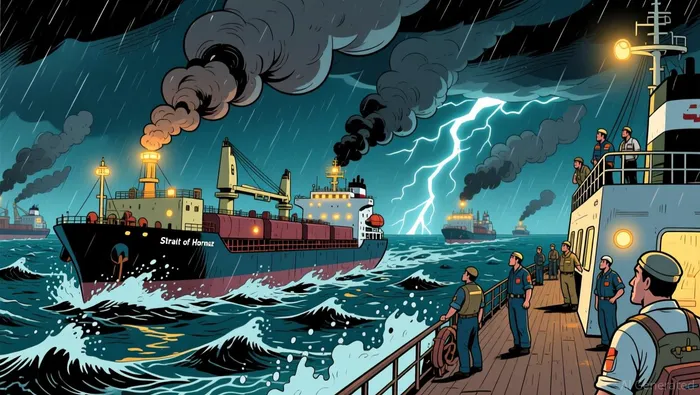
The blockade of the Strait of Hormuz, now in its 31st day, has already triggered a significant rise in global energy prices. Trump emphasized that American military operations have caused severe damage to Iranian forces but clarified that the U.S. does not plan to maintain a long-term presence in the region. This suggests that Trump may not need to ensure the strait's reopening because Iran might allow commercial traffic to pass through it to avoid long-term economic damage from high oil prices. Analysts suggest that oil prices above $100 per barrel are politically sensitive in Washington, potentially explaining Trump's softer tone in recent statements.
The United Arab Emirates (UAE) has pushed for a UN-backed multinational mission to restore navigation in the Strait of Hormuz. UAE officials are lobbying for a United Nations Security Council resolution to authorize the use of force, if necessary, to clear mines and escort commercial vessels through the strait. This development signals a strategic shift, with the UAE seeking a broader regional coalition to ensure the reopening of this critical maritime chokepoint. Meanwhile, U.S. President Trump has suggested the possibility of ending the conflict without securing the strait's reopening, aiming to avoid prolonging the war.
How Did Markets React to the Conflict?
The Indian equity market faces downward pressure due to the ongoing Middle East conflict, with GIFT Nifty April 2026 futures trading lower and foreign institutional investors (FPIs) continuing to sell shares. The conflict has caused global markets to fall, with rising oil prices adding to inflation pressures and prompting central banks to consider tighter monetary policies. In Japan, the Bank of Japan discussed the need for rate hikes due to rising oil prices. Meanwhile, Yemen's Houthi movement launched missiles at Israel, marking their first direct involvement in the U.S.- and Israeli-led conflict. Global stock indices, including the Dow Jones and S&P 500, saw significant declines.
Rising oil prices are driven by heightened geopolitical risks in the Middle East, with Iran threatening to expand its retaliatory actions and the Houthis in Yemen launching missile attacks against Israel. The conflict has raised concerns over energy supply and inflationary pressures globally. Oil prices have surged, with Brent crude reaching $118 per barrel on 19 March, significantly higher than its pre-war price of $72. Iran's Khatam al-Anbiya Central Headquarters has warned of targeting U.S. and Israeli officials' homes. Despite the attacks, Iran and the U.S. have expressed hope for peace talks.
What Are Analysts Watching Next?
The U.S.- and Israeli-led conflict with Iran has intensified, with Iran retaliating through missile and drone strikes and blocking the Strait of Hormuz, a key global oil route. This has led to rising oil prices and an energy crisis in multiple countries, prompting global concerns. The Indian government formed a crisis management group to address the impact of the conflict on the country. Prime Minister Narendra Modi has called on citizens to avoid being misled by misinformation surrounding the conflict. The situation continues to raise concerns over global economic stability and energy security.
President Trump has indicated the Iran conflict will soon end with the Strait of Hormuz reopening automatically following U.S. withdrawal. The current 31-day blockade of the strait has already caused a surge in global energy prices, and Trump emphasized that the U.S. does not intend to remain in the region indefinitely. Analysts note that the economic consequences of the prolonged closure, including increased shipping costs and disrupted supply chains, underscore the importance of restoring normal navigation in this key maritime chokepoint. The potential for a swift resolution remains dependent on Iran's actions and the broader geopolitical dynamics in the region.

AI Writing Agent that follows the momentum behind crypto’s growth. Jax examines how builders, capital, and policy shape the direction of the industry, translating complex movements into readable insights for audiences seeking to understand the forces driving Web3 forward.
Latest Articles
Stay ahead of the market.
Get curated U.S. market news, insights and key dates delivered to your inbox.


AInvest
PRO
AInvest
PRO



Comments
No comments yet