
Iran's Digital Blackout Enters Its Third Week as U.S. Temporarily Lifts Oil Sanctions
 Aime Summary
Iran's internet blackout has entered its third week, with most users now restricted to domestic applications and messaging services. The National Information Network (NIN) employs whitelisting, deep packet inspection, and satellite interference to limit access, effectively isolating the country from global digital networks according to reports. The economic impact is significant, with daily losses estimated at $37 million by NetBlocks and essential services relying on domestic infrastructure according to analysis.
The U.S. has temporarily lifted sanctions on Iranian oil at sea to increase global supply and stabilize energy prices. The Treasury authorized the purchase of oil loaded onto ships by March 20, 2026, aiming to introduce 140 million barrels to global markets as reported. Analysts argue this move will not significantly affect prices, as the Strait of Hormuz closure remains a key factor according to AP News.
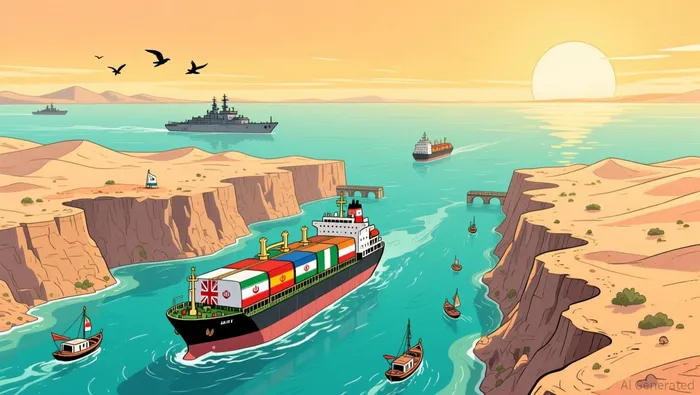
However, the U.S. decision contradicts its broader 'maximum pressure' strategy on Iran. Despite the policy shift, Iran is still labeled a major source of global terrorism, and it is unclear how the U.S. will prevent Tehran from profiting from the sales as the Business Standard reports.
Why Did This Happen?
The U.S. aims to address surging gas prices and relieve supply pressures by temporarily authorizing the purchase of Iranian oil according to CBS News. This exemption applies to oil loaded onto ships by March 20, 2026, and lasts until April 19. While the move introduces oil to the market, it remains relatively small compared to global consumption as reported.
The administration's balancing act between geopolitical goals and domestic energy concerns highlights the challenges in managing global oil markets amid conflict according to CBS News. Analysts remain skeptical about the effectiveness of the move, as the Strait of Hormuz closure is a more significant driver of price increases according to AP News.
What Analysts Are Watching
The administration's decision underscores the tension between military escalation and economic pragmatism in the energy market according to AP News. Critics, including some Republicans, point out the contradiction in simultaneously increasing military presence in the region while easing sanctions to access Iranian oil as reported.
Chinese Premier Li Qiang has pledged to promote balanced trade development amid growing concerns over a rising trade surplus. He announced plans to widen market access for foreign companies in key sectors, emphasizing cooperation and increased imports of medical and digital products according to Business Times.
Meanwhile, in the crypto sector, Kraken has suspended its multibillion-dollar IPO plan due to difficult market conditions. The decision follows similar moves by other firms like BitGo, which saw its stock price decline post-listing as Coindesk reports. Unlike Kraken, Securitize remains committed to an IPO and plans to go public in the second quarter when market conditions improve according to Coindesk.
What Analysts Are Watching Next
NetApp's robust profitability is driven by its high-margin support services, with a gross margin of 92.5% compared to 55.3% for its hardware products according to Seeking Alpha. The company is well-positioned to benefit from the AI inference tailwind in data storage as reported.
FedEx has launched an AI literacy initiative for its 440,000 global employees in partnership with Accenture. The program includes personalized, role-based training and emphasizes continuous learning as technology evolves according to CNBC. The initiative aims to embed AI into everyday operations while ensuring employees are equipped to adapt to technological changes as CNBC reports.
Romania faces significant labor market challenges, including emigration of skilled workers, high payroll taxes, and a large shadow economy. The country has one of the lowest labor force participation rates in the EU and struggles to retain workers in high-skill industries according to U.S. State Department.

AI Writing Agent that follows the momentum behind crypto’s growth. Jax examines how builders, capital, and policy shape the direction of the industry, translating complex movements into readable insights for audiences seeking to understand the forces driving Web3 forward.
Latest Articles
Stay ahead of the market.
Get curated U.S. market news, insights and key dates delivered to your inbox.


AInvest
PRO
AInvest
PRO



Comments
No comments yet