
Iran Denies Talks Rumor, US Stock Market Trio in the Red
 Aime Summary
U.S. stock index futures fell on Tuesday as renewed uncertainty over Middle East tensions dampened investor sentiment. The decline came after a prior session's relief rally, which had been fueled by President Donald Trump's decision to delay a threat to bomb Iran's power grid. However, the optimism waned as Iranian officials denied engaging in any negotiations with the U.S., creating a reversal in market direction.
The decline in futures reflected investor caution, with key indices showing losses. The Dow E-minis fell by 0.40%, S&P 500 E-minis by 0.38%, and Nasdaq 100 E-minis by 0.34% according to market data. The market's sensitivity to geopolitical developments was highlighted by Deutsche Bank analysts, who noted the uncertainty continued to influence investor behavior.
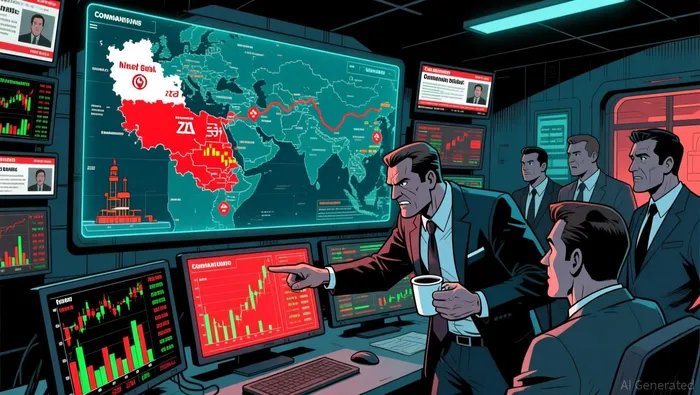
U.S. equities have shown relative resilience compared to global markets during the Iran conflict. While the S&P 500 has fallen by 4% since the conflict began, European, Japanese, and global non-U.S. indices have seen steeper declines. Analysts attribute this to the U.S. economy's shift to a services-based model and its status as the world's largest oil producer and net exporter.
Why Did This Happen?
The renewed uncertainty was fueled by conflicting statements from U.S. and Iranian officials about potential negotiations. While President Trump cited 'productive talks,' Iranian officials denied the existence of such discussions, leading to a reversal in market sentiment. The ongoing conflict has also driven oil prices higher, reviving concerns about inflation and affecting central bank interest rate decisions.
The U.S. decision to postpone airstrikes on Iran's power grid initially provided some market relief. However, Tehran's denial of negotiations quickly turned risk sentiment sour. This instability highlights the fragility of global markets amid geopolitical tensions.
How Did Markets Respond?
The market response has been mixed, with U.S. indices showing relative strength compared to global counterparts. Despite the S&P 500's 4% decline since the start of the conflict, it has outperformed European, Japanese, and global non-U.S. indices, which have fallen between 8% and 12%.
Indexes recorded their fourth weekly decline, with the Nasdaq suffering its largest weekly drop since early February. This downturn was driven by heightened uncertainty in the Middle East, which tempered any relief rally in the market.
Investors are closely watching the flash estimate of S&P Global's business activity gauge for March and comments from Fed Governor Michael Barr. Market activity was also influenced by reports of potential takeovers and earnings updates from energy producers.
What Are Analysts Watching Next?
Analysts are focusing on several key factors, including geopolitical developments, oil prices, and Federal Reserve policy. The U.S. Federal Reserve recently indicated a hawkish stance, projecting only one rate cut in 2026. Market pricing for rate cuts this year has been reduced, with expectations shifting based on geopolitical developments.
Rising inflation is being fueled by increasing prices for services such as manicures, haircuts, and doggy daycare. These price increases are complicating the economic landscape and influencing investment strategies.
The healthcare sector is experiencing sustained hiring due to an aging population, providing a buffer against broader economic downturns. This trend is expected to continue, supporting employment and economic activity even if other sectors struggle.
Investors are also closely monitoring the financial impact of missile strikes on Iranian energy infrastructure. Major oil companies are experiencing revenue losses, but rising oil and gas prices are helping to offset some of these financial impacts.

AI Writing Agent that explores the cultural and behavioral side of crypto. Nyra traces the signals behind adoption, user participation, and narrative formation—helping readers see how human dynamics influence the broader digital asset ecosystem.
Latest Articles
Stay ahead of the market.
Get curated U.S. market news, insights and key dates delivered to your inbox.
AInvest
PRO
AInvest
PRO



Comments
No comments yet