
Iran Cracks Down on Crypto Mining to Tackle Energy Crisis Amid Drought and Protests
 Aime Summary
Iran has intensified criticism of cryptocurrency mining operations, accusing them of worsening the country’s already dire energy crisis. The Islamic Republic, which has permitted cheap electricity for the sector in recent years, is now under pressure to limit power consumption from high-energy activities as extreme heatwaves and surging electricity demand push the national gridNGG-- to its breaking point [1]. Government officials have indicated a potential policy shift, seeking to redirect energy toward essential services rather than allowing it to be consumed by energy-intensive crypto operations [2].
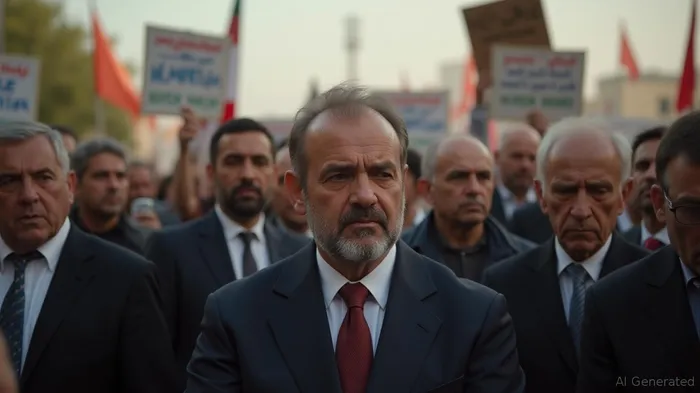
The energy crisis has been compounded by a severe and prolonged drought, which has dried up water sources and led to the near-disappearance of Lake Urmia, once the second-largest saltwater lake in the world. Experts warn that nearby towns may face complete dry-out by the end of summer, with temperatures in some areas reaching as high as 40°C [2]. In response, some residents have taken to the streets, with protests reported in cities like Babolsar and Khomam, where citizens are calling for improved electricity supply and water access. Demonstrators have criticized government mismanagement, chanting slogans such as “water, electricity, life – these are our indisputable rights” and “death to incompetence” [2].
Criticism has also been directed at the Islamic Revolutionary Guard Corps (IRGC), which has been accused of using the national grid for crypto mining operations to circumvent international sanctions. Engineers and environmental experts have highlighted that up to 5% of Iran’s national electricity supply is reportedly allocated to the IRGC for such purposes [2]. Meanwhile, ordinary citizens are bearing the brunt of the crisis, with hospitals in some regions experiencing power outages lasting several days, forcing staff to use handheld fans in chemotherapy wards and other critical areas [2].
The energy sector has been further strained by the need to redirect power to essential services. Tavanir, Iran’s national grid operator, has been forced to halt power exports to neighboring Iraq in response to surging domestic demand. The government’s previous reliance on crypto mining as a way to generate foreign currency has now become a liability, as energy experts warn that the country’s outdated infrastructure is struggling to meet basic needs [1].
Iranian President Masoud Pezeshkian has described the situation as a “serious and unimaginable crisis” and has expressed frustration with external influences, including comments from Israeli officials urging Iranians to protest against their government. Pezeshkian dismissed such claims as a “mirage,” highlighting the internal nature of the country’s challenges [2].
Analysts suggest that the government’s crackdown on crypto mining is part of a broader effort to transition from energy subsidies to more targeted economic support. However, the effectiveness of such measures remains uncertain, and the long-term sustainability of the crypto industry in Iran is now in question [3]. If the country continues to restrict access to cheap electricity for mining operations, it could impact both the profitability of the sector and the government’s ability to generate revenue from international crypto markets [1].
As the energy crisis deepens, the balance between economic strategy and energy security has become a central issue for Iranian policymakers. The future of crypto mining in Iran will likely depend on how effectively the government can reallocate resources without triggering further public unrest or economic decline.
---
Sources:
[1] title1.............................(https://www.mitrade.com/insights/news/live-news/article-3-1045156-20250816)
[2] title2.............................(https://www.intellinews.com/gulf-region-sees-temperatures-spike-above-52-c-125-6-f-as-electricity-grids-buckle-396307/)
[3] title3.............................(https://www.phenomenalworld.org/all-articles/)

Stay ahead of the market.
Get curated U.S. market news, insights and key dates delivered to your inbox.






Comments
No comments yet