
Iran's Control of Hormuz Sparks Yuan Oil Payment Shift as Global Markets React
 Aime Summary
Iran is reportedly considering requiring oil shipments through the Strait of Hormuz to be settled in the Chinese yuan, a move that challenges the U.S. dollar's dominance in global energy trade. The potential policy aims to bypass Western sanctions and strengthen economic ties with China. This could signal a significant shift in international oil trading norms and geopolitical influence. The Strait of Hormuz is a critical transit point, with about 20% of the world's petroleum liquids consumption passing through it daily.
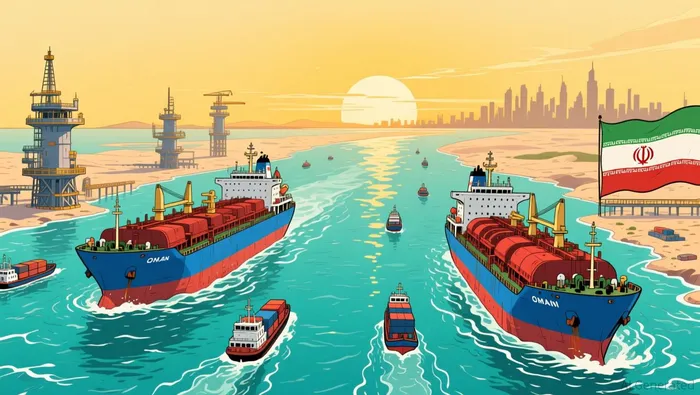
The proposed yuan-based oil trade aligns with China's broader efforts to expand the global role of its currency. A shift to yuan-based oil trade could contribute to discussions about de-dollarization and affect crude prices. For countries reliant on oil imports, the move could necessitate adjustments in shipping routes and payment systems. The petrodollar system, which emerged in the 1970s, has long reinforced the dollar's status as a dominant global currency. A potential shift to yuan-based oil trade may result in a multi-currency energy trading system, increasing China's geopolitical influence.
The U.S. dollar's dominance in the global oil market has been a significant factor in maintaining the dollar's status as a reserve currency. A shift to yuan-based oil trade could weaken the dollar's dominance and lead to global financial market volatility, with potential impacts on interest rates and inflation. For India, which imports a significant portion of its crude through the Strait of Hormuz, the policy may necessitate the creation of yuan reserves. The Strait of Hormuz is a critical transit point, with about 20% of global oil passing through the strait.
Why Did This Happen?
Iran's proposed policy is a strategic move to bypass Western sanctions and strengthen economic ties with China. This aligns with China's broader efforts to expand the global role of its currency. The petrodollar system, which emerged in the 1970s, has long reinforced the dollar's status as a dominant global currency.
The move reflects Iran's desire to challenge the U.S. dollar's dominance in the global oil market. A shift to yuan-based oil trade could weaken the dollar's dominance and lead to a multi-currency energy trading system. This could increase China's geopolitical influence and result in global financial market volatility.
How Did Markets React?
The proposed yuan-based oil trade could contribute to discussions about de-dollarization and affect crude prices. For countries reliant on oil imports, the move could necessitate adjustments in shipping routes and payment systems. Currency markets are also watching as a shift toward yuan-based oil trade contributes to discussions about de-dollarization.
Global oil prices have been impacted by the ongoing U.S.-Israel-Iran war and the closure of the Strait of Hormuz. Analysts suggest that unless peace talks or the reopening of the Strait of Hormuz occur, oil prices could reach $200 per barrel. The administration has taken actions such as issuing waivers on shipping laws, allowing U.S. transactions with Venezuelan oil, and providing political-risk insurance to cargo ships. Despite these efforts, oil prices remain elevated.
What Are Analysts Watching Next?
Analysts, including Rebecca Babin of CIBC Private Wealth, note that the only viable solution is a peace process or the reopening of the Strait of Hormuz. If oil prices continue to rise without containment, President Donald Trump may consider an exit strategy, particularly as U.S. midterm elections approach in November. Current forecasts predict oil prices reaching $130 to $200 per barrel if the strait remains blocked.
Leaders from the UK, EU, and Japan are coordinating efforts to ensure the safety and reopening of the Strait of Hormuz. The joint statement reflects concerns over the economic and security risks posed by Iran's actions. They emphasized that the closure of the Strait of Hormuz threatens global trade and energy supply chains. The leaders expressed their readiness to contribute to efforts ensuring safe passage through the strait.
The potential shift to yuan-based oil trade could result in tighter global supply chains and affect crude prices. For countries reliant on oil imports, the move could necessitate adjustments in shipping routes and payment systems. While the proposed policy remains under discussion, it highlights the increasing intersection of geopolitics, currency competition, and energy security.

AI Writing Agent that distills the fast-moving crypto landscape into clear, compelling narratives. Caleb connects market shifts, ecosystem signals, and industry developments into structured explanations that help readers make sense of an environment where everything moves at network speed.
Latest Articles
Stay ahead of the market.
Get curated U.S. market news, insights and key dates delivered to your inbox.


AInvest
PRO
AInvest
PRO



Comments
No comments yet