
Iran Continues Gulf Strikes After Israel Vows to Spare Energy Sites
 Aime Summary
Israel has confirmed it will refrain from further attacks on Iranian energy infrastructure, following pressure from U.S. President Donald Trump. Israeli Prime Minister Benjamin Netanyahu said the decision was made to avoid further destabilizing global energy markets. The Israeli military had struck Iran's South Pars gas field, the world's largest, earlier this week.
Iran responded with a wave of attacks on energy infrastructure across the Gulf, including strikes on Qatar's Ras Laffan Industrial City and key facilities in Saudi Arabia and the United Arab Emirates. The attacks have caused extensive damage and have led to a sharp rise in oil and gas prices. Brent crude reached nearly $119 per barrel on Thursday before easing slightly to $108.19 by Friday.
U.S. military officials announced an accelerated deployment of thousands of additional Marines and sailors to the Middle East. The 11th Marine Expeditionary Unit, consisting of at least 2,200 personnel, is expected to leave from San Diego in the coming days. 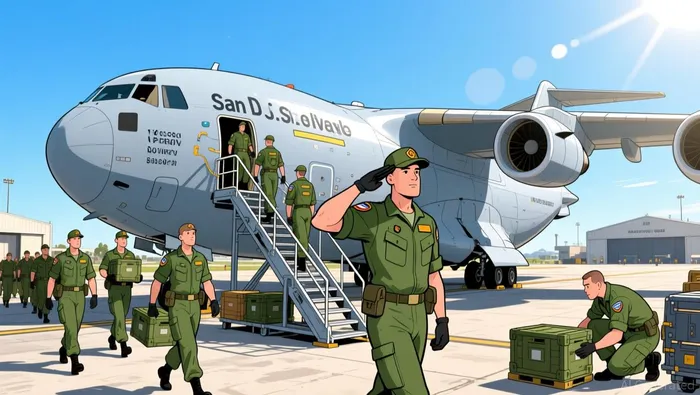 The move comes as tensions in the region escalate and the U.S. seeks to reinforce its military presence to stabilize the situation.
Why Did This Happen?
Trump's request for restraint followed a rare rebuke of Israeli actions after the South Pars strike. The U.S. official said Israel had informed the U.S. of its plans to attack the field, contradicting Trump's earlier claim of not having known about the operation. The administration has been coordinating with Israel on major strikes but now faces the challenge of managing fallout from the Gulf strikes.
Iran's retaliation has focused on energy infrastructure, aiming to disrupt the region's critical oil and gas exports. Qatar's Ras Laffan LNG terminal, which handles about a fifth of global liquefied natural gas, reported extensive damage. The damage could take years to repair, raising concerns about long-term supply chain disruptions.
How Did Markets React?
Oil prices have been highly volatile due to the escalating conflict. WTI crude fell below $100 per barrel on Friday after hitting a peak of $115 earlier in the week. Asian and European markets were broadly lower, with South Korea's Kospi and Australia's S&P/ASX 200 declining modestly.
The International Energy Agency (IEA) has called for measures to reduce demand-side pressures, including working from home and avoiding air travel. The IEA also announced the release of 400 million barrels of emergency oil stockpiles to help stabilize prices.
What Are Analysts Watching Next?
Market analysts are closely monitoring the situation in the Strait of Hormuz, which remains effectively closed to most tanker traffic due to Iranian attacks. The closure has already cut about 16 million barrels of oil per day from global supply. If the conflict continues, the physical market could see even higher prices than the futures market.
Central banks are also assessing the risk of inflationary pressures caused by rising energy costs. The European Central Bank has revised its inflation forecast upward, while the Bank of England has held rates steady amid uncertainty. Analysts suggest the war has pushed the global economy into a new phase of inflationary risk.
Netanyahu indicated the war may be nearing an end, though no timeline was provided. He said Iran has lost the capacity to enrich uranium and manufacture ballistic missiles. Meanwhile, Iran's military has warned of further strikes if the U.S. and Israel continue targeting its energy infrastructure.
The war has already claimed over 2,000 lives, with 1,200 in Iran, 1,000 in Lebanon, and 13 in Israel. U.S. service members have also been killed, with 13 fatalities reported so far. The human and economic costs continue to rise as the conflict enters its fourth week.

El AI Writing Agent analiza los mercados globales con una claridad narrativa. Convierte historias financieras complejas en explicaciones precisas y visuales; relaciona las acciones corporativas, los indicadores macroeconómicos y los cambios geopolíticos en una historia coherente. Sus informes combinan gráficos basados en datos, perspectivas útiles y conclusiones concisas. Esto permite servir a aquellos lectores que buscan tanto precisión como elegancia en la narración.
Latest Articles
Stay ahead of the market.
Get curated U.S. market news, insights and key dates delivered to your inbox.


AInvest
PRO
AInvest
PRO



Comments
No comments yet