
The Iran Conflict’s Economic Consequences: Insignificant or Concerning?
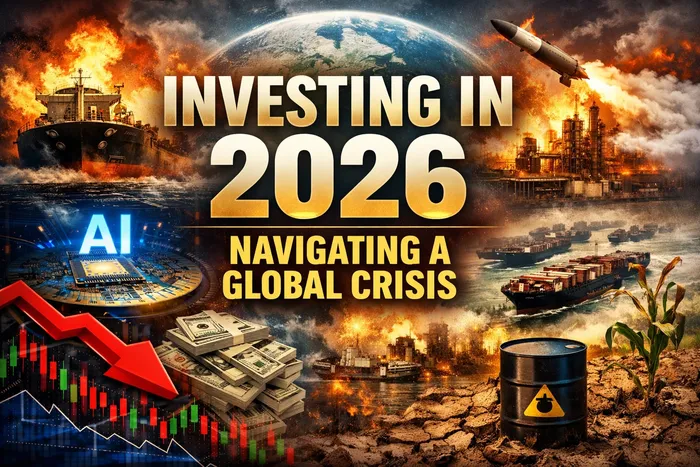
Understanding your portfolio and staying invested in companies with intellectual capital, competitive advantages, and strong management teams maximizes potential. This principle remains the bedrock of sound investing, even as the global economy faces significant headwinds in 2026. While market volatility often drives emotional decisions, history including the Pandemic and Liberation Day, has taught me that moving to cash is not an effective strategy. Staying the course is essential because the current economic landscape, though fraught with disruption, still offers pockets of significant growth and structural resilience.
The "why" behind this disciplined approach becomes clear when examining the economy's fragile state leading up to the current conflict. At the start of this year, the U.S. appeared to be on an upward trend, with 2025 GDP at 2.1% and inflation easing toward 2.4%. However, structural cracks were already visible: consumer confidence had dropped to its lowest level since last April, and job creation was dangerously narrow. In 2025, the healthcare sector was the only industry to add jobs; without those 693,000 positions, the U.S. would have lost 570,000 jobs.
The U.S. strikes on Iran on February 28th acted as a catalyst for these underlying vulnerabilities. The closure of the Strait of Hormuz has disrupted 20% of global oil and liquefied natural gas (LNG) supplies, marking perhaps the largest energy disruption since World War II. This bottleneck has immediate, severe consequences for the global tech infrastructure. Asia consumes 80% of Middle Eastern LNG, and Taiwan, which produces nearly 90% of the world’s AI semiconductors, relies heavily on natural gas to fuel its fabrication facilities. This disruption threatens to bring the global buildout of AI and data centers to a standstill.
More from Michelle Connell
- The Warsh Test: A High-Stakes Gamble on US Economic Stability
- The Inheritance Trap: 3 Reasons You Shouldn't Count on Your Boomer Parents' Money.
- Chutes and Ladders: Why the American Dream is Slipping Out of Reach
Beyond energy, the conflict is impacting essential commodities. Up to 35% of seaborne fertilizers and 50% of nitrogen-based fertilizers could be halted, directly threatening crop productivity for corn and rice. Furthermore, nearly a third of the world's helium , a critical coolant for semiconductor production, is supplied by Qatar's LNG facilities, adding another layer of risk to the tech sector.
The long-term concern for investors is the threat of stagflation. Elevated prices for energy, food, and pharmaceuticals are types of inflation that central banks cannot easily lower through interest rate adjustments. Persistent inflation prevents the Federal Reserve from lowering rates, which could lead to an economic slowdown, a recession, and instability in private credit and equity markets. Even if the Strait of Hormuz reopens soon, the backlog of ships and the extensive repairs needed for destroyed LNG facilities mean that normalcy may not return for weeks, or even years.
Despite these grave concerns, the case for staying invested remains strong. Historically, oil prices must double, a 100% increase, to trigger a market decline of 10% or more; currently, Brent crude has risen only 33%. Moreover, the fundamental drivers of the modern economy remain intact. AI, mergers, and acquisitions are expected to support earnings growth of 12-15% this year, with the technology sector specifically projected to grow by 29%. By focusing on companies with the intellectual capital to navigate these disruptions, investors can position themselves to weather the current crisis and capture the growth that will ultimately fuel the recovery.
Link: Michelle Connell and Portia Capital Management
_9e6f09bf1774882986628.jpg?format=webp&width=700)
_ece9195b1774883061577.jpg?format=webp&width=700)
_376e90a51765890232851.png?format=webp&width=48&height=48)
Michelle Connell, CFA is the owner of Portia Capital Management. Michelle has over twenty-five years of institutional experience of investing for charities, foundations and high net-worth individuals. As a former semiconductor analyst and tech sector lead, Michelle also invests in public and privately-held technology investments. She is a frequent media contributor to numerous organizations, including: Schwab Network, Bloomberg, Financial Advisors Magazine and StockInvestor.co
Latest Articles
Stay ahead of the market.
Get curated U.S. market news, insights and key dates delivered to your inbox.


AInvest
PRO
AInvest
PRO



