
Iran Closes Strait of Hormuz Halting 20% of Global Oil Traffic
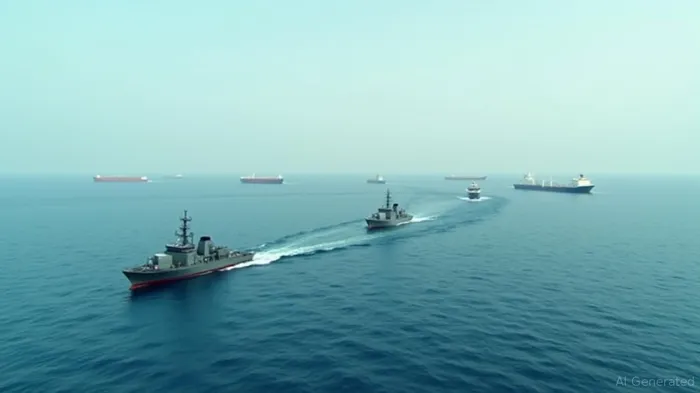
Iran has taken a significant step in response to U.S. airstrikes by closing the Strait of Hormuz, a critical global oil route. This action, which occurred on Sunday, has halted nearly one-fifth of the world's oil traffic. The U.S. airstrikes, authorized by President Donald Trump, targeted Iran's nuclear and missile facilities following Israeli attacks that had already damaged much of Iran's missile infrastructure.
Tehran's parliament swiftly voted to block passage through the Strait of Hormuz, a decision that has raised immediate concerns across global energy markets. This closure affects tankers transporting oil and gas from the Persian Gulf to key regions, including China, Europe, and South Asia, and threatens to drive crude prices sharply higher once markets reopen.
The Iranian regime's response came after Israeli strikes hit multiple targets tied to Iran’s nuclear program and military command centers earlier in the week. Despite the damage to Iran’s arsenal, Supreme Leader Ali Khamenei vowed “irreparable damage” to any U.S. intervention, refusing to back down from the conflict. Iran had issued several threats in the past ten days following what it claimed was an unprovoked Israeli assault, and the vote in parliament to close Hormuz was backed by Khamenei himself.
The Strait of Hormuz is a vital oil route, with tankers moving around 16.5 million barrels of crude and condensate per day through the passage. This includes shipments from Saudi Arabia, Iraq, the UAE, Kuwait, and Iran. The strait is also the pathPATH-- for over 20% of global liquefied natural gas, most of which comes from Qatar. The closure of the strait has already led to reactions from shipping operators and governments, with the UK government issuing a warning to commercial vessels passing through the region, citing increased hostilities that could disrupt shipping.
Frontline Ltd., one of the largest oil-tanker operators, confirmed it would be more cautious offering tankers in the area. Iran has a history of attacking merchant ships in the strait, and the buildup of threats after the Israeli strikes has raised alarm bells across the maritime and energy sectors. Iran’s enforcement of the closure is purely through military pressure, using tactics such as fast patrol boats, drone attacks, and coastal missile strikes to make passage through the strait unsafe for commercial traffic. The U.S. Fifth Fleet, along with European naval forces, has maintained a presence in the region, but the risk has already forced some shippers to delay or reroute their cargoes.
Disruptions are not limited to the Gulf. Shipping through the Red Sea and Gulf of Aden has dropped roughly 70% in June compared to normal levels seen in 2022 and 2023. A U.S.-led force has been deployed in those watersWAT-- to protect vessels, but rerouting traffic around the Cape of Good Hope in South Africa has become the more viable option. This path adds both time and cost to shipments heading between Asia and Europe, which could push up inflation if the situation doesn’t ease.
The move to close the strait is not without risk for Iran. Shutting the strait hurts its own export economy, as Iran depends heavily on shipping oil out of the Gulf. Iran opened a facility at Jask, on the eastern edge of Hormuz, in 2021 to ease reliance on the main channelCHRO--, but its capacity is limited. The decision could also backfire diplomatically, especially with China, its top oil customer. China has used its UN Security Council veto in the past to defend Iran from Western sanctions, but that support could be tested if China’s energy needs are compromised.
Countries like Saudi Arabia and the UAE are more flexible in their oil export routes. Riyadh can send oil via a 746-mile pipeline that links its oil fields to the Red Sea, avoiding both Hormuz and the conflict-heavy southern Red Sea. The UAE moves around 1.5 million barrels a day through a pipeline that reaches Fujairah on the Gulf of Oman. However, Iraq, Qatar, Kuwait, and Bahrain do not have these alternatives. Their oil has to go through Hormuz, and most of it goes straight to Asian markets.
Analysts have predicted a $3–$5 per barrel increase in Brent crude, which closed Friday at $77.01. West Texas Intermediate ended at $73.84. Ole Hansen from Saxo Bank added that prices could open $4 to $5 higher if traders unwind long positions. Since June 13, when Israel launched its first major strike on Iranian nuclear sites, Brent crude has risen 11% and WTI has climbed 10%. So far, oil’s upward movement has been capped by OPEC’s spare capacity and steady production levels. But if Iran keeps Hormuz closed and military tensions escalate, those buffers won’t last.

Stay ahead of the market.
Get curated U.S. market news, insights and key dates delivered to your inbox.


AInvest
PRO
AInvest
PRO



Comments
No comments yet