
Iran Blockade Risk Doubles to 47% After Israel Strikes
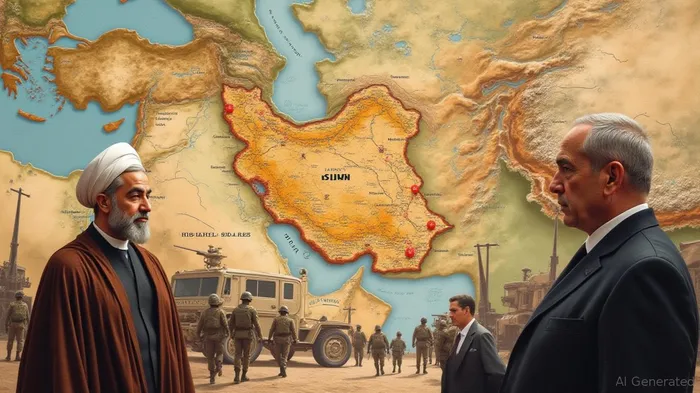
The likelihood of Iran blocking or closing the Strait of Hormuz has surged to 47% as of June 14, marking a near doubling from the 24% recorded on June 11. This shift comes in the wake of Israel's strikes on Iran's nuclear sites, which have heightened geopolitical tensions in the region.
The Strait of Hormuz is a pivotal maritime chokepoint, with roughly one-fifth to one-third of the world’s total oil consumption passing through it. This includes an estimated 17 million to 21 million barrels of oil per day. Additionally, a substantial portion of the global liquefied natural gas (LNG) trade, particularly from Qatar and the United Arab Emirates, transits through this critical shipping channelCHRO--.
Experts warn that any disruption or closure of the Strait of Hormuz, even temporarily, could lead to a dramatic surge in oil prices. Some analysts predict that Brent crude could rise well above $100-$120 per barrel. Following Israel’s strikes, oil prices have already surged past the $70 per barrel mark for the first time since April 3, 2025, raising concerns about potential economic stagnation for countries reliant on the Strait of Hormuz.
The escalation in the odds of the Strait of Hormuz closure reflects growing fears that the recent military exchanges between Iran and Israel could escalate into a full-blown war. Previous exchanges have been characterized as choreographed, with both sides reportedly receiving advance warnings and avoiding crossing each other's red lines. However, Israel’s latest strikes on Iranian nuclear sites, including the destruction of an above-ground enrichment plant in Natanz, suggest a crossing of Tehran’s red lines, increasing the likelihood of retaliatory actions from Iran.
Closing the Strait of Hormuz would have devastating economic consequences for Iran itself, potentially provoking a response from other countries dependent on the strait, including the United States. The situation remains tense, with the potential for further escalation or de-escalation depending on the actions of the parties involved. Investors and market observers are closely monitoring the developments, as any disruption in the Strait of Hormuz could have significant implications for global oil supplies and economic stability.

Stay ahead of the market.
Get curated U.S. market news, insights and key dates delivered to your inbox.






Comments
No comments yet