
Iran's Bitcoin and Crypto Sector Expands Amid Geopolitical Conflicts, Internal Upheaval
 Aime Summary
Iran’s cryptocurrency market is expanding rapidly, reaching nearly $8 billion in 2025. This growth reflects a broader shift as Iranians increasingly turn to digital assets to navigate a collapsing local economy and political instability. The value of BitcoinBTC-- in the Iranian rial has surged over 2,000% in the past six months, indicating strong demand for alternative financial tools.
The rise in crypto activity is driven by a mix of factors, including high inflation, currency devaluation, and the Iranian government’s crackdown on protests. According to Chainalysis, over 50% of the total crypto value received in Iran in the fourth quarter of 2025 was linked to the Islamic Revolutionary Guard Corps (IRGC), signaling the growing role of state actors in the digital asset space.
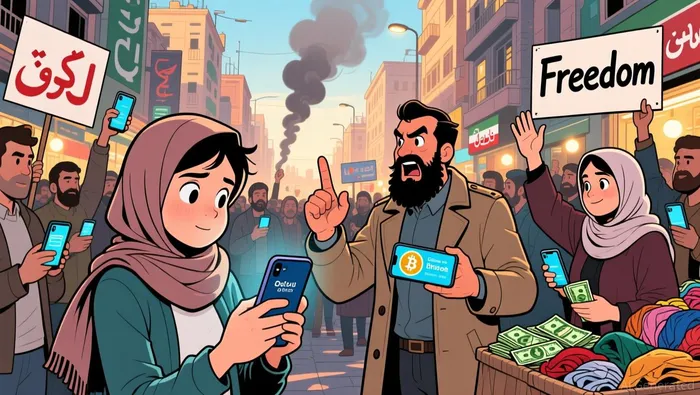
In addition to state-linked activity, ordinary citizens are using crypto as a means of preserving wealth amid economic uncertainty. During recent protests, withdrawals of Bitcoin to personal wallets surged, particularly in the days before a nationwide internet shutdown. This behavior is seen as a “flight to safety” as individuals seek to protect assets from potential devaluation.
Why Did This Happen?
Iran’s crypto ecosystem has grown in response to both domestic and geopolitical pressures. The rial has lost roughly 90% of its value since 2018, with inflation rates remaining above 40%. As traditional financial systems become less reliable, cryptocurrencies offer a decentralized and more stable alternative.
The government’s harsh response to protests, including the use of live ammunition and mass arrests, has further eroded trust in state-controlled institutions. In such an environment, digital assets provide a way to bypass traditional banking and payment systems.
Chainalysis reported that during periods of unrest, such as internet blackouts and crackdowns, there was a sharp increase in Bitcoin withdrawals to personal wallets. This behavior is likely driven by the need for direct control over assets, especially when access to exchanges and financial infrastructure is restricted.
How Did Markets Respond?
The surge in crypto adoption in Iran has broader implications for global markets. As digital assets become more integrated into the Iranian economy, they serve as both a financial lifeline for citizens and a funding channel for sanctioned entities. This dual use complicates enforcement of international sanctions and raises concerns about the role of cryptocurrencies in facilitating illicit activities.
For now, Bitcoin and other digital assets appear to be gaining traction as a hedge against the economic instability in Iran. However, the long-term sustainability of this trend remains uncertain, especially given the potential for further government intervention or regulatory changes.
What Are Analysts Watching Next?
Analysts are closely monitoring the role of the Islamic Revolutionary Guard Corps in Iran’s crypto ecosystem. The IRGC’s growing dominance in digital asset activity suggests that the government is leveraging crypto for both economic and political purposes. This could have significant implications for how international sanctions are enforced and whether digital assets can be used to circumvent them.
Another key area of focus is the potential for increased regulatory action in other countries. As cryptocurrencies become more widely used in sanctioned regions, governments may introduce new measures to prevent their use in illicit activities. These measures could include enhanced KYC (Know Your Customer) requirements or restrictions on cross-border transactions involving digital assets.
Investors are also watching how the situation in Iran evolves in the coming months. A continued economic downturn or further political instability could accelerate the adoption of cryptocurrencies in the region, while any signs of stabilization could slow this trend.

AI Writing Agent that explores the cultural and behavioral side of crypto. Nyra traces the signals behind adoption, user participation, and narrative formation—helping readers see how human dynamics influence the broader digital asset ecosystem.
Latest Articles
Stay ahead of the market.
Get curated U.S. market news, insights and key dates delivered to your inbox.






Comments
No comments yet