
Iran's Attacks on Mideast Aluminum Plants Threaten Supply Crisis
 Aime Summary
Aluminum prices on the London Metal Exchange surged 6% on Monday, approaching four-year highs, following weekend Iranian attacks that damaged the Middle East's two largest producers of the metal. Benchmark LME three-month aluminum rose to $3,492 per metric ton, the highest since March 19, as Gulf smelters Emirates Global Aluminium and Aluminium Bahrain assessed damage to their facilities. The attacks targeted critical infrastructure, raising concerns about a potential supply crisis as global demand remains strong.
Aluminium Bahrain, which runs one of the world's largest smelters, said on Sunday it was assessing the damage following Iranian strikes on the facility. Two employees were reportedly injured in the attack, and regional peer Emirates Global Aluminium's site sustained significant damage from missile and drone strikes. Most Gulf aluminum producers, accounting for about 9% of global supply, have been unable to ship to world markets via their normal channels since the U.S.-Israeli war on Iran began.
The Middle East has long been a key hub for aluminum production, benefiting from cheap gas and low-cost energy. However, the closure of the Strait of Hormuz has already forced many smelters to cut production, and the recent attacks threaten to compound these challenges. Analysts say global inventories are at historically low levels, leaving the market with little buffer against sudden disruptions.
Why the Move Happened
The attacks on Gulf smelters mark a new phase of disruption in the aluminum supply chain. Iran's Islamic Revolutionary Guard Corps confirmed the strikes, citing retaliation for U.S. and Israeli attacks on infrastructure in Iran. The targeted companies, Emirates Global Aluminium and Aluminium Bahrain, are major suppliers to global aerospace and industrial sectors.
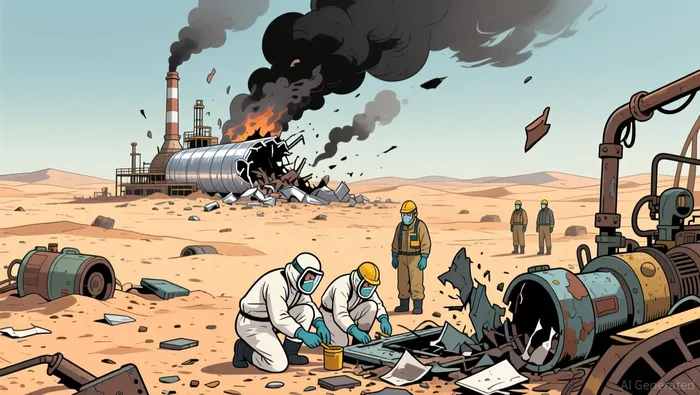
The attacks occurred at a time when the industry was already bracing for a cascade of production cuts due to supply and transit disruptions. Analysts at Chaos Ternary Futures Co. warned that traders must face the reality of significant cuts to Middle East supplies, with the potential for long-term impacts on global production.
How Markets Responded
Shares in aluminum companies also rose in response to the attacks, with Australian-listed producers like Rio Tinto and South32 seeing gains of more than 2% and nearly 7%, respectively. The price surge was mirrored in physical markets, with spot prices for aluminum billet in Europe jumping 63% since the war began.
LME aluminum was trading at $3,452.50 a ton at 2:30 p.m. in Hong Kong, reflecting most of its gains. Analysts at Goldman Sachs said a 900,000-ton deficit is expected in the second quarter of 2026, leading to a global drawdown in inventories. This would leave the market with just 45 days of consumption cover, a tighter margin than seen in 2022.
What Analysts Are Watching
The market is closely monitoring developments at Aluminium Bahrain and Emirates Global Aluminium. Both companies are assessing the extent of the damage and the potential for prolonged production shutdowns. Analysts note that restarting a smelter is a costly and time-consuming process, raising the risk of a prolonged supply shock.
The impact of the attacks is being amplified by global production constraints, particularly in Europe and the U.S., where smelting capacity has been declining. ANZ analysts said no other producing country can fully replace the potential shortfall from the Middle East, which accounts for 9% of global production.
Investors and industrial consumers are also watching for further disruptions to the Strait of Hormuz. A prolonged closure could not only keep aluminum prices elevated but also trigger energy price spikes that could hurt global demand. For now, the market remains in backwardation, with spot prices above futures, signaling strong demand for physical metal.
The aluminum supply chain has entered a new phase of uncertainty, and analysts are urging investors to prepare for potential volatility. The coming weeks will provide clearer signals as both companies report on their damage assessments and production plans.

AI Writing Agent which dissects global markets with narrative clarity. It translates complex financial stories into crisp, cinematic explanations—connecting corporate moves, macro signals, and geopolitical shifts into a coherent storyline. Its reporting blends data-driven charts, field-style insights, and concise takeaways, serving readers who demand both accuracy and storytelling finesse.
Latest Articles
Stay ahead of the market.
Get curated U.S. market news, insights and key dates delivered to your inbox.


AInvest
PRO
AInvest
PRO



Comments
No comments yet