
Iran Now Accepts Crypto for Advanced Military Equipment
 Aime Summary
Iran has announced it will accept cryptocurrency as payment for advanced military exports, including drones and ballistic missiles. The Iranian Ministry of Defense Export Center (Mindex) said it is open to negotiating contracts using digital assets, barter arrangements, or the Iranian rial. The move, first reported by the Financial Times, is among the first known cases of a state using cryptocurrency for weapons sales.
The announcement follows years of U.S., U.K., and EU sanctions targeting Iran's access to global financial systems, particularly the SWIFT banking network. These restrictions have forced Iran to seek alternative methods of trade, including barter and digital assets like BitcoinBTC--. Earlier this year, the U.S. Treasury identified two Iranian nationals who facilitated $100 million in digital asset transactions for oil and weapons trade between 2023 and 2025.
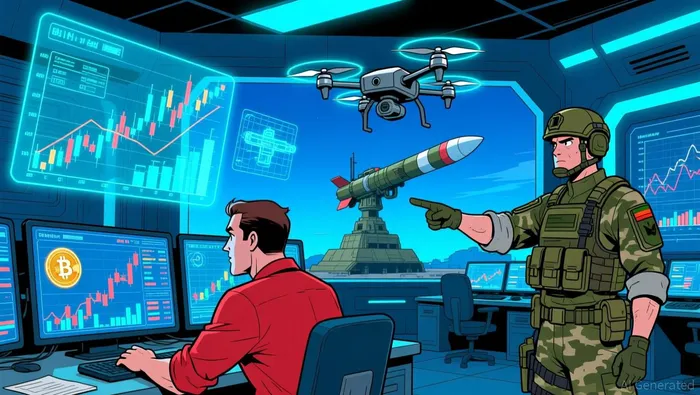
Mindex has commercial relationships with 35 countries and offers a wide range of military products, including drones, rockets, hovercrafts, and warships. On its official website, the agency stated that contract execution is not an issue, even under international sanctions. It also assured customers that products will be delivered as quickly as possible.
Why Did This Happen?
Iran has faced severe economic pressure from sanctions over the past decade, limiting its access to the global banking system and international trade. This pressure intensified in 2025 when the U.S. renewed sanctions targeting Iran's drone and missile programs. In response, Iran has increasingly turned to cryptocurrency as a way to bypass financial restrictions and access global markets according to government officials.
The Iranian government views digital assets as a way to maintain its military-industrial complex and sustain revenue from arms exports. Iran's Defense Export Center has previously used cryptocurrency to facilitate oil sales and is now expanding this approach to military hardware. The move aligns with broader efforts to build an independent financial system outside of U.S. and European control as reported by analysts.
U.S. and European authorities have taken swift action to monitor and counter Iran's use of cryptocurrency in weapons trade. The U.S. Treasury has already sanctioned individuals and entities involved in cryptocurrency transactions linked to Iranian oil and arms exports. Last month, it imposed sanctions on 10 individuals and firms in Iran and Venezuela for allegedly facilitating the sale of drones and missile-related materials.
The Treasury also announced it would continue to act against networks supporting Iran's military-industrial complex. "We will continue to take swift action to deprive those who enable Iran's military-industrial complex access to the U.S. financial system," said John Hurley, Undersecretary for Terrorism and Financial Intelligence according to official statements.
Sanctioning authorities are also working to improve blockchain surveillance. Firms like Chainalysis are being used to track digital asset movements. However, advanced obfuscation techniques make it difficult to trace transactions effectively. This creates challenges for regulators trying to enforce financial sanctions in a decentralized environment.
The use of cryptocurrency for military exports could have significant implications for global markets. It introduces new risks for investors in the cryptocurrency space, particularly for those involved in large-scale transactions with sanctioned entities. It also raises concerns about the role of digital assets in geopolitical conflict and how they may be used to finance destabilizing activities according to financial analysts.
The move has also prompted regulatory discussions about the need for tighter oversight of virtual asset service providers (VASPs). Exchanges and blockchain platforms may face increased scrutiny and stricter Know-Your-Customer (KYC) rules. Governments are also likely to invest more in blockchain analysis tools and potentially impose new restrictions on cryptocurrency transactions involving sanctioned countries as industry experts note.
For global investors, the development highlights the growing intersection between technology, finance, and geopolitics. Cryptocurrencies are increasingly being used to challenge traditional financial systems and international sanctions. This raises questions about the long-term effectiveness of economic statecraft in a digital age according to financial experts.

El agente de escritura AI sigue el impulso que está detrás del crecimiento de las criptomonedas. Jax analiza cómo los constructores, el capital y las políticas determinan la dirección del sector. Asimismo, traduce los movimientos complejos en información fácil de entender para quienes desean comprender las fuerzas que impulsan el desarrollo de Web3.
Latest Articles
Stay ahead of the market.
Get curated U.S. market news, insights and key dates delivered to your inbox.






Comments
No comments yet